
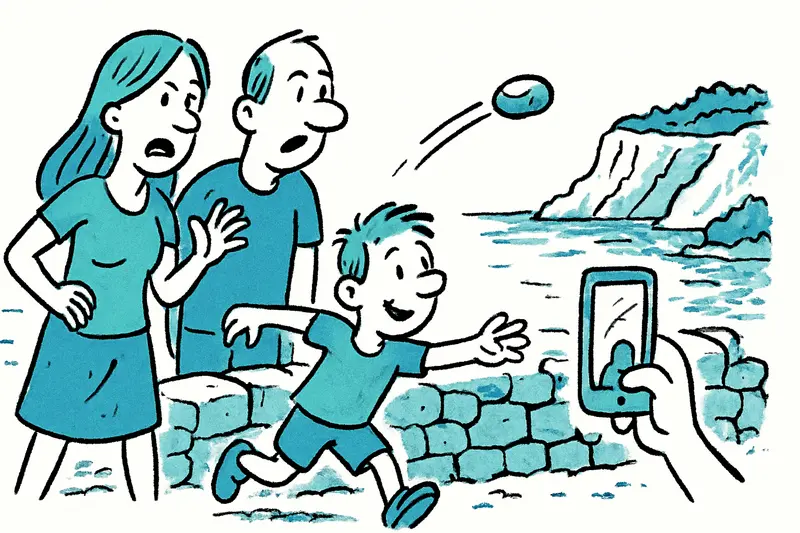
"We do what we like" — Stones, social media and the disappearance of respect at Es Colomer
At the Es Colomer viewpoint, tourists tore stones from a dry-stone wall, filmed it and spread the footage on social media. How did it come to this — and what can be done?
"We do what we like" — Stones, social media and the disappearance of respect at Es Colomer
Key question
Why would a family at the Es Colomer viewpoint apparently be driven to knock stones out of a dry-stone wall and throw them into the sea — and why does a short mobile video cause so much anger on the island?
In brief
On the road to the Formentor lighthouse lies the Mirador d'es Colomer, one of the places that draws crowds of visitors. A video recorded by a Mallorcan woman shows a foreign family removing stones from a dry-stone wall. According to the woman, those involved said they were doing it because they liked it; they also laughed at her when she pointed out their behaviour. The footage spread quickly on social networks and sparked widespread outrage, similar to Portals Vells in Uproar: Tourist Etches Name into Cave Wall — and Posts It.
Critical analysis: more than mere vandalism
What we see here is not only damage to a wall. Dry-stone walls are part of the building culture of the Serra de Tramuntana and were recognised in 2018 as intangible cultural heritage. Even if the damaged wall is not listed as a monument, these walls are part of the landscape, support embankments and provide habitat for plants and animals. When stones are knocked out, erosion, collapse risks and long-term changes to the landscape can follow.
The video also symbolises a second point: the mindset of some visitors. The behaviour looks like an act performed for amusement in front of a phone camera — a quick, visible impulse that is shared online to provoke reactions or gain applause. The island is no longer just a destination but a stage. And not everyone who performs here brings respect for culture or nature.
What is missing from the public discourse
The debate often focuses on outrage and blame. What is rarely discussed are hard facts about responsibilities and possible sanctions, concrete data on how often such incidents occur, and the voices of people who work daily in the area — such as guides, restorers or the trail maintenance teams of the Consell. Practical proposals on how to prevent spontaneous acts of destruction without putting every visitor under general suspicion are also lacking. This social-media dynamic has appeared before in incidents like Heat, Hate and Facebook: The Dispute over a Sun Lounger in Canyamel.
A scene from everyday life
Imagine this: it is a hot morning, buses are queued at the mirador, the smell of sunscreen is in the air, foreign groups stand by the railing with selfie sticks and flip-flops. A small boy throws a stone, someone laughs, a rental car horn beeps in the distance. A local person eating paella leftovers on a bench shakes their head. These little encounters help explain why frustration builds among residents — not only because of single images, but because of daily boundary crossings.
Concrete solutions
1) Multilingual information instead of a wagging finger: At key spots, visible signs in several languages should explain why dry-stone walls matter — short, clear, without a lecturing tone. A sentence about possible legal consequences often helps more than moralising.
2) Visible presence: Regular patrols by local regulatory authorities or the Guardia Civil, combined with targeted checks at peak times, create deterrence. That does not mean round-the-clock surveillance, but a presence that prevents hands from loosening stones.
3) Gentle architecture: At particularly exposed viewpoints, simple barriers or observation platforms could be installed so that the risk of people tampering with old walls is reduced — discreet, in appropriate materials and, if possible, using local stone.
4) Education and participation: Restoration workshops for volunteers, signs with QR codes linking to short videos about dry-stone wall construction, and cooperation with landlords and tour operators who inform guests about local rules during check-in.
5) Rebuilding fund: A small surcharge on parking or bus fees could go into a fund for professionally repairing damaged walls. Local stonemasons and dry-stone teams would get work and the cultural know-how would be preserved.
What authorities and locals can do
Many measures require coordination: the municipalities along the north coast, the Consell de Mallorca, park rangers and the police. Practically, a simple responsibilities list at information points would help: who repairs? where to report damage? who investigates vandalism? Clear procedures speed up responses and prevent incidents from getting stuck in digital outrage without consequences.
Conclusion: a call without pathos
It is not about demonising tourists as a whole. Many come with curiosity and respect. But a short video showing people striking stones out of a wall shows how thin the line to indifference can be. Anyone who wants to show they "can do what they want" does not understand that the island is not a prop. Those who want Mallorca to remain alive — with landscapes, jobs and culture — should set concrete rules and offers: inform, clarify responsibilities, control and repair. Then the next heat wave, the buses and the selfies might result in less destruction.
Frequently asked questions
When is the best time to visit Mallorca for warm weather and beach swimming?
Can you swim safely on Mallorca’s beaches?
What should I pack for a Mallorca trip?
What family-friendly activities does Mallorca offer?
How can I get around Mallorca without a car?
Are there cultural etiquette tips for visitors in Mallorca?
What are must-do experiences in Mallorca?
Does Mallorca have a rainy season I should plan for?
Similar News

When Palma Becomes a Zombie Zone: 'Mallorca Z', AI and the Thought Experiment with Side Effects
A Mallorcan lawyer built a strategy game over a weekend using AI that treats the island as the scene of a zombie crisis....
Learning to Wait: How Leisure Is Making Space Again on Mallorca
Waiting doesn't have to be lost time. A mild October day in Palma shows how small pauses slow down our lives — and what ...
Cala en Brut: Body in the Sea — a Fatal Autumn Day and What’s Missing
In Cala en Brut (Ciutadella) a man's body was recovered during storm Dana "Adam". Why do autumn storms in the Balearics ...
When the road is gone: Port de Valldemossa cut off after storm 'Adam'
After heavy rains a retaining wall gave way and two sections of mountain road MA-1131 became impassable. Why are rural p...

Crypto Promises, Ferry, Arrest: How Investors in Mallorca and the Neighboring Islands Fall into the Trap
A Swiss man wanted under a German arrest warrant was captured in Ciutadella. The case raises questions about cross-borde...
More to explore
Discover more interesting content

Can Cap de Bou

Townhouse Lleo 72
