
Attempted Abduction in Son Ferriol: Drugs, Memory Gaps and the Question of Safety
Attempted Abduction in Son Ferriol: Drugs, Memory Gaps and the Question of Safety
A British couple tried to drag a neighbor into a car in Son Ferriol. In court both said they had been on drugs. What's missing from the debate?
Attempted Abduction in Son Ferriol: Drugs, Memory Gaps and the Question of Safety
Leading question: How could it happen in broad daylight that two people, apparently intoxicated, try to drag a neighbor into their car — and what does that say about our prevention and police aftercare?
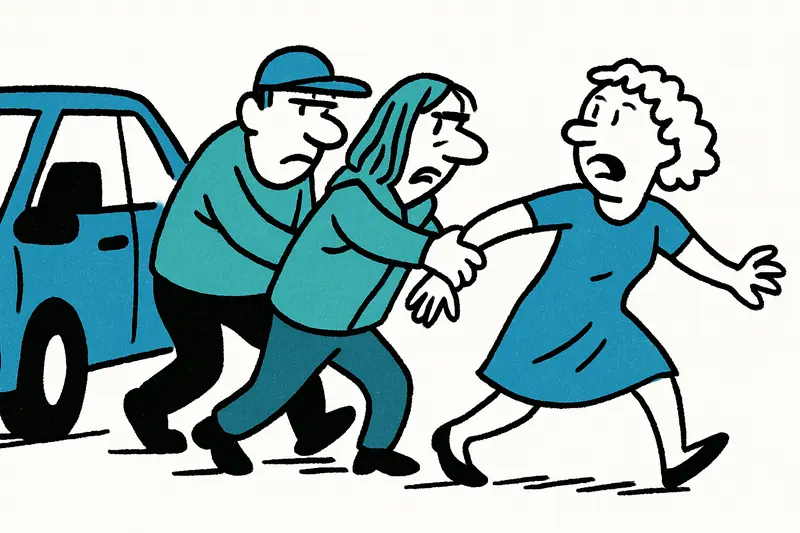
On Sunday at around 12:50 p.m., the quiet roundabout at the junction with Carrer Major in Son Ferriol was thrown into turmoil for a few minutes: an approximately 60-year-old woman was approached by a black car, a woman got out, grabbed the neighbor by the arm and tried to pull her into the car. Bystanders rushed to help; the woman's husband and an employee of a nearby shop were able to intervene and the victim escaped. Shortly thereafter the suspects, a man and a woman of British origin, were arrested not far from the scene.
Before the duty judge both said they had taken drugs before the incident and could hardly remember the sequence of events. The court ordered remand. It is also known from the surroundings that the same couple were allegedly involved in a serious violent incident about a month earlier: a man to whom they supposedly owed money was apparently abducted at that time in the neighborhood Son Banya—known as a drug distribution hotspot—and severely injured, as reported in Severely injured in Port d'Alcúdia: When life explodes behind closed doors.
These facts are enough to raise several worrying questions out loud: Are these isolated perpetrators with an acute drug problem? Are they part of a criminal structure that uses violence to collect debts? Or does the case simply show how ill-prepared neighborhoods are for sudden escalations?
Critical analysis: At first glance many things appear to be a series of unfortunate isolated incidents. At second glance the incident reveals patterns. First: drug use with memory gaps is offered here as an excuse, but it does not explain the propensity for violence and the risk of reoffending. Similar episodes of suspected drug impairment have featured in local reporting, for example Crash in Cala Rajada: Suspected Drug Use After Rear-End Collision. Second: the connection to the arrest for abduction and bodily harm a month earlier points to repeat offenders — and to gaps in prevention and law enforcement. Third: locations like Son Ferriol and Son Banya represent different problems: one district is residential with many older inhabitants, the other is considered a hotspot for drug dealing. Links between both problems are dangerous.
What is missing from the public discourse: We like to talk about spectacular isolated acts and call for more police, but rarely about the bridge between drug policy, social work and the justice system. There is a lack of transparency about prior convictions, protective measures for potential victims and support services for residents who are left traumatized; this problem is also underlined by cases such as Fatal Discovery in Son Macià: A Case Raising Questions about Protecting Older People. Equally little discussed is how quickly and effectively preventive measures take effect when suspects have already come to the attention of the police, a gap highlighted in broader investigations such as Drugs, Millions and Suspected Abuse of Office: What the Major Operation in Mallorca Reveals.
An everyday scene from Son Ferriol: in the mornings older women sit on the benches in front of the little bakery on Carrer Major, children come from school, delivery drivers honk; people know and greet each other. It is precisely this familiarity that makes the idea so distressing that someone from the neighborhood could attack in broad daylight. The voices of the people standing later at the meeting point sound annoyed and unsettled: "I don't know anything like this here," says a woman with a shopping bag, while the bell of the small church tolls for the next quarter hour.
Concrete solutions: First, better networking of police, social services and health services. Those who become conspicuous because of violent acts in connection with drugs should not only be prosecuted, but quickly connected to addiction support and psychosocial care. Second, controlled and neighborhood-oriented presence: visible patrols to reassure residents, but also officers familiar with the districts, not just in reaction mode. Third, fast information channels for residents: emergency numbers, local hotlines and neighborhood groups that know how to act correctly when they suspect something (take photos, do not provoke perpetrators, provide secure witness statements). Fourth, special protection offers for older residents: short neighborhood training sessions, self-protection tips, improved lighting at exposed intersections.
In addition, the justice system should examine how to deal with repeat offenders closely linked to drug crime: tailored measures that combine imprisonment and therapy can prevent people from repeatedly falling into the same cycles — or injuring others.
Conclusion: The incident in Son Ferriol is alarming because it affects everyday places and vulnerable neighbors. Celebrating the arrest alone is not enough. We must ask why it came to this and which gaps in prevention, addiction support and judicial practice paved the way. Son Ferriol should now talk not only about security measures but about neighborhood work, support services for addicts and rapid support for victims. Anyone who focuses only on additional patrols overlooks that safety is more than visible presence: it is a network of help, prevention and clear legal rules — and that network must be repaired before another neighbor has to run for her life.
Frequently asked questions
Is Son Ferriol safe for everyday life after the attempted abduction?
What should you do if you witness a violent incident in Mallorca?
Can drug use explain violent behaviour in Mallorca cases like this one?
Why are Son Ferriol and Son Banya mentioned together in Mallorca crime reporting?
How can Mallorca neighbourhoods better protect older residents from sudden crime?
What happens after suspects are arrested in a serious Mallorca assault case?
How can residents in Mallorca report suspicious behaviour safely?
What does this incident say about prevention and social support in Mallorca?
Similar News

Fewer Airlines, Fewer Destinations: What Palma's Winter Flight Schedule Means for Mallorca
Analysis shows: Winter at Son Sant Joan Airport will be quieter, with significantly fewer airlines and destinations. Who...
German tourist dies in Sa Calobra – a reality check for emergencies on Mallorca's beaches
A 40-year-old tourist died at the Torrent de Pareis. The emergency call, a doctor who happened to be present, a defibril...
Deadly Tractor Accident in Bunyola: What Needs to Be Done Now
In a work accident on an estate near Bunyola, a roughly 40-year-old man lost his life. His wife and a small child were o...
Head-first dive into the shallow part of Cala Fonoll: An accident and the unresolved question of responsibility
A young tourist dove into Cala Fonoll and was seriously injured. Key question: Why are clear warning signs missing at da...
Mistaken identity with fatal consequences: Brutal assault in S'Aranjassa — what's missing in the follow-up?
At S'Aranjassa a visitor to a finca was tied up, beaten and thrown out of a van. Three men have been arrested, including...
More to explore
Discover more interesting content

Can Cap de Bou

Townhouse Lleo 72
