
Brawl at Portitxol: Three Men, Bloody Bottles and the Question of Neighborhood Safety
Brawl at Portitxol: Three Men, Bloody Bottles and the Question of Neighborhood Safety
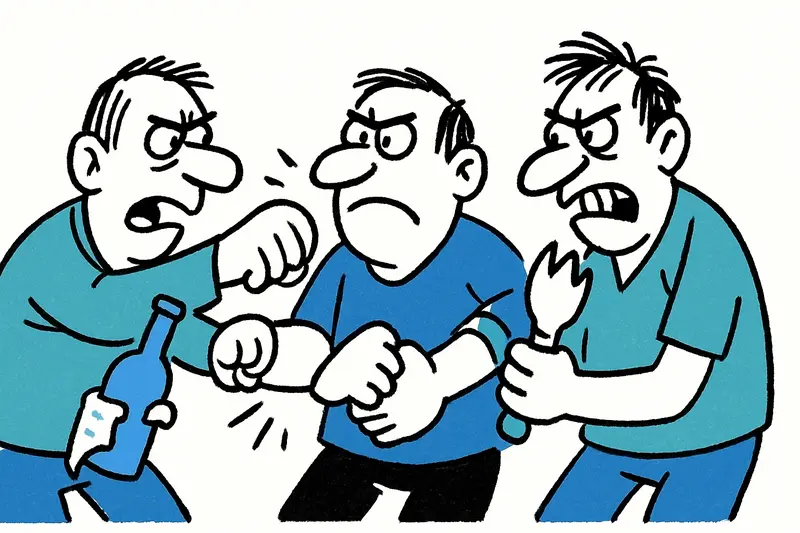
On a weekday morning in the popular Portitxol coastal quarter a fight with glass bottles escalated. Three men of Ukrainian origin were arrested and several people were injured. What does this say about safety and integration in Palma?
Brawl at Portitxol: Three Men, Bloody Bottles and the Question of Neighborhood Safety
Police operation in broad daylight causes unease in an otherwise quiet coastal quarter
Last Saturday morning the usually calm promenade of Portitxol briefly turned into a crime scene. It was morning, not afternoon: cafés were just filling up, seagulls circled above the sea and traffic noise from the Passeig could be heard in the distance when residents suddenly raised the alarm. Three men began fighting in the middle of the street and apparently used glass bottles as weapons. Local police forces and a unit of the national police arrived and arrested the three men. Similar rapid responses occurred in other cases, such as Arrests after threats at the city beach: Why an evening stroll must become safer again. Emergency responders treated a man with a heavily bleeding head wound; another was taken to hospital with a lip injury that may require stitches; the third sustained knuckle injuries.
Key question: What does such an incident mean for the perception of safety in a neighborhood that is popular with both residents and tourists?
In short: the scene made many people nervous. Portitxol is regarded as a calm, valued residential area with cafés, small boutiques and people picking up their bread rolls in the morning. Of all places, here, in broad daylight, someone fights with broken bottles — that does not leave the sense of safety unaffected for those who live here or own holiday apartments. Residents report that the police were on the scene quickly; the arrests, according to information, were carried out promptly. It is notable that the three apparently did not speak Spanish, which made communication on site more difficult.
Critical analysis: A single incident must not become a blanket judgement about a group; similar episodes have been reported elsewhere, for example Brawl at Playa de Palma: Why a verbal exchange could have ended fatally. At the same time it raises several questions that often disappear from public debate: How is preventive social work organised in urban and tourist neighbourhoods? Are conflicts detected early enough before glass bottles become weapons? And how good is the communication between police, emergency services and the public when language barriers exist?
What has so far been little discussed: firstly, the role of alcohol and of outlets selling glass bottles near public spaces; previous scenes such as Tumults at Playa de Palma: When Controls Threaten the Beach Scene show how quickly a conflict can escalate. Secondly, the accessibility of low-threshold counselling and mediation services for people who live here and carry out conflicts. Thirdly: the fact that none of those involved spoke Spanish makes it clear that multilingual information offerings — not only for tourists but also for the local neighbourhood — are not a luxury task.
An everyday scene from Mallorca that stays in the memory: the rubbish truck rattling down the side street, an older woman tending balcony plants in the courtyard, the distant call of a café owner — and in the middle of it all bloody scraps on the asphalt and shocked faces. Such images stick in the neighbours' memories longer than the sirens that later faded away.
Concrete approaches, not only for Portitxol but for Palma as a whole:
- Multilingual emergency information: Signs at central points, multilingual notices about emergency numbers and first aid — including Ukrainian and English — would ease initial communication.
- Prevention instead of only repression: Social workers and mediators in burdened neighbourhoods could defuse conflicts early. Mobile services that go to people often work better than fixed contact points.
- Reduction of hazard sources: In particularly frequented areas, urban design measures could help: zones with fewer glass items, more bins for bottles and stricter controls on street vending.
- Community policing with language skills: Regular patrols that also serve as contact points for neighbours, plus targeted hiring or training of officers with foreign language skills.
- Make first aid visible: Workshops for shop owners, beach operators and neighbours on applying pressure bandages or how to act in cases of severe bleeding.
What is often missing from the debate is the perspective of the people who live here every day: not only counting crime statistics, but asking about causes and promoting local solutions. The swift arrests may have closed the immediate incident, but the insecurity remains, as other cases like Arrest after knife attack in Pere Garau: How safe is Palma's neighborhood? suggest. If someone is so badly injured in a supposedly quiet neighbourhood in broad daylight, it signals that prevention, language support and neighbourhood work need to be further developed.
Conclusion: The incident at Portitxol is disturbing but not inexplicable. Anyone who lives on Mallorca or spends time here knows: the island is a kaleidoscope of languages, lifestyles and conflicts. The task of the city and municipalities is to organise this coexistence so that heated conflicts do not escalate into bloody confrontations. Otherwise the cosy morning by the sea leaves behind only the aftershock of fear.
Frequently asked questions
Is Mallorca still warm enough for swimming in autumn?
What is the weather usually like in Mallorca during shoulder season?
What should I pack for Mallorca if I want to do both beach time and sightseeing?
Is Mallorca a good place to visit when the summer crowds are gone?
What is Port de Sóller like in autumn?
Can you still enjoy the beach in Mallorca if the air feels cooler?
Is September or October a good time to travel to Mallorca?
What is Palma de Mallorca like outside the peak summer months?
Similar News
Rental Car Theft in El Arenal: What This Incident Reveals About Our Gaps
A teenager steals a running rental car in El Arenal, flees on foot, climbs over walls and is caught by the Guardia Civil...
Red Rope in Palma's Library: What Helps Against Selfie Tourism — and What's Missing
Palma's city library cordoned off an area with a red rope to keep selfie tourism away from reading and working activitie...
Fort San Carlos: Museum, Harbor Dispute — and a Conflict That Demands Answers
The military museum at Fort San Carlos sits right on Palma's harbor, with unexpectedly quiet rooms filled with cannons a...
Old Town Under Pressure: When a Doorway Becomes a Sleeping and Shower Place
For months a woman has been living with a parasol, a clothes rack and personal belongings next to the social welfare off...
When Shopping Weighs Heavier: Mallorca Demands a Tax Pause on Food and Fuel
Rising prices are putting pressure on households and agriculture. The Balearic Islands are calling for temporary tax rel...
More to explore
Discover more interesting content

Can Cap de Bou

Townhouse Lleo 72
