
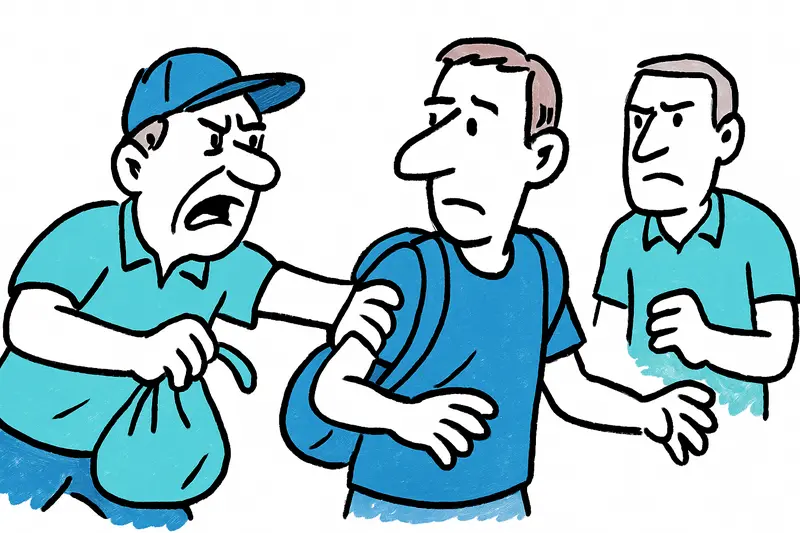
Conflict at Ballermann: When Vendors Become the Persecuted — and Why It's Not Just a Police Matter
Conflict at Ballermann: When Vendors Become the Persecuted — and Why It's Not Just a Police Matter
Seven arrests after assaults at Playa de Palma: Not just theft, but intimidation within the vendor community. What is missing in the debate — and how can everyday life on the beach be made safer again?
Conflict at Ballermann: When Vendors Become the Persecuted — and Why It's Not Just a Police Matter
Seven arrests after attacks at Playa de Palma; the issue goes beyond mere criminality
Key question: How did the everyday life of street vendors at Playa de Palma turn into a situation in which colleagues protect tourists — and in doing so are themselves threatened, injured or intimidated?
On a late May evening at Playa de Palma you often see the same picture: tourists with shopping bags and sunburn, small stalls, vendors hawking their goods, and the buses that take the last guests back to their hotels. In these alleys, between the avenue and the beach accesses, tensions have now escalated to the point that the Spanish National Police intervened: they arrested seven men accused, among other things, of threats, coercion, bodily harm and forming a criminal organization, as reported in Arrests after threats at the city beach. Earlier related incidents, such as a routine check that ended in a scuffle and an arrest, show tensions rising.
The investigations stem from reports by the Senegalese community: vendors allegedly tried to stop thefts from holidaymakers — and were subsequently attacked themselves. Similar episodes, when vendors intervened to protect tourists, have been documented in coverage of vendors stopping an arrest. According to investigators, the alleged perpetrators blended in with the vendors and deliberately approached tourists on their way home to steal valuables. Those who intervened were then targeted.
This is problematic on several levels. First: the immediate danger to holidaymakers is real and harms the reputation of a neighborhood that already heavily depends on tourism. Second: power relations arise within an already marginalized group that undermine trust and lead people to stop reporting incidents — out of fear of retaliation.
What is often missing in the public debate is a view of the daily reality of those who earn their living on the pavement. Vendors often live in precarious conditions, work without secure contracts, face language barriers and have little access to legal support. In this gray area, criminal structures can take root more easily — as recent inspections at Playa de Palma showed — not because the majority are criminal, but because protective mechanisms are lacking.
Another unresolved problem: there are hardly any low-threshold reporting channels in the relevant languages. Those who are threatened or injured often do not know how to contact the authorities and also fear economic reprisals. Added to this is the dynamic of the place: in the evenings, when buses and taxis arrive and the streets are full of people, opportunities for pickpocketing and violent outbursts are greatest — and the visibility of civic courage is small.
Which steps could improve the situation? Some concrete proposals are obvious and pragmatic:
1) Permanent dialogue platforms: Regular meetings between police, representatives of the vendor community, the hotel association and local authorities. They must be low-threshold, offered in several languages and accompanied by clear follow-up agreements.
2) Protection and reporting services: A hotline or a local trust center that receives incidents anonymously and forwards them with the help of interpreters. Informational flyers in the most spoken languages would be a quick first step.
3) Legal clarity and enforcement: If courts already issue restraining orders, these must be followed up with controls. At the same time, there needs to be information about rights — those who are attacked should know how to file a complaint and what support services exist.
4) Structured market regulation: Instead of an outright ban or chaotic growth, the city could work with stakeholders to create clear rules for street vending — fixed zones, hygiene rules, a permit system — that make illegal activities more difficult and allow legal work.
5) Prevention work: Social organizations and nonprofits can offer training — on conflict de-escalation, occupational safety and legal basics. A visible presence of such organizations on site builds trust.
The arrests were necessary: crimes must be prosecuted and victims need protection. But the police alone will not solve the problem in the long term. Without accompanying measures, power relations risk persisting in the background and new perpetrators will exploit gaps.
I think of a late afternoon, when seagulls screech and selling blankets are spread out on the warm asphalt: an older vendor who thanks a colleague in broken Spanish because he just pulled a handbag away — small everyday gestures that show protection does not come only from uniforms. This form of mutual help must be strengthened, not criminalized.
Conclusion: The sad reality is that people on the margins of society can become both victims and perpetrator figures when institutional support is missing. The arrests give the police and judiciary time; the task in the coming months is to use that time to build sustainable structures: open dialogue, clear rules and practical help on the ground. Otherwise, after each arrest the same picture will remain — only with new names.
Frequently asked questions
What is the best time of year to visit Mallorca for sunny weather and outdoor activities?
Can you swim in Mallorca year-round, and what water temperature should I expect?
What should I pack for a Mallorca trip, considering beaches, hiking, and evenings?
What are the top things to do in Mallorca besides the beaches?
Is it easy to get around Mallorca without a car?
Where is a good base in Mallorca for first-time visitors?
What should I know about Mallorca’s beaches and coves?
What is Mallorca's weather pattern through the year and how should I plan?
Similar News
Palma under the microscope: 87 arrests over forged passports – what now?
The National Police stopped 87 people at Palma airport this year with allegedly forged documents. Why are controls alone...
When a Taxi Fare Dispute in Magaluf Turned Bloody: How Safe Are Passengers and Drivers?
In Magaluf a dispute over the fare escalated: a tourist, now 18, is accused of having seriously injured a taxi driver in...
Why Mallorca Has Become So Terribly Expensive — A Reality Check
Rents are exploding, staple food prices are rising, wages are lagging behind. A look at the causes, what is missing from...

When Paradise Becomes Unaffordable
Hotel rooms, paella and the weekly grocery shop: Mallorca is becoming more expensive for many. Who pays the bill — guest...
End at Ballermann: What Is Lost with the Dino Mini Golf at Playa de Palma
On October 25 the dinosaur mini-golf course at Playa de Palma will close after more than 30 years. Why the city is recla...
More to explore
Discover more interesting content

Can Cap de Bou

Townhouse Lleo 72
