
Dead snake on a traffic mirror in Selva: What do such finds say about us?
Dead snake on a traffic mirror in Selva: What do such finds say about us?
In Selva someone hung a large dead horseshoe snake on a traffic mirror. The find raises questions: animal cruelty, invasive species, and how prepared are places like Selva really?
Dead snake on a traffic mirror in Selva: What do such finds say about us?
Leading question: How should municipalities and residents deal with invasive snake sightings — and are alarm calls and Instagram posts an adequate response?
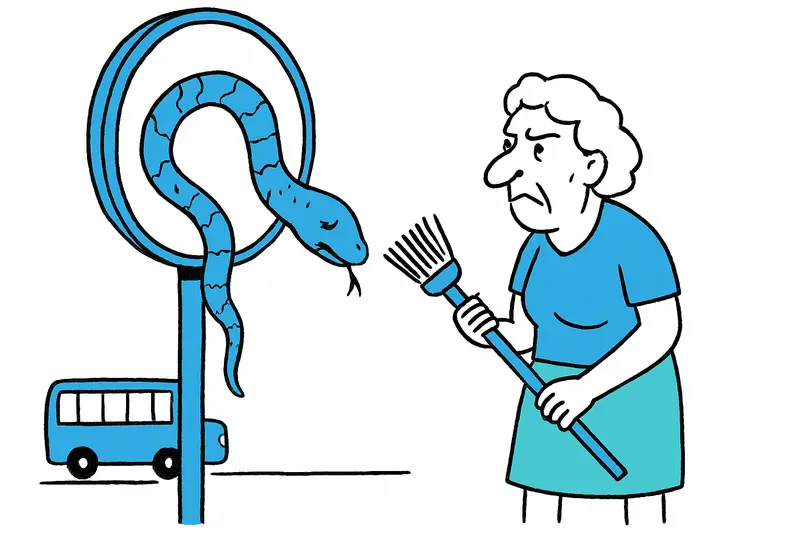
Over the weekend the Policía Local of Selva discovered an unusual scene at a narrow intersection: a large dead snake had been hung over the post of a traffic mirror. The animal, presumed to be a horseshoe snake (Hemorrhois hippocrepis), showed severe injuries to its head and front body. Officers removed the reptile from the road and made the find public.
On site the usual summer picture was visible: cicadas buzzing in the stone walls, an older woman sweeping the porch on the plaça in the morning, and a morning bus slowly rolling along the main street. Yet the scene remained unusual: a dead body intentionally displayed over a mirror — more provocation than mere removal of a carcass.
Critical issue: Who hung the animal like that, and why? The injuries do not suggest a natural death. This is no harmless curiosity, but an act with two dimensions: possible animal cruelty and the media and practical challenge of dealing with invasive species. Such finds are recurring: in recent weeks similar sightings have been reported in other parts of the island, including Sa Coma (municipality of Bunyola) and on beaches in the southwest (Alarm at the Malgrats: Invasive Snakes Threaten the Sargantana).
What is often missing in the public debate is differentiation. First: not all foreign snakes are venomous; horseshoe snakes are usually harmless to humans, but can be problematic for native small animals, as documented in 'A snake eats another' - what cannibalism among invasive snakes reveals about Mallorca's ecosystem. Second: outrage alone does not replace a management plan. Police posts and appeals to report sightings are important — but they only suffice as a short-term reaction.
Specific problems we experience here in Mallorca: lack of routines for recording finds in smaller municipalities, unsafe transport routes for large reptiles, and often insufficient public education on how to act calmly and safely. A resident working in Selva and drinking his morning coffee at the kiosk put it succinctly: Many do not know whom to call when they see a living but large snake; recent coverage explains why sightings have been increasing and what to do in such cases (Why Snakes Are Appearing More Often in Mallorca Now — Danger, Causes and What We Should Do).
What would concretely help:
- Unified reporting chain: Local police, environmental services, and specialized teams (such as COFIB) need coordinated protocols. Citizens should receive clear instructions: phone numbers, behavior upon sighting, keep distance. COFIB can be reached by phone at +34 653 57 41 45 and by email at ofidiscofib@gmail.com.
- Training for small towns: Simple workshops for municipal staff (public works, police, tourism employees) on safe recovery, documentation and transport of reptiles.
- Preventive education: Signs on popular hiking trails and at village entrances with short notes: which species are common, how to behave, whom to call?
- Investigations into animal cruelty: If carcasses are injured and displayed, this must be examined. That sends a signal: illegal acts against animals will not go without consequences.
A possible pilot project would be a regional network of volunteers who can respond quickly in cooperation with COFIB and local protection services. Such community teams know the paths, the locals and are often more trusted in small municipalities than outside emergency forces.
Conclusion: The dead horseshoe snake on a traffic mirror is more than a macabre photo opportunity for social media. It reveals gaps in local administration, education and the handling of invasive species. Selva and other municipalities must ask themselves: Do we want to continue relying on ad hoc individual actions at sightings — or build practical structures that protect people and animals? The answer will decide whether such incidents can be resolved objectively, quickly and without ugly staging in the future.
Frequently asked questions
What should I do if I spot an invasive snake in Mallorca?
Are horseshoe snakes dangerous to people in Mallorca?
How can Mallorca towns improve handling of invasive snake sightings?
What role do volunteers play in Mallorca’s wildlife response?
What public education helps hikers and residents when snakes are present?
Why is a dead snake displayed in public not just a curiosity?
Where can I report snake sightings in Mallorca, and what happens next?
Are there any plans to improve response to invasive snakes in Mallorca?
Similar News
Released with Conditions: The Plus Ultra Suspicion and a Mallorcan Finca as Residence
A Dutch entrepreneur, sought in connection with the Plus Ultra case, was extradited to Spain after his arrest in Germany...

Haute Nuit in Puerto Portals: Fashion, Art and Indulgence by the Water
On October 2 the Lobster Club in Puerto Portals will be transformed into a stage for curated fashion, art and culinary e...

Magaluf: Watchtower Alarm – Lifeguards Pull Unconscious Beachgoer from the Water
After a drama in the late afternoon, two lifeguards at Magaluf beach rescued an unconscious 44-year-old man. He was stab...

Turquoise in the City: How dangerous is the color play of the Sa Riera?
The Sa Riera in Palma suddenly turned turquoise — a pretty motif, but behind the effect lies a discharge of saline waste...

Jeckliner at Sunnesching: Cologne spirit sets sail from Palma
In September 2027 the Mein Schiff 2 briefly becomes a floating carnival stage: four days with Cologne bands, comedy and ...
More to explore
Discover more interesting content

Can Cap de Bou

Townhouse Lleo 72
