
Death after fire: What the Escorca blaze reveals about our caution
Death after fire: What the Escorca blaze reveals about our caution
A man dies after a fire in the Serra de Tramuntana near Escorca. Who protects the landscape and people when traditional fires get out of control?
Death after fire: What the Escorca blaze reveals about our caution
Leading question: Could this fire have been prevented with simple measures?
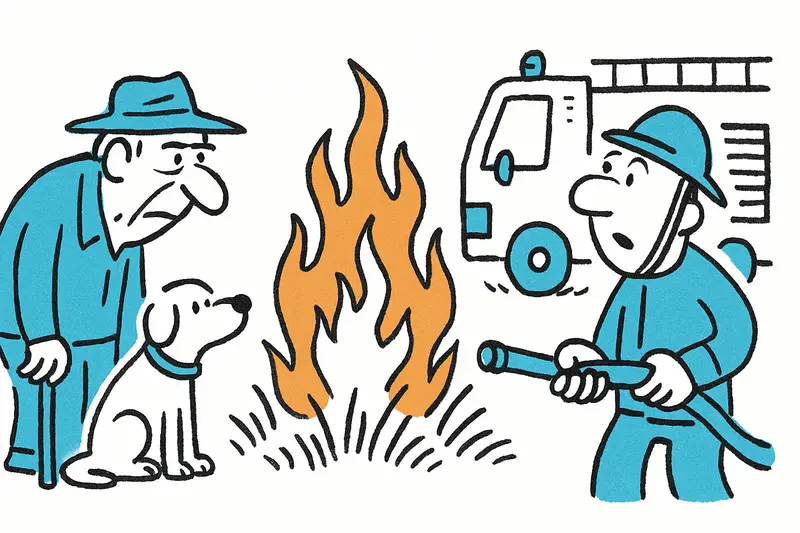
One morning in the Serra de Tramuntana, above Escorca, nearly two hectares of pine and scrubland caught fire. Emergency teams on site found the car of a 78-year-old man and his dog. The man himself was discovered lifeless and with burn injuries after a search operation. Firefighters from Sóller and Inca as well as teams from the environmental authority IBANAT extinguished the fire; a firefighting helicopter assisted with water drops, a situation reminiscent of Fire next to the sports field in Inca: A firefighter injured — what now?.
The bare facts are short: injured man, dog and vehicle at the scene, around two hectares burned, helicopter, investigations ongoing. But the bigger question hinges on the details: Why is open fire even being used in a rugged, wind-prone area when solitary elderly people are involved?
Critical analysis: In Mallorca, "controlled" or traditional burnings are still used to clear areas or dispose of biomass. Such operations are prone to risk. A fainting spell, a gust of wind, a spark on dry undergrowth — and a small fire can quickly become a wildland fire. In this case there were no witnesses, so investigators so far only have circumstantial evidence; similar investigative challenges have arisen in events like Nighttime Fires in S'Albufera: Six Ignition Points — How Do We Protect the Wetland?. Much suggests that a single person was tending the fire; they apparently did not receive help in time.
What is often missing in public debate is the connection between two fields of discussion. First, the nature conservation and fire-protection rules (Who may burn when? Which permits are required?). Second, the social dimension: aging residents in sparsely populated mountain areas performing simple tasks alone — without emergency contacts, without quick help. We talk about protecting landscapes, but not enough about protecting the people who live in them.
An everyday scene: On the Ma-10, when the wind comes from the north, you can hear in the distance the clatter of goat bells, the rattle of a delivery van and sometimes the deep drone of a helicopter flying to fight a fire. In Escorca the roads are narrow, the fields steep; a simple fainting episode can mean that no one arrives in time.
Concrete solutions that would make sense now:
1) Mandatory notification and coordination: Every planned burning near forests must be registered in advance with IBANAT or the municipal administration including GPS coordinates. A quick check by phone or app could provide simple, risk-reducing guidance.
2) Supervised burnings: Especially for older people, burnings should only be permitted in the presence of another person or a team organized by the municipality.
3) Early warning and emergency systems: Subsidized emergency transmitters or personal emergency apps for residents of remote areas; in case of a fall or collapse the device automatically sends location data to rescue services.
4) Public education and sanction strategy: Clear, recurring information campaigns before high-risk periods and fair but binding penalties for negligent endangerment.
5) Local patrols and prevention: Municipal checks in sensitive zones during the risk period, complemented by volunteer teams that support neighborhoods.
One point remains hard: Traditional small burns have their place in rural practice. But tradition must not be an excuse when human lives are at stake. The autopsy will hopefully clarify whether a medical emergency triggered the incident. Regardless, it is clear: Escorca needs practical rules, simple reporting channels and social networks that protect isolated people.
Conclusion: The fire near Escorca is more than a local event, as seen in Spain is Burning: Fire Traces as Far as Mallorca – Is the Country Really Prepared?. It shows how closely landscape protection and social security are intertwined. If we want to preserve the Serra de Tramuntana, we must also ensure that those who live there — old or young — are not put in life-threatening situations by avoidable risks.
Frequently asked questions
What does the Escorca fire say about wildfire risk in Mallorca’s mountains?
Is it safe to do controlled burning in Mallorca during dry or windy conditions?
What should people in remote parts of Mallorca do before burning vegetation?
Why are elderly residents in the Serra de Tramuntana more vulnerable during a fire?
What is the usual emergency response to a wildfire near Escorca?
Can a small fire in Mallorca’s countryside spread fast?
What fire-prevention steps could help protect Mallorca’s rural areas?
What makes the roads and landscape around Escorca difficult during a fire?
Similar News
Carriages Without Horses: Palma Plans E-Carriages – a Reality Check
Palma plans to switch to electric carriages in 2027. The prototype was shown near the cathedral. What is the technology ...

Record season, empty coffers: Who really benefits from the tourism boom?
Full hotels and more flights: the numbers sound impressive — yet many locals feel no benefit. A reality check with an ev...

Pool ordered for €46,000 – €23,000 paid, no work carried out: A fraud case in Palma
A homeowner in Palma transferred €23,000 for the construction of a pool. Weeks later it emerged that no building applica...
Summer greetings from the Pitiusas island: Gottschalk and Krüger enjoy the sun on Ibiza
A friendly photo of Thomas Gottschalk and Mike Krüger on Ibiza evokes memories of their shared film years and shows that...
Occupied in a Few Days: When Property in Mallorca Turns into a Dispute
Six young men were arrested in Palma after homeowners returned and could no longer open their own door. A case that rais...
More to explore
Discover more interesting content

Can Cap de Bou

Townhouse Lleo 72
