
Death on Camí Vell de Cala Llamp: Who protects against heat-related death in the narrow alleys of Port d'Andratx?
Death on Camí Vell de Cala Llamp: Who protects against heat-related death in the narrow alleys of Port d'Andratx?
A 57-year-old was found unconscious in his car on Camí Vell de Cala Llamp and died despite prolonged resuscitation attempts. An autopsy will determine whether heat was the cause. The case raises fundamental questions about emergency access, heat protection and readiness in narrow residential streets.
Death on Camí Vell de Cala Llamp: Who protects against heat-related death in the narrow alleys of Port d'Andratx?
Key question
How well are our villages and residential areas prepared for the combination of extreme heat and narrow access roads — and what needs to change so that a discovery like this does not happen again?
What happened
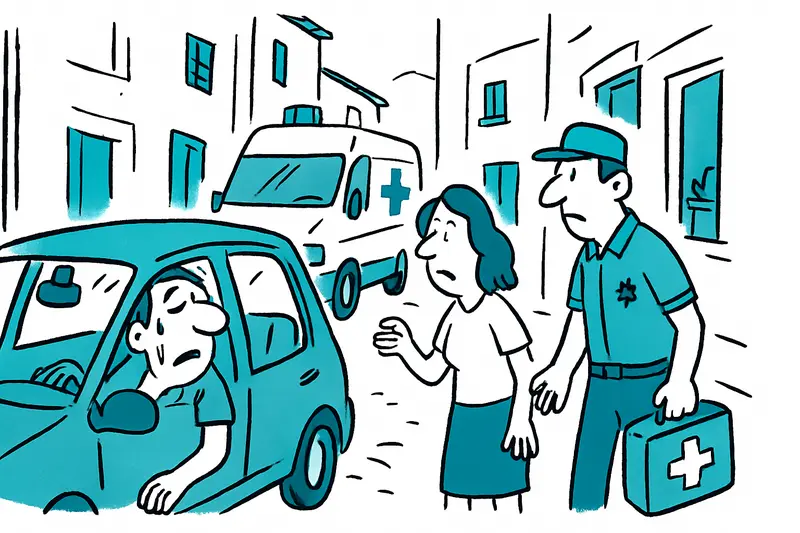
On Thursday afternoon a 57-year-old man was found unconscious in a car on Camí Vell de Cala Llamp. A passerby discovered him around 5 p.m. and alerted emergency services. Local police, paramedics and doctors from the local health center (PAC) rushed to the scene. The responders removed the man from the vehicle and tried to resuscitate him for more than an hour — unfortunately without success. The Guardia Civil took over the further investigation; an autopsy will determine the exact cause of death. Given the high temperatures that day, heatstroke is being mentioned as a possible cause.
Critical analysis
The case contains several problematic elements that come together here: extreme heat, a body in a closed vehicle, narrow street conditions and delayed access to medical equipment. On Mallorca, narrow alleys and driveways are part of the charm but often problematic in many residential areas. When emergency vehicles have to park outside and equipment must be carried in by foot, it costs time — time that can be decisive in circulatory collapse or heatstroke. The fact that only one ambulance could enter the street is not an accident but a structural problem.
What is missing in public discourse
There is a lot of talk about summer heat waves, such as Nearly 40 °C: Mallorca's Daily Life Under Heat Stress — How the Island Can Respond, and tourism, but less about protecting working people or older residents in smaller communities. The question of how private developments, so-called 'German neighborhoods' or narrow harbor streets are integrated into the municipality's emergency concepts is also rarely present, as reporting on incidents like Cardiac Arrest in Caimari: Are Mallorca's Villages Prepared for Medical Emergencies Involving Tourists? shows. Public awareness and administration seldom debate how to organize rapid first aid during a heat period without relying on the luck of a random finder.
Everyday scene from Port d'Andratx
In the early evening, when the church and boat bells ring over the harbor and the last fishing boats glide back, the narrow paths of Port d'Andratx are full of life: cyclists avoid tourists, delivery vans manoeuvre carefully, and doors stand open because the heat presses into the houses. It is at such moments that emergency vehicles in the old parts reach their limits. Nobody wants to turn the narrow, cobbled street into concrete — but reality demands practical solutions.
Concrete solutions
1. Mapping and signage: Every municipality should maintain a public map of problematic streets so that emergency services, fire brigades and the Guardia Civil know alternative routes and assembly points. A visible sign system with the nearest assembly points helps visitors and drivers in need.
2. Emergency zones and loading areas: Where streets are too narrow, small, kept-clear "emergency bays" could be established — areas that must not be parked in during the summer and where emergency vehicles can temporarily leave equipment.
3. Heat checks and awareness: At municipal level, employers and neighborhood groups should regularly contact older or isolated people by phone during hot months. Information leaflets and banners (also in German) explain the symptoms of heatstroke and first measures: into the shade, cool cloths, emergency number 112.
4. Local first responders and training: Volunteer neighborhood teams with basic equipment (AED, cold packs) can bridge the time until paramedics arrive. Municipalities could offer courses — especially in summer months and in tourist centers, as cases like Cardiac Arrest on Can Picafort Beach: Questions Remain and Ideas for the Future suggest.
5. Building standards and access requirements: For new builds or changes of use, the municipality should insist on ensuring access for rescue and fire services. Existing settlements need pragmatic solutions such as removed parking at critical points.
Why this matters now
Palma reported 37 °C on Thursday — an indication that heat is also hitting western Mallorca and has prompted alerts such as Mallorca on Alert: Highest Wildfire Warning Level and Scorching Heat – What to Do Now. Temperatures of this magnitude increase the risk of dehydration, circulatory collapse and heatstroke, especially after physical work or prolonged periods in closed vehicles. Against this background, the tragic death in Andratx is not just an isolated fate but a warning sign.
Pithy conclusion
A death in a car in a narrow alley may look from the outside like a tragic accident. On closer inspection, however, it reveals gaps in planning, prevention and neighborhood support. The answer cannot lie solely in an autopsy. It must be: better accessibility for rescue services, clear heat protection plans and a small network of people on site who intervene before time runs out. Port d'Andratx is too beautiful to leave its elderly and workers exposed to heat and the limitations of its street architecture.
Frequently asked questions
What is the best time of year to visit Mallorca for good weather and swimming?
How warm does the sea get in Mallorca and when is it nicest for swimming?
What should I pack for a trip to Mallorca in spring?
What should I pack for Mallorca in summer?
Are beaches in Mallorca suitable for families with small children?
Is it easy to get around Mallorca without a car?
What are the best times for outdoor activities like hiking in Mallorca?
What should I know about Mallorca’s weather patterns to avoid surprises?
Similar News
Injured captain, big plans: Germania Mallorca before the away match in Consell
The newly founded FC Germania Mallorca travels to Consell on Saturday. Captain Bastian Müller is out injured, but coach ...
Palma, Palma de Mallorca, Palma‑Mallorca: What is it really about?
The debate over the city's name is more than grammar: it concerns identity, law and branding policy. A sober reality che...
Warning to Bathers: Nipping Fish in Cala Major and Other Coves — a Reality Check
In Cala Major and several beaches around Mallorca, bathers report painful “nips”. Who are the animals, why are they gett...
Rental Car Theft in El Arenal: What This Incident Reveals About Our Gaps
A teenager steals a running rental car in El Arenal, flees on foot, climbs over walls and is caught by the Guardia Civil...

Red Rope in Palma's Library: What Helps Against Selfie Tourism — and What's Missing
Palma's city library cordoned off an area with a red rope to keep selfie tourism away from reading and working activitie...
More to explore
Discover more interesting content

Can Cap de Bou

Townhouse Lleo 72
