
Emergency at Ballermann: Cardiac Arrest in Arenal – a Reality Check
Emergency at Ballermann: Cardiac Arrest in Arenal – a Reality Check
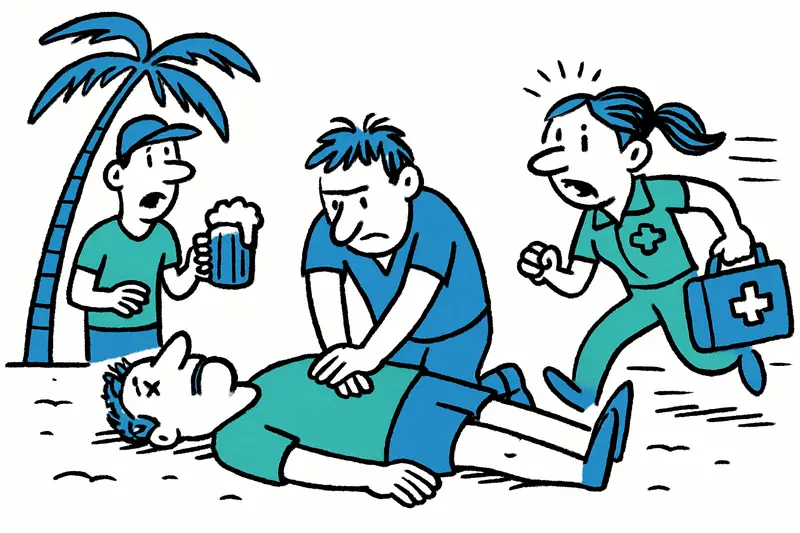
A 42-year-old suffered a cardiac arrest in a brothel in Arenal. The Policia Local began resuscitation and paramedics performed about 25 minutes of CPR. The man was stabilized and taken to Son Llàtzer. What does the incident reveal about prevention, the rescue chain and the reality on site?
Emergency at Ballermann: Cardiac Arrest in Arenal – a Reality Check
Guiding question: Why does an emergency at Ballermann almost always end in a race to rescue instead of preventive safety?
Early on Saturday morning, around 8:40 a.m., a 42-year-old man collapsed in a brothel in Arenal. According to on-site reports, suspected drug use is considered the trigger; his nationality is unknown. The Policia Local immediately began resuscitation measures. Later, rescue personnel took over and carried out cardiopulmonary resuscitation for about 25 minutes. Eventually circulation could be restored, and the patient was transported to the University Hospital Son Llàtzer in Palma.
Those are the sober facts. But the incident is not an isolated event in a vacuum: as earlier reporting such as Critical Bathing Incident at Arenal: Call for Better Protective Measures shows, it raises fundamental questions about prevention, the equipping of nightlife venues and coordination on the ground.
Critical analysis: rescue chain, equipment, training level
The fact that the Policia Local responded first and began resuscitation is a stroke of luck in misfortune. We know the numbers: early-started CPR and an early-used defibrillator massively increase survival chances. What remains unclear here is whether an automated external defibrillator (AED) was quickly available and whether staff at the establishment were appropriately trained. Many businesses around Ballermann are heavily frequented, but not necessarily prepared for medical emergencies. This issue has been highlighted in Sudden death at Balneario 2: What the incident in Arenal reveals about our emergency preparedness.
The roughly 25 minutes of resuscitation by rescue teams indicate a serious course. Such prolonged measures require coordination, calm and experience – and ultimately a hospital with the capacity for aftercare. Son Llàtzer is a central point of contact in Palma; yet there are always critical minutes between a beach bar and the emergency room.
What is missing from the public discourse
In conversations after such events the focus is usually on sensational aspects – location, alcohol, drugs – and rarely on structural questions: How are places where sexual services are offered regulated? Are there mandatory emergency plans for staff and customers? Who finances first-aid training or the provision of AEDs in small venues? These points rarely come up, even though they could directly save lives. Questions about protection and social responsibility have also been raised in Mourning at Ballermann: Who protects the most vulnerable at Playa de Palma?.
A commonplace scene from Arenal
Imagine Arenal on a Saturday morning: the sun is already high enough to warm the beach chairs, cleaning trucks rumble behind the promenade, seagulls cry over freshly emptied bins. Tourists drag suitcases, tradespeople open bars, and at some corners curtains still close – those corners where time runs differently and risks are easily overlooked. It was precisely there that the emergency occurred.
Concrete proposed solutions
1. Visible first-aid equipment: In tourist hotspots and businesses with public traffic, AEDs should be more accessible and clearly visible. This increases the chance they will be used.
2. Mandatory training for staff: Employees in higher-risk venues – bars, clubs, brothels – should receive regular basic CPR and AED training. Such courses can be offered locally by health centers or emergency services.
3. Emergency plans and reporting culture: A clear, simple emergency procedure for staff and guests reduces chaotic minutes. This should also include information on how to reach first responders and where the nearest AED is located.
4. Low-threshold health services: A stronger focus on harm reduction for drug use, such as information, counseling and, where legally possible, availability of antidotes and testing – without stigmatizing those affected.
5. City–health–tourism cooperation: Authorities, clinics and industry representatives should set up regular roundtables to analyze risks in tourist districts. Prevention is often cheaper than subsequent rescue operations.
What matters now
First and foremost one thing counts: that the man receives medical care in Son Llàtzer and that his relatives are informed if they can be reached. Then the city must draw consequences from such incidents: more attention to gaps in equipment, serious prevention instead of silence, and a clear offer of training for the people who work on the front lines.
Conclusion: The incident in Arenal was both a human emergency and a system test. The quick response of the Policia Local and the perseverance of the rescue teams deserve respect. Nevertheless the question remains: do we continue to hope that everything will be fine next time – or do we make sure the odds are better? If Mallorca wants to live up to its responsibility as a tourism island, safety does not begin at the hospital entrance but in the streets and rooms where people live and work.
Frequently asked questions
What should I know about medical emergencies in Ballermann and Arenal?
How important is CPR when someone collapses in Mallorca?
Should bars and nightlife venues in Mallorca have AEDs?
What happens after an emergency in Arenal, Mallorca?
Why is Son Llàtzer important in emergency cases in Mallorca?
Is Arenal in Mallorca prepared for medical emergencies?
What should tourists in Mallorca do if someone collapses?
Why do Mallorca nightlife areas need better emergency prevention?
Similar News
Ancient Piece Brought to Light: Guardia Civil Recovers Roman Anchor Fragment off North Coast of Mallorca
Divers from the Guardia Civil recovered a massive iron piece from Roman times off Mallorca's north coast. The roughly 35...
Who Benefits from the Half‑Hourly Flight on the Edge? Aena, Investments and the Island's Interests
Almost one billion euros is flowing into Son Sant Joan. The figures show the scale of investment and expected beneficiar...
Are the Balearic Islands the Southern Border of Europe? A Reality Check on Immigration
The Balearic Islands are again calling for EU aid after a sharp rise in arrivals by sea. Conflicting priorities between ...

"Expensive chaos" and many open questions: What clients can do when a lawyer suddenly stops responding
Several clients complain that a well-known German lawyer in Mallorca has been unreachable for months. Key question: What...
TV tip: 'The Last Problem' — Mallorca as the setting of a classic crime
A classic whodunit on Mallorca: A new miniseries set in spring 1959 brings storm, an isolated hotel and a dense web of s...
More to explore
Discover more interesting content

Can Cap de Bou

Townhouse Lleo 72
