
Energy drinks and nitrous oxide: Protection for young people or half a solution?
Energy drinks and nitrous oxide: Protection for young people or half a solution?
The Balearic government wants to stop selling energy drinks to minors and criminalizes nitrous oxide for recreational use. A reality check for Mallorca.
Energy drinks and nitrous oxide: Protection for young people or half a solution?
Main question: Does the new decree really protect young people — or is Mallorca merely making a symbolic gesture without addressing the root causes?
The regional government of the Balearic Islands has issued a clear ban: energy drinks may no longer be sold to minors, and nitrous oxide will be prohibited for recreational use. Those who break the rules risk heavy fines; the upper limit is 60,000 euros. The measure still needs to be confirmed by parliament. Health Minister Manuela García (PP) cites the protection of young people and refers to scientific studies that point to risks such as sleep disturbances, nervousness, or heart palpitations. According to the ESTUDES 2023 study, almost half of 14- to 18-year-olds regularly consume energy drinks; one in five mixes them with alcohol.
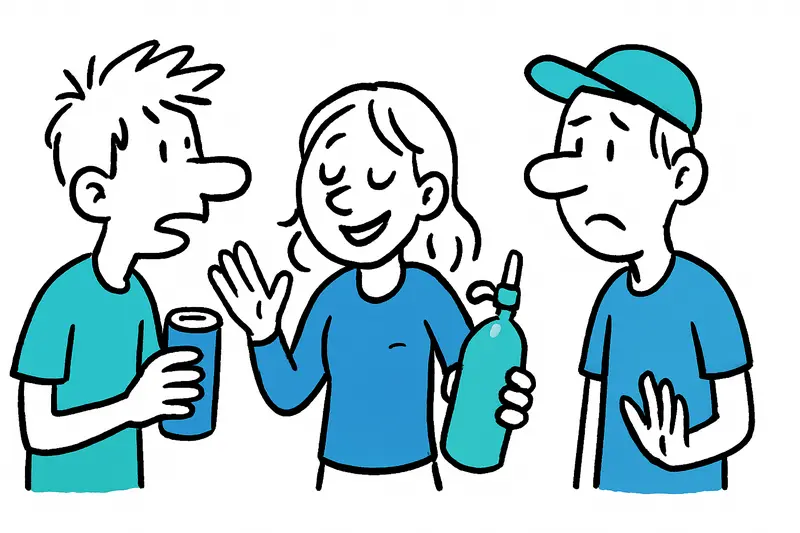
Good reasons, no question. On the promenades of Palma and at the kiosks in the seaside resorts you can see groups of young people with cans in their hands in summer — on Playa de Palma just as on the bay of Cala Major. In the evening hours these cans often circulate among groups of friends, sometimes together with beer or spirits. This is exactly where the new rule aims: the product itself is not banned, but access for minors and the recreational use of nitrous oxide are restricted.
But a ban alone is not enough. A sober look at implementation shows this: where will controls take place? How will age verification work for sales from vending machines, online orders, or at festivals? Someone working behind the counter in a tourist area on the Paseo Marítimo faces ten orders per minute in August — the practical side must remain workable, otherwise the law will remain paper.
What is missing from the public debate is the why behind consumption. Young people do not reach for stimulants or party drugs only because of advertising. Long evenings, pressure to perform at school and in sports, the desire for quick effects — these are drivers. The environment also matters: adults who buy cans or pass on nitrous capsules are part of the problem. Privacy-friendly prevention and honest conversations in schools are often lacking. And: who controls rental apartments and holiday accommodations where parties take place?
Concrete proposals that go beyond bans: 1) Make age checks at points of sale mandatory and carry out random inspections; set clear rules for vending machines and online sales. 2) Train retailers: short training sessions and easy-to-access information sheets for kiosk and supermarket staff. 3) Education in schools and sports clubs with local health services — not moralizing, but clear facts about risks and interactions (e.g. with alcohol). 4) Stricter controls at festivals and in beach bars, coordinated deployments of health and public-order services during the high season. 5) Mandatory labeling: drinks with particularly high caffeine or sugar content should be clearly identifiable. 6) Data collection: regional authorities should measure consumption before and after the decree's introduction so that successes can be demonstrated.
On the subject of nitrous oxide the reality on the islands is already visible: on Ibiza, but also in certain parts of Mallorca — capsules and small bottles appear in parks and by the roadside, as reported in Sleepless Nights in Nou Llevant: When the Street Keeps You Awake. Medical, dental and industrial uses remain permitted; the decree targets recreational use. That is sensible, yet: without accompanying inspections and prevention (e.g. information centers at popular meeting points) the supply will move underground — with incalculable risks such as loss of consciousness or neurological damage from repeated use.
Another open field is coordination with national rules: on e-cigarettes the Balearic government wants to wait for a nationwide solution (see Smoking Ban in Mallorca: What the New Law Means for Terraces, Playgrounds and E‑Cigarettes). That is understandable, but must not serve as a postponement. In an island society where tourism, locals and newcomers live close together, clear, quickly implementable rules are needed — coordinated with Madrid, but also with local municipalities, reflecting the regional debate documented in Balearic Islands Reject Central Smoking Ban on Beaches and Terraces.
Conclusion: The decree is not a mistake — it strikes a sensitive chord and sets legal limits. Still, it remains half a job if it stops at bans and does not lead to accompanying measures: controls, education, retailer training and data monitoring belong to the package. Otherwise what we often see in Palma will happen: rules that look good on paper but are swept aside by routines in the heat of August. If policymakers now think practically, the measures can bring real protection — if not, it will remain a prevention promise without sustainable effect.
Frequently asked questions
What is banned for energy drinks and nitrous oxide in Mallorca?
How will age verification work for energy drink sales in Mallorca?
Why is recreational nitrous oxide being restricted in Mallorca?
What impact could the new rules have on Palma's nightlife and beaches?
Is the new decree enough to protect young people?
What accompanying measures could make the decree work?
How does this fit Mallorca's island governance and national rules?
Are e-cigarettes covered by Mallorca's rules, and what about timing?
Similar News
Finally Home: Mike and Leyla Heiter Buy Villa with Sea View in Mallorca
The reality TV couple Mike and Leyla Heiter have bought a house in Mallorca with a roof terrace and sea view. An Instagr...
Arrest after series in Palma: Who protects apartments from repeat offenders?
The National Police arrested a man in Palma who investigators say may have broken into several apartments. In one incide...
How a Teenager Without a Driver's License Stole a Rental Car — and What It Means for El Arenal
In El Arenal a minor took advantage of an unattended rental car with its engine running. Flight, climbing over walls and...
Three-ton llaut salvaged in Puerto Portals – volunteers clear microplastics from the harbor
During the weekend operation in Puerto Portals, divers pulled an approximately three-ton llaut from the harbor. Associat...
Naked Pillar in Bunyola: Why a Climbing Prank Is More Than an Accident
During the Sant‑Mateu verbena a 20‑year‑old fell at a protected wayside cross in Bunyola and pulled the stone cross off ...
More to explore
Discover more interesting content

Can Cap de Bou

Townhouse Lleo 72
