
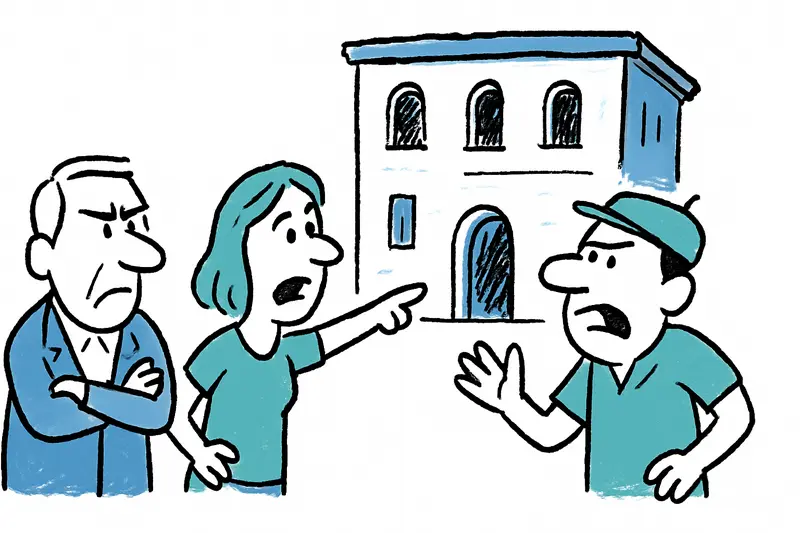
Facade stays, building doesn't: Dispute over the Bennàssar building in Palma
The city approves preserving the exterior shell of a Bennàssar building on Carrer del 31 de Desembre, but criticism runs deep: Is a 'watered-down' façade sufficient for heritage protection?
Facade stays, building doesn't: Dispute over the Bennàssar building in Palma
Key question: Does preserving a façade actually protect the city's architectural heritage?
In the early morning, when the garbage truck rattles down the Carrer del 31 de Desembre and the corner bakery sends the fresh scent of Ensaimadas across the street, the construction site with its scaffolding sits like a foreign body between old-town palms and small shops. The city administration has now approved a solution that resembles a compromise between demolition and heritage protection: the existing façade of the Gaspar Bennàssar building is to be retained, while a new residential complex with around 15 apartments may be built behind it, as reported in New residential building instead of Bar Sagrera? Dispute over the corner plot in Palma.
At first glance this sounds like a rescue – but what exactly is being preserved? The decision follows an assessment that the currently visible façade does not match Bennàssar's original design, but rather represents a simplified, "watered-down" variant. Previously a demolition permit had been issued, which was later suspended by a heritage protection application; Demolition halted in Palma: What Gaspar Bennazar’s house teaches us about heritage protection. The island council rejected full protection, arguing that the building supposedly lacks distinctive architectural features.
Critical analysis: Conserving only the façade primarily preserves an image. The substance, the interior, possible original spatial proportions and craftsmanship details are lost if the core is completely replaced. Many heritage-protection arguments point to more than appearance: materiality, construction, historical use and artisanal techniques also matter. A façade without substance can institutionalize a narrative of the city's history without preserving tangible evidence, a concern echoed in Demolition in Palma: When Reconstruction Replaces the Original.
What is missing from the public debate: transparency and criteria. So far it has remained unclear according to which standards it was determined whether a façade is "authentic enough." Public discussions have often revolved around emotions — beautiful versus old — rather than comprehensible checklists. It has also been little discussed how owners and the city can jointly ensure long-term preservation, instead of treating a reconstruction as a one-off solution.
Everyday scene: An elderly couple who cross the Carrer del 31 de Desembre daily stop, look at the scaffolding and exchange memories: there used to be a barbershop here, and over there the small workshop with its sour metallic smell. Such places connect neighbors to a building far beyond its façade. If only a rebuilt front remains, these conversations lose their physical anchor.
Concrete proposals: First, the city should publish binding assessment criteria that consider material findings, construction methods and historical use. Second, a mandatory "heritage report" should be required before any demolition decision, prepared by independent conservators and made publicly available. Third, owners could be incentivized through tax breaks or grants to preserve more than just the façade; a municipal preservation fund would be a practical approach. Fourth: peer review by local architects and craftspeople who know traditional techniques before approval is given for how far reconstruction may go.
Conclusion: The decision to preserve the visible shell of the Bennàssar building and build anew behind it is a partial victory for the streetscape, but not full-fledged heritage conservation. If Palma truly wants to protect its heritage, criteria and procedures must be designed so that not only an image but also the building's substance, its stories and craft techniques have a chance to endure. Until then the Carrer del 31 de Desembre will remain a stage of lived urban life: coffee aromas, construction noise and neighborhood debates included.
Frequently asked questions
What is happening with the Bennàssar building in Palma?
Does keeping only a façade count as heritage protection in Mallorca?
Why is the Bennàssar case in Palma controversial?
What does the Bennàssar building in Palma tell us about demolition and reconstruction?
What should residents expect if a historic building in Palma keeps only its façade?
Why do people in Palma care so much about old buildings like the Bennàssar house?
What kind of rules could help protect heritage buildings in Palma better?
Is the Bennàssar building on Carrer del 31 de Desembre fully protected?
Similar News

Eurowings lets four aircraft carry names – a friendly idea that also reaches Mallorca
Eurowings is launching a campaign: four Airbus A320s are to carry the first names of people who help others in everyday ...
From the Reality Studio to the Pitch: Aleks Petrovic Makes Mallorca His Base
The former participant in numerous TV shows moves from Dubai to the island and launches a project with FC Germania Mallo...

When the Phone Falls Silent: Concern for Sarah Joelle in Mallorca — and What It Reveals
After days without a response, the TV personality's unreachability in Mallorca sparked concern. Shortly afterwards an al...

Ultraluxury on the Ground: Four Seasons Jet in Palma — a Reality Check for Formentor and the Island
A high-priced flight crosses Mallorca and its guests stay for days at the Formentor resort. What does the island get bes...
Death of a Witness and the Justice Backlog: Why the Kegel Brothers Trial Matters in Mallorca
A witness in the Playa de Palma fire case has died, and the trial against eight German holidaymakers has been delayed un...
More to explore
Discover more interesting content

Can Cap de Bou

Townhouse Lleo 72
