
Unpleasant Fall by the Sea: When Will Palma Inspect Its Manhole Covers?
Unpleasant Fall by the Sea: When Will Palma Inspect Its Manhole Covers?
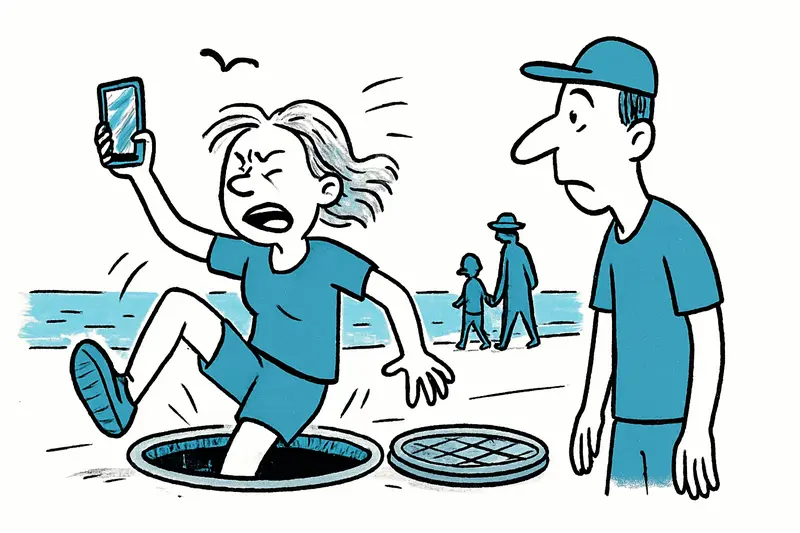
During a livestream at Playa de Palma a German internet personality sinks into a collapsed manhole cover. The incident raises questions about municipal inspections, liability and behaviour on social media.
Unpleasant Fall by the Sea: When Will Palma Inspect Its Manhole Covers?
A livestream, a broken manhole and the question of responsibility
On a hot July afternoon, as the asphalt shimmers and the scent of sunscreen and fried tapas drifts along the promenade, it happens: a well-known German internet personality loses her footing, sinks in and lies on the Playa de Palma promenade with a face contorted in pain. Hundreds of thousands of viewers followed the events live online.
The facts are brief: the 30-year-old woman, who comes from Cologne, was out during a livestream, apparently stepped on a manhole cover, it gave way, she fell and suffered a severe bruise and an abrasion. X-rays at the hospital showed no fracture. The injured person reports treatment costs of around €1,900 and summed it up soberly and slightly self-deprecatingly: "That was unlucky!"
Key question: who bears responsibility when municipal infrastructure fails and an accident occurs? The answer is not only legal; it also concerns the practice of municipal administration and the everyday safety of locals and visitors. Similar debates followed other high-profile infrastructure incidents, including Medusa Beach: Who Bears Responsibility After the Collapse? and its ensuing Court Hearing After Terrace Collapse: Who Is Responsible?.
Critical consideration: at first glance the incident looks like an unfortunate mishap. On closer inspection, however, it becomes clear that several issues converge here. First: municipal inspection. Manhole covers, curbs and sidewalks are not just urban furniture; they are traffic infrastructure. Rules for inspection, documentation and replacement exist, but in practice they run into budgetary and organizational limits, especially in tourist high seasons when the road network is under increased strain. Recent incidents such as Burst Pipe in Palma's Old Town: Carrer Oms Underwater — A Wake-up Call for Deteriorating Pipes illustrate the consequences of ageing infrastructure.
Second: media and user dynamics. Livestreams create pressure — content must keep running, spontaneous actions become clickbait. This increases the likelihood that people will take risks: climbing on walls, stepping onto unusual surfaces or performing unusual manoeuvres among passersby. Not every camera angle in the stream captures potential dangers.
What is often missing in public discourse: the perspective of those who maintain the paths and that of random passersby. There is little easily accessible information about how and when municipal inspections take place, how citizens can report defects and what deadlines apply for repairs. Nor is there much discussion about whether organisers of large outdoor events or platform operators have a responsibility for safety when their users act live.
Everyday scene: anyone walking along the Playa de Palma in the late afternoon knows the picture — families with parasols, English and Spanish murmurs, vendors with chilled drinks, older residents sitting on benches watching the goings-on. Among it all, a streamer holding a smartphone entertaining the audience. Local reporting on Tumults at Playa de Palma: When Controls Threaten the Beach Scene highlights how quickly order can fray.
Concrete solutions: first, municipal inspections should be made more visible. A digitally maintained log listing routine checks and repairs builds trust. Second: simplify reporting channels — QR codes at frequently used sections of the promenade through which passersby can immediately send damage reports to the responsible authority. Third: temporary markings and barriers until repairs are carried out; in summer, when the promenade is crowded, faster response times are needed. Fourth: awareness-raising for people who stream live — short notices from platforms or local information leaflets about safety can help avoid risky situations. Fifth: visitor information — travellers should be clearly advised to have travel and accident insurance; in case of damage, quick clarity about costs and reimbursement options is important.
Pointed conclusion: the fall at Playa de Palma was more than an embarrassing clip on the internet. It showed how tightly urban safety, digital publicity and tourism are interwoven. A city like Palma, shaped by crowds in summer, cannot afford such gaps. It is not enough to discuss individual cases — concrete improvements must be made, visibly and quickly. And for those who stream live: a short look down can save more trouble than any viral video brings in popularity.
Frequently asked questions
How does Palma inspect and maintain manhole covers and sidewalks to keep the streets safe?
What should I do if I see a damaged manhole cover or broken sidewalk in Mallorca?
Who bears responsibility when municipal infrastructure fails in Palma, for example a faulty manhole during a crowd event?
What safety improvements could Palma implement along tourist promenades like Playa de Palma to reduce accidents?
How can visitors stay safe on Mallorca’s seaside promenades when livestreams are popular?
What role do reporting channels play in improving Mallorca's street safety?
What costs or insurance considerations should travellers know about in Mallorca if an accident happens?
Are there practical steps Palma could take to make manhole repairs faster during peak tourist season?
Similar News
Mistaken identity with fatal consequences: Brutal assault in S'Aranjassa — what's missing in the follow-up?
At S'Aranjassa a visitor to a finca was tied up, beaten and thrown out of a van. Three men have been arrested, including...
High heel slips, car accelerates: accident on Camí de Son Hugo
A woman lost a high-heeled shoe on the forecourt of the sports facility at Camí de Son Hugo. The car accelerated, mounte...
Phone Scam: How Two Hotel Employees at Playa de Palma Lost Thousands of Euros
One morning in September, two reception employees at Playa de Palma were pressured by alleged alarm-company staff — in t...

When the Wallet Becomes a Danger: Attack in Peguera and Lessons for Mallorca
In Peguera, two women are said to have stolen the wallet from a 75-year-old German couple. When the victim intervened, t...
Plata stays Plata: Young people take over, Llonguets remain
A small bar on Carrer de l'Argenteria will continue: Tolo Serra hands the place over to young Mallorcans at the end of t...
More to explore
Discover more interesting content

Can Cap de Bou

Townhouse Lleo 72
