
Fatal Fall at Sa Calobra: Who Protects Cyclists on the Descents?
Fatal Fall at Sa Calobra: Who Protects Cyclists on the Descents?
A cyclist crashed during the descent to Sa Calobra at kilometer 10.3 and died at the scene. Key question: How safe are the popular, demanding routes and what is missing in the public debate?
Fatal Fall at Sa Calobra: Who Protects Cyclists on the Descents?
Key question: How safe are the demanding sections for cyclists — and who must act?
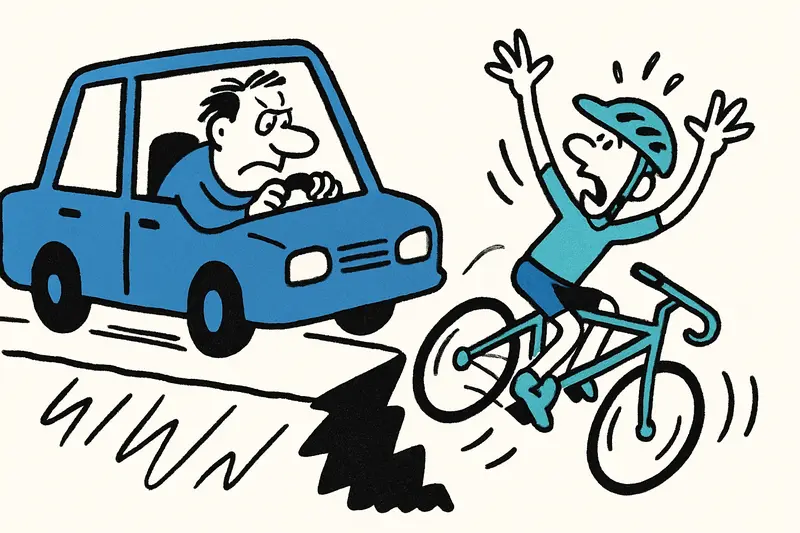
On an afternoon during a weekday, a serious accident occurred on the notorious road to Sa Calobra: at about kilometer 10.3 a cyclist lost control during a descent, fell approximately 15 meters down and died at the scene. She was riding in a group; emergency services and the mountain rescue team from Sóller were deployed to the difficult-to-access location, and the Guardia Civil has taken over the investigation. Details on identity and nationality were initially not confirmed; the woman was not carrying identification documents, a problem also noted after the Tragic Fall in Cala Sant Vicenç: A Wake-Up Call for Greater Coastal Safety.
Those are the bare facts. Anyone who has ridden Mallorca knows the route: long, steep descents, tight turns, then again rough asphalt – a parcours where speed and risk easily come together. I think of the whir of road bike tires in the Sa Calobra car park, the sound of the sea drifting up from the depths, the groups that push each other through the hairpins. It is exactly there that seconds decide between safety and disaster.
Critical analysis
Several aspects converge here: attractive cycling tourism, challenging topography and infrastructure that in many places is not designed for high speeds. Group rides increase the pressure to keep pace; with tourist traffic flows there are also motor vehicles and pedestrians, and local reporting has underlined multiple morning incidents, including a cyclist fatality near Selva in Serious Traffic Saturday: Cyclist Dies in Selva, Motorcycle Crash in Sóller Tunnel. At hard-to-reach spots, rescue operations are delayed, helicopters must be called in, and sometimes evacuations fail because of the location; see the Fatal Fall in the Picos de Europa: A Reminder for All Hikers for another example. The fact that the deceased had no papers complicates timely care and communication with relatives – a factor often overlooked.
What is missing from the public discourse
We talk a lot about tourist numbers and cycle paths, but rarely concretely about: a clear classification of route difficulties for visitors; mandatory information for foreign cycling groups; maintenance standards for routes, especially on popular descents; specialized emergency plans for hard-to-reach sections. Rarely discussed is also the responsibility of organizers and guides: What safety briefings are given, how are inexperienced riders integrated, and who enforces rules when risk increases? Infrastructure issues have already forced closures in Sa Calobra, as the Ma-2141 was shut after a rockfall, described in Rockfall at Sa Calobra: What are the lessons from the Ma-2141 closure?, underscoring the maintenance and hazard-mapping gaps.
Everyday scene from the site
Anyone who has stood at the entrance to Sa Calobra knows the mix of departure excitement and underlying caution: cyclists push their bikes, a few tourists take photos, a delivery van maneuvers – and always the spray and the scent of pine. On such days everyone bears a small responsibility: the leader, the follower, the municipality that maintains the road.
Concrete solutions
1) Classify and communicate routes: A clear, multilingual system (difficulty, recommended speed, danger spots) at access points and in digital maps. 2) Infrastructure maintenance: Regular inspections and patching of asphalt on critical sections; better marking of curves. 3) Visibility and warning systems: Prominent signs, low-level road markings, and where appropriate speed limits for cycling groups on especially dangerous stretches. 4) Training and rules for groups: Mandatory safety briefings by organizers, identification of inexperienced participants, recommendation of support vehicles for large groups. 5) Strengthen emergency logistics: Local rescue plans for hard-to-reach spots, streamlined procedures with helicopter teams, a requirement to carry an emergency ID or digital health data. 6) Awareness campaigns: Targeted at tourists and locals so encounters between cyclists, pedestrians and cars become safer.
Pointed conclusion
The death of a cyclist at Sa Calobra is a bitter wake-up call. This is not about banning cycling – it is part of our daily life and our economy – but about shaping conditions so that the attraction does not become a death trap. If we seriously improve routes, information and rescue logistics, such reports will lose their grim routine tone. Until then the question remains: Will we just keep paying and watching — or finally act systematically?
Frequently asked questions
Is the road to Sa Calobra in Mallorca dangerous for cyclists?
What should cyclists know before riding steep descents in Mallorca?
Why are group cycling rides more risky on Mallorca’s mountain roads?
Who is responsible for cyclist safety on roads like Sa Calobra in Mallorca?
How are accidents handled on hard-to-reach roads in Mallorca?
What makes Sa Calobra such a difficult cycling descent in Mallorca?
Do cyclists in Mallorca need to carry identification on long rides?
What can be done to make cycling safer on Mallorca’s popular routes?
Similar News
Magaluf: Watchtower Alarm – Lifeguards Pull Unconscious Beachgoer from the Water
After a drama in the late afternoon, two lifeguards at Magaluf beach rescued an unconscious 44-year-old man. He was stab...
Turquoise in the City: How dangerous is the color play of the Sa Riera?
The Sa Riera in Palma suddenly turned turquoise — a pretty motif, but behind the effect lies a discharge of saline waste...

Jeckliner at Sunnesching: Cologne spirit sets sail from Palma
In September 2027 the Mein Schiff 2 briefly becomes a floating carnival stage: four days with Cologne bands, comedy and ...
Finally Home: Mike and Leyla Heiter Buy Villa with Sea View in Mallorca
The reality TV couple Mike and Leyla Heiter have bought a house in Mallorca with a roof terrace and sea view. An Instagr...
Arrest after series in Palma: Who protects apartments from repeat offenders?
The National Police arrested a man in Palma who investigators say may have broken into several apartments. In one incide...
More to explore
Discover more interesting content

Can Cap de Bou

Townhouse Lleo 72
