
Fatal motorcycle accident on the Ma-2220: Which questions remain open?
Fatal motorcycle accident on the Ma-2220: Which questions remain open?
A 53-year-old motorcyclist died at the entrance to Port de Pollença in the night to Monday. The accident raises questions about the road, safety and emergency response.
Fatal motorcycle accident on the Ma-2220: Which questions remain open?
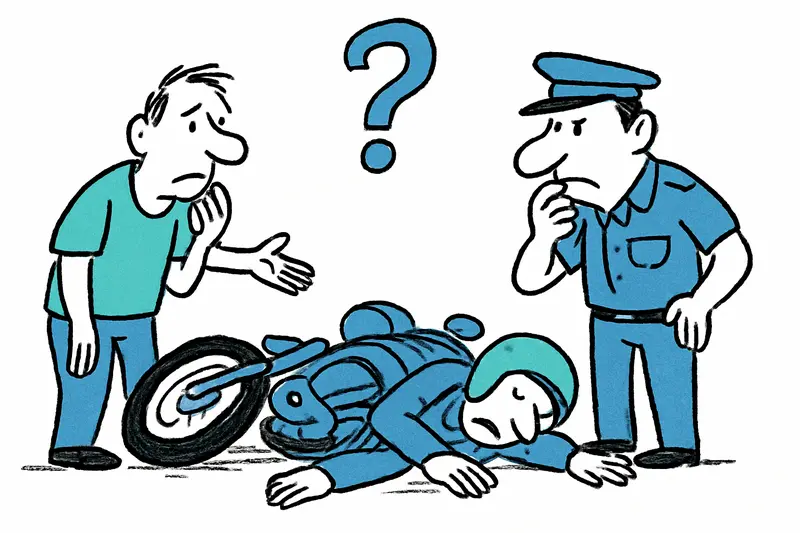
In the night to Monday a 53-year-old motorcyclist lost his life on the Ma-2220. The accident occurred around 1:00 a.m. at the entrance to Port de Pollença; ambulances from SAMU 061, the local police of Pollença and the traffic unit of the Guardia Civil from Inca responded. Rescuers found the man in cardiac arrest. Despite about 30 minutes of resuscitation attempts they could not save him. Passersby who had stopped recognized the victim and informed his relatives, who arrived shortly after.
These are the confirmed facts. They are enough to grieve — but not to explain why something like this could still happen here, at this spot. My guiding question therefore is: What must change in Mallorca so that an accident like this does not become the next local tragedy, as discussed in Why Are So Many Motorcyclists Dying on Mallorca? A Reality Check after the Llucmajor Accident?
Looking for answers, a look at typical risk factors helps: road surface, curve layout, lighting, traffic management, police enforcement and the role of human decisions. The Ma-2220 is an important connecting road between Alcúdia and Port de Pollença; at the entrances to towns traffic, pedestrians and tourist activities often concentrate. Those who drive at night encounter different dangers: poorer visibility, tired eyes, different traffic patterns.
Critical is how little public information often follows an accident. There are operation reports about the units involved and the resuscitation attempts — that's important — but only rarely numbers that show context: How many serious motorcycle accidents have occurred in recent years on this stretch? At what times of day? Under what road conditions? Recent incidents such as Fatal accident on the Ma-19 near Llucmajor: Why motorcyclists are repeatedly affected underline this lack of context. Without this data the discussion remains on individual fates, on emotions instead of cause analysis.
On site, on a hot summer evening, one sees typical scenes: street lamps that are dim in places, the distant rustle of the sea, the engines of passing cars, people strolling on the promenade. In such situations the temptation is great to increase speed — whether out of bravado or to quickly reach the bay. Such everyday scenes are not a judgment, they are context.
What is missing in the public discourse? First: a transparent accident statistic at municipal and route level. Second: regular checks and visible prevention — not only at weekends but during the summer months and at night, when tourism and nighttime routines collide. Third: a discussion about rental motorcycles and brief instructions for tourists who take on vehicles here.
Concrete suggestions that could be implemented relatively quickly: more visible markings on blind curves, additional reflectors and maintenance of road lighting, warning signs before danger spots, targeted speed controls and more traffic presence in the evening hours. For infrastructure, rumble strips or lane narrowings are conceivable that automatically reduce speed without major intervention.
On the topic of assistance there is also need for action. That SAMU 061, local police and the Guardia Civil were quickly on site is a good sign. But what about the availability of automated external defibrillators (AED) at access roads and tourist hotspots? Could municipalities and hotel associations jointly create AED locations or expand existing ones? And how many people in Mallorca are trained in basic first aid? More public courses, offered accessibly in town centers, would massively increase the chances that initial measures take effect before professional teams arrive.
Authorities and rescue services should also clearly communicate after such an incident which investigations are underway: Was the motorcycle's technical condition involved? Did road condition or third-party involvement play a role? Such information must be handled sensitively — the relatives deserve discretion — but must not disappear into a fog. Only in this way can trust and prevention arise instead of speculation.
For everyday practice I propose local initiatives: refresher courses for motorcyclists in municipalities, a visible quality seal for rental companies with mandatory briefings, voluntary night patrols by associations for quick support and a simple digital reporting form for dangerous road sections that municipalities regularly analyze. Cases such as Fatal accident near Capdepera: motorcycle collides with microcar on MA-4040 show the consequences when measures are lacking.
Pointed conclusion: A life lost on the Ma-2220 is more than a sad headline. It is a signal that infrastructure, prevention and emergency culture in Mallorca must work together better. If we do not ask the right questions — about data, about infrastructure and about shared responsibility of authorities, renters and riders — the drama will be repeated elsewhere. The island can and must work on it; it can start today with measurable steps and visible communication, as recent coverage such as Third traffic death in a few days: Do Palma's night streets need to be safer? has highlighted.
Frequently asked questions
What steps can Mallorca take to reduce motorcycle accidents on coastal roads like the Ma-2220?
What should travelers know about driving or renting motorcycles in Mallorca during summer?
What happened on the Ma-2220 near Port de Pollença and what does it reveal about local road safety?
Should there be more frequent speed checks and improved lighting on approaches to Alcúdia and Port de Pollença?
What kind of data would help people understand motorcycle accidents on Mallorca roads?
What practical steps can Mallorca implement quickly to prevent crashes on routes like Ma-2220?
How can emergency response and public awareness be improved in Mallorca after crashes?
How should authorities handle investigations after a crash to build trust without compromising families?
Similar News
Released with Conditions: The Plus Ultra Suspicion and a Mallorcan Finca as Residence
A Dutch entrepreneur, sought in connection with the Plus Ultra case, was extradited to Spain after his arrest in Germany...

Haute Nuit in Puerto Portals: Fashion, Art and Indulgence by the Water
On October 2 the Lobster Club in Puerto Portals will be transformed into a stage for curated fashion, art and culinary e...
Magaluf: Watchtower Alarm – Lifeguards Pull Unconscious Beachgoer from the Water
After a drama in the late afternoon, two lifeguards at Magaluf beach rescued an unconscious 44-year-old man. He was stab...
Turquoise in the City: How dangerous is the color play of the Sa Riera?
The Sa Riera in Palma suddenly turned turquoise — a pretty motif, but behind the effect lies a discharge of saline waste...

Jeckliner at Sunnesching: Cologne spirit sets sail from Palma
In September 2027 the Mein Schiff 2 briefly becomes a floating carnival stage: four days with Cologne bands, comedy and ...
More to explore
Discover more interesting content

Can Cap de Bou

Townhouse Lleo 72
