
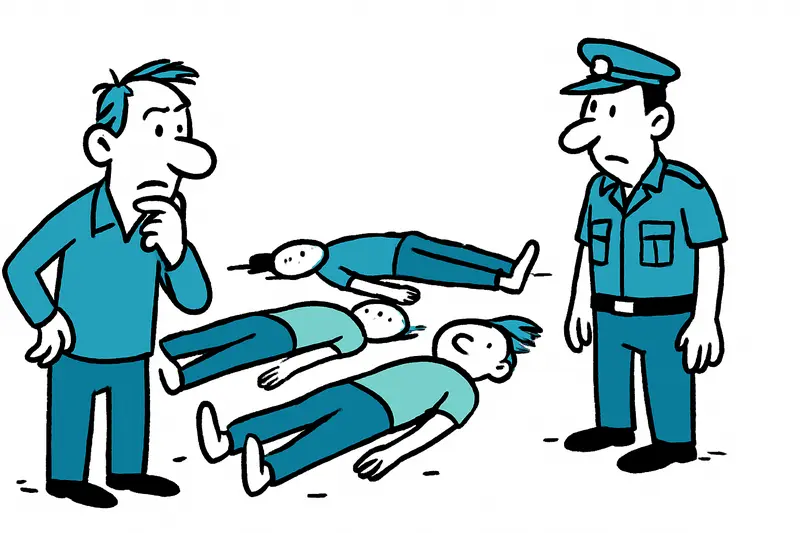
Four Dead off Portocolom: How Much Do We Know — and What Is Being Concealed?
Four Dead off Portocolom: How Much Do We Know — and What Is Being Concealed?
Four bodies were recovered from the sea off Portocolom. The circumstances are unclear, and a possible connection to a previously rescued migrant boat is being investigated. A reality check: what is known, what is missing, and which steps are necessary.
Four Dead off Portocolom: How Much Do We Know — and What Is Being Concealed?
Key question: How could it happen that four people were found dead drifting in the sea off Portocolom — and why do so many questions remain unanswered?
On late Tuesday afternoon the boats in Portocolom's small harbor lay still, heat shimmered over the water, seagulls cried, an old motor yacht emitted a quiet, regular ticking. Then the unusual movement: a search-and-rescue vessel, later an inflatable from the Guardia Civil. Authorities recovered four bodies from the sea; the deceased were later taken to the western section of Palma's port, where a medical examiner carried out an initial examination. The Guardia Civil carried out the recovery; a specialist group (GEAS) was called in, and the bodies reached Palma around 8 p.m., a sequence not unlike a heavily decomposed corpse recovered about 25 nautical miles off Cala Rajada and brought to Portocolom.
What is certain: during an operation concerning a disabled migrant boat the rescue crew discovered several bodies in the water. The Guardia Civil carried out the recovery; a specialist group (GEAS) was called in, and the bodies reached Palma around 8 p.m. These details are clear because locations and procedures can be documented — but little else.
According to statements by those rescued there may be a connection to an incident in mid-July: on July 15 a small fishing boat capsized off Portopetro with about 23 people aboard; 23 people were rescued then. Some survivors reported that three fellow passengers had died during the crossing and were thrown into the sea. Investigators are checking whether the bodies recovered now belong to those missing. Also: so far this year 172 migrant boats carrying a total of 3,231 people have been recorded in the Balearics — a number that underlines the frequency of such operations.
But where the facts end, darkness begins. Critically viewed, several points are missing from public discourse. First: concrete information on the identities of the deceased and the time of death. Second: clear information on evidence collection aboard the rescue vessel and whether possible indications of human trafficking or criminal activity were secured. Third: transparency about how survivors are dealt with — medical care, witness protection, interpreters and access to legal assistance.
In conversations on the quay local fishermen say that rescue boats have become almost a summer normality here, a pattern also seen in other recent incidents such as Two bodies on the coast: Investigations in Ciutadella and off Alcúdia – Many questions remain. On the square in front of the harbor pensioners sit with newspapers and coffee; they see the engines, hear radio traffic, but not the case files. A woman who brings fresh fish every morning says dryly: "We see a lot, we know little." This small everyday scene says more about information gaps than many official statements.
What is missing from the public debate? The analysis of causes remains vague: who organizes the crossings? How are bodies treated until courts and laboratories provide clarity? And: why is there not a faster, transparent linkage of eyewitness reports, survivor statements and forensic results? Nor is there discussion about how port towns like Portocolom could be better prepared when rescue vessels dock there or bodies land.
Concrete, quickly implementable and locally effective proposals:
1) Mobile forensic teams at central Balearic ports: they could speed up identification, sampling and initial autopsies instead of waiting for long transports.
2) Standardised documentation in search-and-rescue operations: photographic, time-stamped and witness protocols that are legally usable and make human traffickers traceable.
3) Better initial care and protection for survivors: permanent contact points with interpreters, psychosocial support and legal advice — in the ports and not only in Palma.
4) Regional cooperation on surveillance data: satellite, AIS and fishing reports can be combined to identify hazard patterns and proactively make more search-and-rescue capacity available.
5) Acceleration of investigations: prioritisation of DNA matches and data checks with international consulates so families receive clarity faster.
Another often overlooked area is the criminal prosecution of the networks behind the crossings. Without reliable evidence collection at the scenes of the incidents perpetrators often remain anonymous. Therefore linking rescue work and criminal police evidence collection is not a luxury but essential.
My conclusion, brief and without sugarcoating: four people are dead — this is a human tragedy and at the same time a systemic failure. We will hear justifications from local politicians and rescue services, from authorities legal reviews. What we need now is less diplomatic language and more concrete measures: faster identification, better care for survivors, and a serious strategy against smuggling networks. On the quays of Portocolom and other small harbors people sit every day looking out to sea. They deserve answers. And above all the dead deserve that something changes because of their deaths.
Frequently asked questions
What happened off Portocolom and why are the details still unclear?
Are the identities and time of death for the deceased known?
What evidence is being collected, and is there any sign of trafficking?
How are survivors supported at Mallorca ports like Portocolom?
What concrete steps could speed up identification and investigations?
How many migrant boats and people have been recorded in the Balearic Islands this year?
Why is it important to link eyewitness reports, survivor statements, and forensic results?
What role do Portocolom and other small harbors play in improving rescue responses?
Similar News
Cafetería San Siro: A Meeting Place on Schinken Street Since 1966
In the middle of Schinken Street, Cafetería San Siro has been offering Mallorcan hospitality for more than six decades —...
From Ballermann to Prison: What the Verdict Against the Femina Operator Means for Palma
The Munich Regional Court convicted a German operator for subsidy fraud. What does the verdict mean for the Femina Club,...
Underpass Verge de Lluc: 19-year-old fights her way out of flooded car – a warning sign for Palma
A 19-year-old recently escaped swimming from her car after the Verge de Lluc underpass held up to one and a half meters ...
When the Floodgates Open Again: Why Palma's Floods Aren't a Coincidence
A sudden heavy downpour around 5 p.m. brought Palma to a standstill: flooded streets, full basements, panicked commuters...
Playa de Palma: Life-saving at Balneario 11 – Lifeguards Act Quickly
A German holidaymaker suffered cardiac arrest at Playa de Palma. Lifeguards resuscitated her on the beach; emergency ser...
More to explore
Discover more interesting content

Can Cap de Bou

Townhouse Lleo 72
