
Four Tons of Trash Recovered from the Sea off Sant Elm — Hope for Sa Dragonera
Four Tons of Trash Recovered from the Sea off Sant Elm — Hope for Sa Dragonera
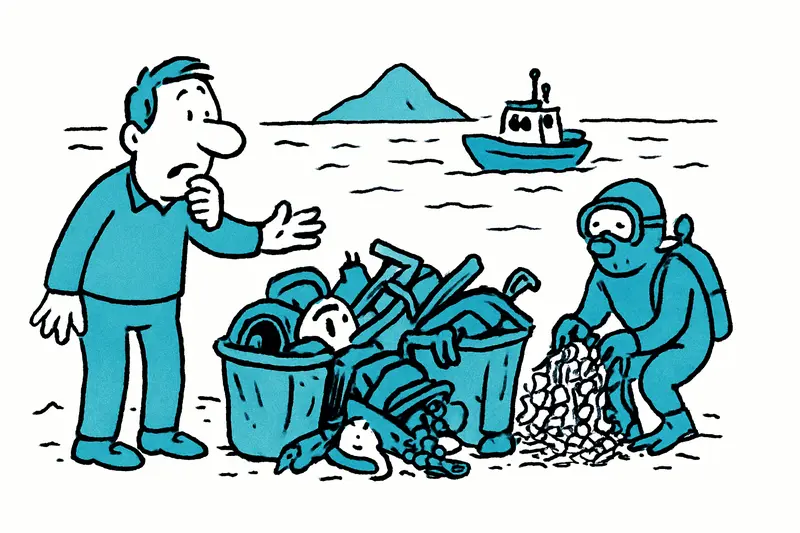
Diver teams, the municipality of Andratx and Save the Med recovered around four tons of bulky waste from the Cala Conills area. A small victory for the coasts around Sa Dragonera — and a reminder of how much remains to be done.
Four Tons of Trash Recovered from the Sea off Sant Elm — Hope for Sa Dragonera
In the early morning, when fishing boats still glide quietly across the bay of Sant Elm and cafés on the shore serve the first coffee, an unusually busy scene unfolded at a stretch near Cala Conills: dive boats, rubber dinghies and a few silent helpers on land. Teams from the municipality of Andratx, the Save the Med foundation and professional divers jointly pulled around four tons of bulky waste from the sea — heavy items that had accumulated on the seabed.
What was found
According to the helpers, they encountered significantly more waste than they had expected. Mattresses, car parts, metal frames and other bulky objects lay where Posidonia meadows and fish normally live. Such loads are not only an eyesore: they can mechanically destroy marine habitats and pose dangers to swimmers and boats.
Why this matters for Mallorca
The site is located in the protected area around the island of Sa Dragonera — a place many Mallorcans associate with long weekends, boat trips and family outings. Clean water is not only a quality-of-life issue; it is important for the species that live there, for local fisheries and for sea-lovers who dive or snorkel here. Clearing the seabed also improves anchoring safety and reduces the risk of debris washing up on beaches.
A daily scene from Sant Elm
Standing at the harbor of Sant Elm, you can hear the occasional clatter of nets, the cry of the seagulls and the distant horn of boats heading toward Sa Dragonera. One afternoon after the operation, children were seen collecting shells on the shore and older residents were taking walks along the harbor wall — they visibly breathed a sigh of relief as skiffs with fully loaded containers came in. Such small, almost banal scenes show how closely the sea is tied to everyday life here.
What remains to be done
The recovery alone does not solve the problem (Almost 37 Tons of Waste: What Mallorca's Cleanup Fleet Really Tells Us). For the seas around Mallorca to contain less waste in the long term, several steps are needed: better waste management on land, regular monitoring and cleanup measures (6.5 Tons of Waste in July: Why Mallorca's Coasts Keep Struggling), education for tourists and boaters, and technical support for dive teams. The cooperation between the municipality, the NGO and professional divers is a good model — it just needs to happen more often and be better funded.
Concrete suggestions
Those who want to help locally can contact municipal offices or organizations like Save the Med about planned actions (see More than 6.7 tonnes of waste from the sea: Why the cleanup on Mallorca is only the beginning). Boat owners should secure items on board and dispose of waste properly on land. Coastal restaurants and hotels can actively inform guests about how to avoid and correctly dispose of waste.
Conclusion: Four tons are a visible success — and a reminder. Sant Elm and the waters around Sa Dragonera benefit directly from the recovery. What is now important is to sustain the efforts: regular inspections, stronger prevention on land and more support for the teams that care for our coast underwater.
Image: Balearic Government
Frequently asked questions
Is it safe to swim near Sant Elm after a seabed cleanup?
Why is waste under the sea a problem off Mallorca?
What kind of trash is usually found in underwater cleanups in Mallorca?
What is Sa Dragonera like for day trips from Sant Elm?
Who takes part in seabed cleanups in Mallorca?
When is the best time of year to visit Sant Elm in Mallorca?
What can boat owners do to help keep Mallorca’s waters clean?
How can people support marine cleanups in Mallorca?
Similar News
German tourist dies in Sa Calobra – a reality check for emergencies on Mallorca's beaches
A 40-year-old tourist died at the Torrent de Pareis. The emergency call, a doctor who happened to be present, a defibril...

Deadly Tractor Accident in Bunyola: What Needs to Be Done Now
In a work accident on an estate near Bunyola, a roughly 40-year-old man lost his life. His wife and a small child were o...
Head-first dive into the shallow part of Cala Fonoll: An accident and the unresolved question of responsibility
A young tourist dove into Cala Fonoll and was seriously injured. Key question: Why are clear warning signs missing at da...

Mistaken identity with fatal consequences: Brutal assault in S'Aranjassa — what's missing in the follow-up?
At S'Aranjassa a visitor to a finca was tied up, beaten and thrown out of a van. Three men have been arrested, including...

High heel slips, car accelerates: accident on Camí de Son Hugo
A woman lost a high-heeled shoe on the forecourt of the sports facility at Camí de Son Hugo. The car accelerated, mounte...
More to explore
Discover more interesting content

Can Cap de Bou

Townhouse Lleo 72
