
When a Glass at the Beach Changes the Mood: What We Must Learn About Beach Safety and Consideration
When a Glass at the Beach Changes the Mood: What We Must Learn About Beach Safety and Consideration
A cut through a child's foot on a Canary Islands beach draws attention to an everyday problem: careless disposal of glass on beaches. What is missing in public debate — and what we can do concretely in Mallorca.
When a Glass at the Beach Changes the Mood: What We Must Learn About Beach Safety and Consideration
A deep cut, a hospital visit and then a stingray – how quickly feeling and reality change on the coast
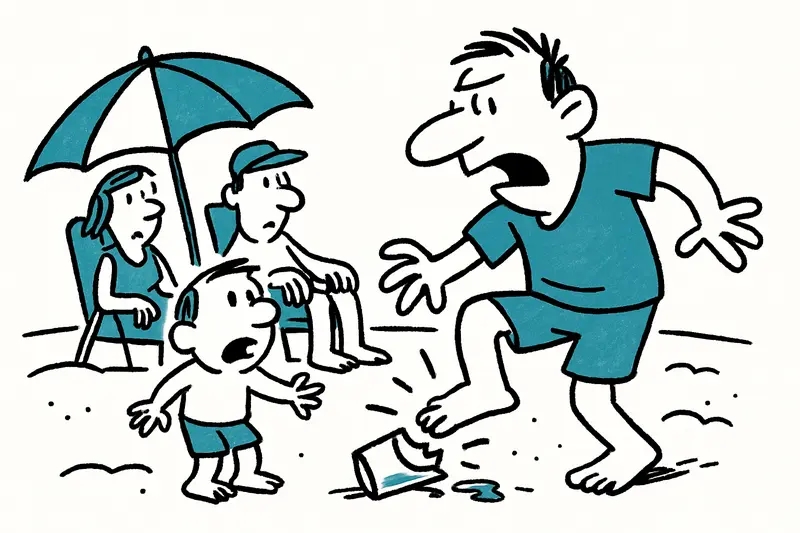
Recently a family on the Canary Islands experienced a frightening moment: a child was injured on the beach by a shard of glass and the wound had to be stitched in hospital. The mother – who once lived on Mallorca – described her fear because the child has a known blood clotting disorder. This is an incident that should not leave us indifferent here on the island. Similar coastal tragedies, like When the Surf Strikes: Deaths in Tenerife – What Mallorca Must Learn, remind us of the stakes.
Key question: How much responsibility do beachgoers, municipalities and authorities bear for safety on the beach – and why is mere outrage not enough?
The situation is simple and at the same time complex: shards of glass in the sand are not a new phenomenon. Early in the season you can still see the remnants of the previous season on our beaches – bottle caps, plastic, sometimes shards. What makes this case special is the danger of injury for children and people with health vulnerabilities. The mother described that the trip to the hospital was particularly stressful given her child's clotting disorder. Such personal risks are often neglected in general discussions.
Critical analysis: public outrage is not enough. Three levels must be considered: individual behavior, measures by beach services and the role of municipalities in prevention and cleaning. On the behavioral level, appeals alone do not help; many discard drinks on the beach out of convenience or because waste bins are lacking. Beach services often lack continuity: cleaning is seasonal or sporadic, not always carried out according to a clear plan. Municipalities must decide whether to invest more in regular clean-ups, clear rules and their enforcement, especially given incidents such as Fatal Rescue Attempt in Son Bauló: What Must Change on Our Beaches that show the consequences of insufficient preparedness.
What is often missing in public discourse: the perspective of the vulnerable. People with blood clotting disorders, small children, barefoot seniors – they are all at greater risk. Little is said either about the costs of follow-up measures: hospital visits, parents' time off work, psychological strain. These consequences usually remain invisible until an incident occurs; cases like Cala Blava: A Day at the Beach Ends in Death — Who Must Act? illustrate how serious the outcomes can be.
An everyday scene from Mallorca: on a late morning along the Passeig Marítim you hear the sound of the waves, children's laughter and the smell of freshly fried fish from a chiringuito (beach bar). Between sunbeds and parasols there are sometimes small piles of rubbish because the next bin seems too far away. This little convenience can have big consequences — the quiet crunch of glass splinters under bare feet is not an uncommon sound; yet there are also moments when quick help matters, as described in Playa de Muro: Seconds That Saved a Life — and What We Must Learn.
Concrete solutions – pragmatic and local:
1) More and smarter waste infrastructure: Thousands of small beach bins with clear separation are better than a few large containers. Visible signs at access points asking visitors to avoid glass can change habits.
2) Regular, documented beach inspections: Simple checklists for cleaning teams and mandatory inspection intervals – especially after weekends or holidays – reduce risks.
3) Clear public education: Posters and short announcements that describe concrete consequences (injuries, hospital visits) often have more impact than abstract appeals.
4) Active enforcement: Instead of just threatening fines, mobile teams that can intervene on the spot and collect rubbish are useful.
5) First-aid strategy for beaches: Small kits in beach huts, staff with basic training and quickly accessible transport plans to the hospital.
These proposals cost money, but they pay off in reduced risk, fewer emergencies and a better holiday experience. And: investing in a clean environment strengthens mutual responsibility.
Pithy conclusion: A cut in the sand is more than an accident; it is an indicator. It shows how small carelessness can have large consequences. On Mallorca we see daily people who love and want to protect their island. What is needed now is less outrage, more practicable measures and the willingness not to look for responsibility only in others. Otherwise the next frightening moment is only a matter of time.
Frequently asked questions
What is the weather like in Mallorca in autumn?
Can you still swim in Mallorca in late season?
What should I pack for Mallorca in autumn?
Is autumn a good time to visit Mallorca?
What is Peguera like in the off-season?
Is Santa Ponsa still lively outside the summer season?
What are the beaches like in Mallorca after the main summer months?
What kind of activities work well in Mallorca when the weather cools down?
Similar News

Mueller continues expanding in Mallorca: Artà in 2026, Can Picafort in early summer 2027
The drugstore chain Mueller is opening two new stores in Mallorca: a 1,400 m² shop in Artà on 5 November 2026 and a bran...
The Painter Who Lived Mallorca: Franz Taussig and His Century-Old Secret
A hundred years ago a young Viennese arrived in El Terreno, sketched the island and called himself Francis Caron. Today ...

Airport dispute: Bridge, forecasts and the question of responsibility
A video by the Spanish transport minister has ignited the dispute over DORA figures, capacities and local governance pow...

The Painter Who Invented Himself: How a Young Viennese Drew Mallorca
A hundred years ago a 19-year-old draftsman arrived in El Terreno. His diary and sheets, long known under the pseudonym ...
Released with Conditions: The Plus Ultra Suspicion and a Mallorcan Finca as Residence
A Dutch entrepreneur, sought in connection with the Plus Ultra case, was extradited to Spain after his arrest in Germany...
More to explore
Discover more interesting content

Can Cap de Bou

Townhouse Lleo 72
