
Half-Naked on the Vía de Cintura: A Safety Check in the Middle of Traffic
Half-Naked on the Vía de Cintura: A Safety Check in the Middle of Traffic
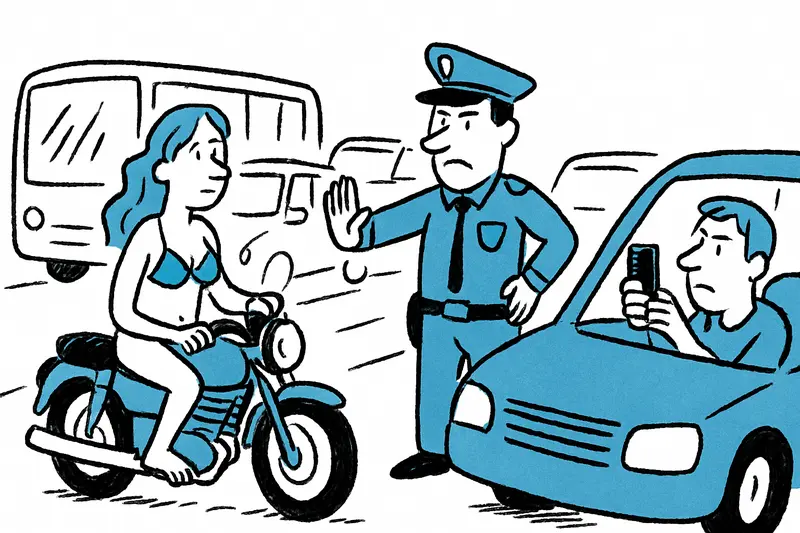
On the ring road around Palma, a motorcycle rode between cars with an almost naked, barefoot passenger. A video circulated. We ask: How dangerous is this — and what is missing from the discussion?
Half-Naked on the Vía de Cintura: A Safety Check in the Middle of Traffic
Leading question: Why do we allow situations that can easily turn into a catastrophe on the beltway?
Wednesday midday, Vía de Cintura between the Valldemossa and Son Espases exits: traffic jam, air conditioners rattling in parked buses, the asphalt shimmering in Palma's late-summer heat. A motorcycle weaved between the cars with a passenger sitting barefoot and wearing only a bikini. Another driver held his camera to the dashboard — the video later circulated on social networks. No scuffle, no fight, just a scene that makes many frown.
The question goes beyond mere sensationalism: Is this still harmless nonsense or already a risk to all road users? On the Vía de Cintura, one of the busiest bypasses, evasive maneuvers are limited, trucks and buses pass with only centimeters to spare, and a sudden reaction can trigger domino effects — more an alarm signal than a curiosity, as documented in Skid Hazard on the Vía de Cintura: Burst Pipe Triggers Serious Motorcycle Accident.
Critical analysis: The video shows a series of problems that come together. First: protective clothing and footwear are obviously absent — this greatly increases the risk of injury in any fall, a pattern examined in Why Mallorca Remains Dangerous for Bikers — and What Could Really Help. Second: Maneuvering between dense traffic increases the probability of an accident for the motorcycle and other vehicles. Third: The spread of such recordings normalizes risky behavior if they are perceived only as "quirky clips".
What is often missing in public debate: concrete responsibility and prevention. Discussions remain at "outraged comments" instead of asking how to prevent such scenes. Who bears responsibility? The riders, passengers, rental companies for two-wheelers, or simply a lack of awareness among tourists and locals?
Everyday scene from Mallorca: At the bus stop at Hospital Son Espases you often see students, delivery drivers, and hospital staff who hurry to the Vía de Cintura after their shift. Motorcycles roar past — a mix of commuters and holidaymakers. An old man with a shopping bag stops, hears the engine noise, shakes his head and mumbles, "It only takes a jolt, and then..." Such observations show that this behavior is not isolated — it happens where we travel daily.
Concrete solutions: 1) Increase visibility: strengthen police presence on critical sections such as the stretch between Valldemossa and Son Espases, especially at peak times. 2) Review rental obligations: scooter rental companies should provide documented safety briefings and highlight protective clothing. 3) Information campaigns at the airport and in hotels: short notices in several languages about risks and basic safety rules, as recommended in Cruising Safely on Mallorca: What Tourists and Authorities Should Finally Do Differently. 4) Infrastructure: more buffer zones at access points, clearer lane markings and temporary controls during holiday seasons. 5) Community work: involve local motorcycle clubs and instructors as multipliers so that safe riding is modeled — an approach in line with Mallorca's Curves without a Racing Heart: Staying Safe on the Tramuntana & Co..
These measures are pragmatic and affordable. They do not replace a police officer, but they change the norm: If rental companies inform before departure and hospital staff at Son Espases more often point out risky traffic spots, a different everyday reality emerges in which such images become rarer.
Pointed conclusion: A bikini on the pillion may attract looks, but the real message is soberer: We tolerate behaviors on our roads that can affect many people in an emergency. Not every odd scene merits a press release — but the question of how we make the narrow line between freedom and responsibility safer certainly does. Palma has enough loud curiosities; a little less risk on the Vía de Cintura would do us all good.
Frequently asked questions
Is riding a motorcycle on Mallorca’s Vía de Cintura without protective gear dangerous?
What practical steps can reduce risk for riders and rental companies on Mallorca?
How can locals and visitors help create safer driving culture around Palma?
Where on the Vía de Cintura are safety risks most evident near Palma?
What responsibilities do scooter rental companies have regarding rider safety in Mallorca?
How can information campaigns at airports and hotels help improve road safety for visitors to Mallorca?
If you witness a risky riding scene on Mallorca’s roads, what should you do?
What broader lessons about freedom and responsibility can Mallorca's road use learn from recent scenes?
Similar News
Why Mallorca Has Become So Terribly Expensive — A Reality Check
Rents are exploding, staple food prices are rising, wages are lagging behind. A look at the causes, what is missing from...
When Paradise Becomes Unaffordable
Hotel rooms, paella and the weekly grocery shop: Mallorca is becoming more expensive for many. Who pays the bill — guest...
End at Ballermann: What Is Lost with the Dino Mini Golf at Playa de Palma
On October 25 the dinosaur mini-golf course at Playa de Palma will close after more than 30 years. Why the city is recla...

Expensive Address Calvià: What Does First Place Mean for Mallorca?
The National Institute of Statistics (INE) ranks Calvià as Spain’s most expensive municipality for property purchases. W...
Emergency over Spain: Ryanair Dublin–Tenerife flight diverted to Santiago after medical emergency
A Ryanair flight from Dublin to Tenerife was diverted to Santiago de Compostela due to a passenger's acute health proble...
More to explore
Discover more interesting content

Can Cap de Bou

Townhouse Lleo 72
