
Heatstroke at El Toro: Why the island must be better prepared for such major events
Heatstroke at El Toro: Why the island must be better prepared for such major events
At the El Toro viewpoint in Calvià a 74-year-old man suffered a heatstroke while waiting for the solar eclipse and had to be airlifted by the fire department's helicopter. The incident raises questions about emergency preparedness for large crowds in hard-to-reach areas.
Heatstroke at El Toro: Why the island must be better prepared for such major events
Key question: Does our infrastructure protect the vulnerable when crowds flock to hard-to-reach viewpoints?
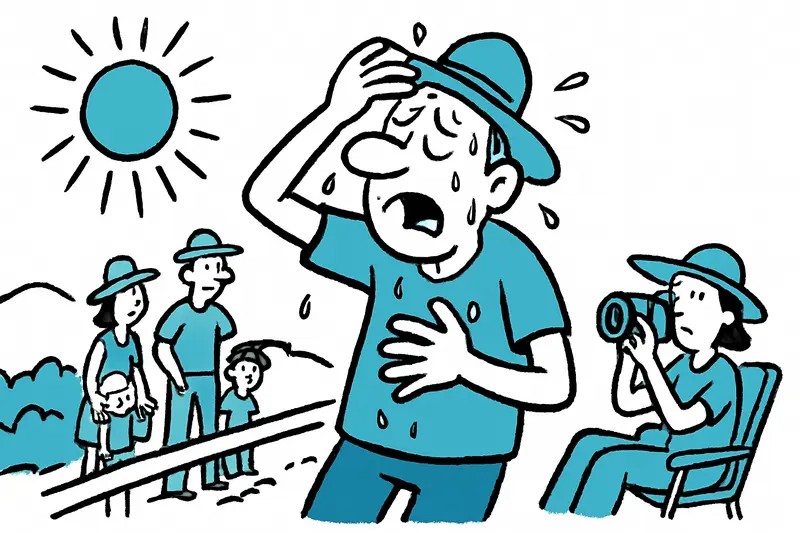
Late on Wednesday afternoon many people gathered at the El Toro viewpoint in Calvià to watch the partial solar eclipse. Around 5:50 p.m. a 74-year-old man suddenly collapsed. His companions called emergency services because the footpath and narrow trails made access impossible for emergency vehicles. The fire department deployed a helicopter and flew the man to a nearby roundabout where police and ambulance crews were waiting. Medical personnel treated him on site. Similar helicopter rescues have been reported elsewhere, such as Helicopter over Cala Deià: Rescue in the Tramuntana and the Uncomfortable Questions and Heatstroke in the Torrent de Pareis: Rescue Raises Questions About the Safety of Hiking Groups.
The scene: heat, dusty shoes, the chirping of cicadas, sun hats and camera shutters. Families with children, elderly people on folding chairs, some with binoculars – all stood in the sun. Water bottles disappeared quickly, shade was scarce. Anyone who has visited such viewpoints before knows the cramped parking area, the steep steps and the short but rockfall-prone access path. Not an ideal combination on a hot August afternoon. Similar collapses from heat have occurred, for example Heat shock on the quay: Swiss tourist collapses in Andratx after hike.
Critical analysis: The incident highlights several problem areas. First: crowds at exposed spots are not uncommon during celestial events. Second: many visitors are older — and therefore more susceptible to heat. Third: the existing infrastructure (parking, rescue access, signage) does not appear designed for sudden medical emergencies during high visitor numbers. The result: a fatal incident would have been possible in this situation.
What is missing from the public debate: there is much discussion about road closures and traffic, but less about concrete dangers from heat, exhaustion or the combination of both with hard-to-reach locations. Warnings for vulnerable groups — older people, cardiac patients, those on medication that reduces heat tolerance — are seldom part of information campaigns. And: the question of temporary medical posts or water stations for expected visitor flows rarely comes up.
Everyday scene from Mallorca: on a hot afternoon driving the switchbacks of Calvià you hear delivery vans honking, smell olive wood smoke from gardens and see tourist groups balancing with selfie sticks on narrow walls. Market neighbors pack up, and the workers from small bars on the slope bring buckets of ice cubes in plastic crates. That is the island — friendly, lively, but not always well organised for emergencies. Difficult rescues in exposed locations have also raised safety questions, as shown by Paraglider Crash at Mirador de Sa Torre: A Rescue Drama and the Open Question of Safety.
Concrete solutions: first, preventive information work: municipalities and emergency services should specifically warn of heat risks ahead of major events and issue recommendations on who should rather stay home or seek shaded areas. Second, logistical preparation: temporary water stations, mobile sanitation and first-aid tents at known viewpoints could be simple but effective measures. Third, secure access for rescuers: marking emergency corridors and imposing parking bans in critical areas. Fourth, train local volunteers: willingness to help is strong in the villages — trained helpers could provide first aid on site until professionals arrive. Fifth, targeted controls: older visitors should not be categorically excluded, but clear recommendations and, where possible, shuttles to safer viewing spots are needed.
Concluding point: it is good that the helicopter intervened in time and that police and ambulance services took over quickly. The incident at El Toro is however a wake-up call. Natural events bring people together — on Mallorca this does not have to be a risk for the vulnerable. With better preparation, clearer information and simple local measures the risk could be significantly reduced. Otherwise the question remains whether the next extraordinary day will again end with an avoidable emergency.
Frequently asked questions
What precautions should I take for heat when visiting exposed viewpoints in Mallorca?
How can Mallorca prepare for large crowds during celestial events to protect vulnerable visitors?
Why are temporary medical posts and water stations important at Mallorca viewpoints?
What should families bring when attending outdoor events in Mallorca in hot weather?
What happened at the El Toro viewpoint in Calvià during the solar eclipse, and what does it show about safety?
What practical changes are suggested for emergency access and safety at Mallorca viewpoints?
Are there plans to improve information campaigns about heat risks for visitors to Mallorca's major events?
How can visitors help make Mallorca events safer during hot weather?
Similar News
When Paradise Becomes Unaffordable
Hotel rooms, paella and the weekly grocery shop: Mallorca is becoming more expensive for many. Who pays the bill — guest...
End at Ballermann: What Is Lost with the Dino Mini Golf at Playa de Palma
On October 25 the dinosaur mini-golf course at Playa de Palma will close after more than 30 years. Why the city is recla...
Expensive Address Calvià: What Does First Place Mean for Mallorca?
The National Institute of Statistics (INE) ranks Calvià as Spain’s most expensive municipality for property purchases. W...
Emergency over Spain: Ryanair Dublin–Tenerife flight diverted to Santiago after medical emergency
A Ryanair flight from Dublin to Tenerife was diverted to Santiago de Compostela due to a passenger's acute health proble...
Ten Years in a Tent: A Couple in Son Verí and the Gaps in the Housing Market
A British couple has lived for around ten years in a makeshift shelter near Son Verí. Their story is not an isolated cas...
More to explore
Discover more interesting content

Can Cap de Bou

Townhouse Lleo 72
