
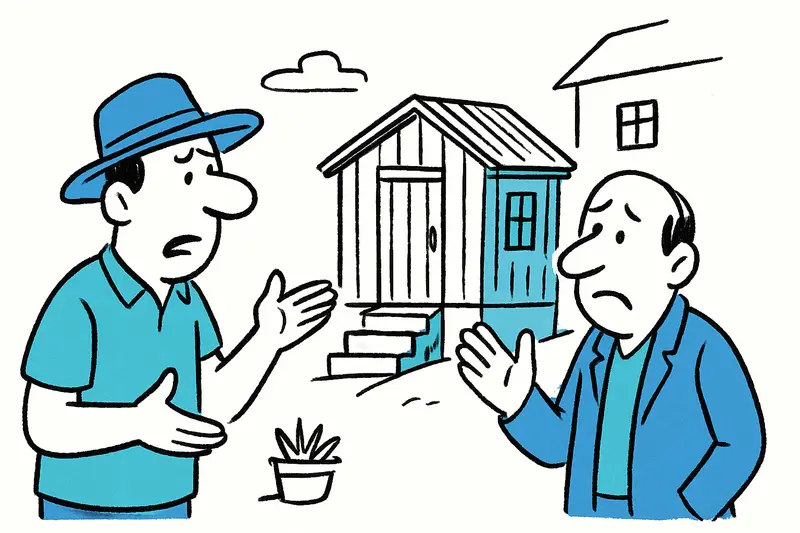
Demolition or Opportunity? The Casetas on the Costa des Teatre — What Palma Really Must Decide
Demolition or Opportunity? The Casetas on the Costa des Teatre — What Palma Really Must Decide
The city plans to redesign Plaça Major — but the small wooden huts on the Costa des Teatre are at stake. An inventory with a guiding question, analysis and concrete proposals.
Demolition or Opportunity? The Casetas on the Costa des Teatre — What Palma Really Must Decide
Guiding question: Must Palma's administration demolish the historic sales huts on the Costa des Teatre, or can they be integrated into the redesign of Plaça Major without jeopardising the goal of a largely car-free, more attractive square?
The scene is familiar: narrow steps, tourists in sun hats, the click of heels on natural stone, and on some days the musty smell of paint and dust when construction is underway. Along these steps line the narrow wooden huts — dated by heritage advocates to 1857 — like small witnesses of time, as reported in When the Kiosk Disappears: Palma's Little Kiosks Between Tradition and Planning. Nearby operators, including a souvenir shop that has existed on the Costa des Teatre for decades, report practical concerns: construction dust, restricted access and fewer customers.
The city administration argues with a big plan: more cultural spaces, better access thanks to a panoramic lift, more greenery and a largely car-free public realm, similar in ambition to Palma plans redesign around the Gesa building - redevelopment with question marks. From the perspective of city planners, the small huts hinder a unified appearance of the square and the new usage concept.
On the other hand is heritage protection, which does not only rely on sentimental reasons. The wooden buildings are, activists say, part of Palma's architectural layering; parts of the structure also sit above a historic cistern that is archaeologically interesting. A protection status that councillors previously acknowledged remains a possibility, as shown in Demolition halted in Palma: What Gaspar Bennazar’s house teaches us about heritage protection. ARCA has also shown AI-supported visualisations demonstrating possible restorations — intended to show that preservation and modernization are not mutually exclusive.
Critical analysis: Both sides have valid points, but public debate too often remains black-and-white. What is missing are precise data: How structurally sound are the constructions really? What flow of people and goods do the huts generate today? What would the costs of demolition plus redesign be compared with a staged restoration? And: who represents the affected small businesses in these plans?
Missing view of everyday life: In the early morning hours, when suppliers haul crates up the steps and older residents fetch their bread, the effects of construction and redesign are especially evident. A large-scale construction project without coordinated delivery zones, dust protection and route management hits the elderly, the small shops and the authentic residents hardest — not primarily the visions in planning offices.
Concrete approaches that could combine both goals:
- Phased plan instead of rapid demolition: A phased implementation: first archaeological investigation of the cistern, then pilot restorations of two to three huts as prototypes for later decisions.
- Technical survey: Photogrammetry and non-destructive testing (wood moisture, structural analysis) provide reliable foundations — no decisions made on gut feeling.
- Interim use: Time-limited rental to local artisans and producers creates an audience, tests economic viability and prevents permanent vacancy.
- Construction and traffic management: Clearly regulated delivery times, dust protection measures and temporary access solutions protect existing shops during the works.
- Financing mix: In addition to municipal funds, heritage and tourism development grant programs should be explored; public-private partnerships can accelerate action without relinquishing city control.
- Transparent participation: An open process with clear timelines in which residents, business owners and heritage advocates have equal say reduces mistrust and avoids unnecessary conflict.
What has been missing in the public discourse so far: a robust cost-benefit analysis over 10–20 years, clear criteria for when restoration is more economical than rebuilding, and binding minimum protection measures for neighbouring shops during construction. The potential cultural use of the cistern has also only been addressed superficially so far.
A possible bridge: The casetas could become part of the new square concept — not as mere nostalgic relics, but as designed, weatherproof kiosks and workshops that enrich the Plaça Major concept. Technically, this can be achieved by reinforcing the structure and roofs, adding insulation measures and renewing the facades so they fit the overall appearance.
Conclusion: The decision is not a simple choice between demolition and sentimentality. It requires a sober inventory, visible pilot projects and binding protection mechanisms for residents and businesses. Those who decide locally and hastily now risk shaping the space for decades — a better approach would be a staged path that respects historical substance, realises urban goals and does not leave the people of the Costa des Teatre out in the rain.
Frequently asked questions
What are the casetas on the Costa des Teatre, and why is their future debated in Palma?
Should Palma demolish the casetas or integrate them into the Plaça Major redesign?
What would a phased plan look like for the Casetas in Palma?
How could preserving the casetas benefit Palma's Plaça Major?
What are the practical concerns for local shops during construction on the Costa des Teatre?
How should the public participate in Palma's decision about the casetas?
Is a long-term cost-benefit analysis recommended for the Casetas project in Palma?
What could the casetas become if preserved in the new Palma square?
Similar News
Why Mallorca Has Become So Terribly Expensive — A Reality Check
Rents are exploding, staple food prices are rising, wages are lagging behind. A look at the causes, what is missing from...
When Paradise Becomes Unaffordable
Hotel rooms, paella and the weekly grocery shop: Mallorca is becoming more expensive for many. Who pays the bill — guest...
End at Ballermann: What Is Lost with the Dino Mini Golf at Playa de Palma
On October 25 the dinosaur mini-golf course at Playa de Palma will close after more than 30 years. Why the city is recla...

Expensive Address Calvià: What Does First Place Mean for Mallorca?
The National Institute of Statistics (INE) ranks Calvià as Spain’s most expensive municipality for property purchases. W...

Emergency over Spain: Ryanair Dublin–Tenerife flight diverted to Santiago after medical emergency
A Ryanair flight from Dublin to Tenerife was diverted to Santiago de Compostela due to a passenger's acute health proble...
More to explore
Discover more interesting content

Can Cap de Bou

Townhouse Lleo 72
