
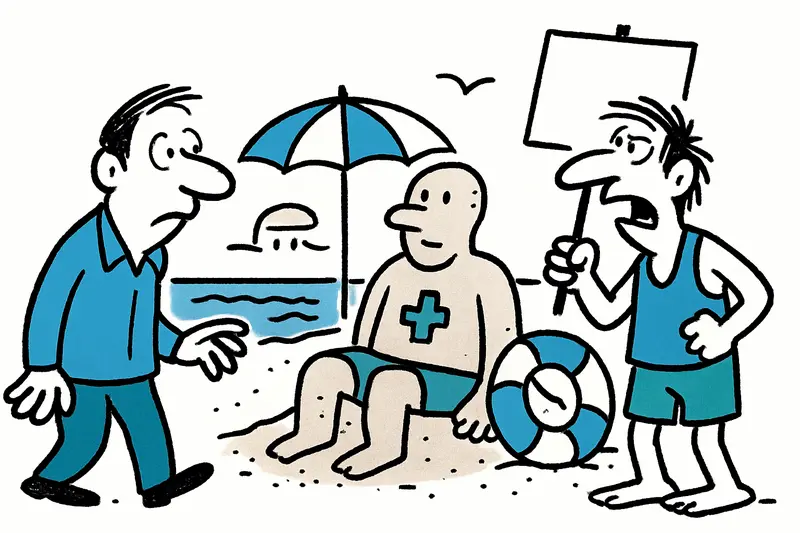
Who will protect Mallorca's beaches if the lifeguards strike?
Who will protect Mallorca's beaches if the lifeguards strike?
65 lifeguards in Palma demand better hygiene, accessibility and longer duty hours – and threaten a strike on the night of San Juan. A reality check and pragmatic solutions for the island.
Who will protect Mallorca's beaches if the lifeguards strike?
Key question: Can Palma ensure a major summer event without professional surveillance of its beaches?
There was no silence at Plaça Cort yesterday: whistles, drums and voices calling for more staff and better conditions. Around 65 lifeguards from Palma gathered, issued the city an ultimatum and accused the administration of years of neglect, a situation covered in Lifeguards Strike: Safety Questions and the Uncomfortable Debate Over Seasonal Work. They set the night of San Juan as the date for escalation, a time when fires, crowds and alcohol traditionally come together – a typical high-stress scenario for beach and rescue services.
Short and clear: the demands revolve around four interconnected areas: safety at sea and on the beach, minimum hygiene standards, accessibility for people with reduced mobility and reliable duty hours for rescue teams. Examples mentioned sounded drastic: syringes in the sand, dead rats, missing toilet facilities in certain sections and unclear responsibility over an unfinished sewage project.
The situation is problematic from two perspectives. First: for the people who work on or live by the beaches every day. Second: for visitors who rely on basic infrastructure. If neither area is addressed, not only does the risk of accidents increase, but so does the potential for conflicts on summer nights.
Critical analysis: Why it got this far
On the island several responsibilities meet: city hall (municipal administration), the port authority for boats, regional authorities for environmental issues and private operators on tourist sections. This quickly leads to shifting of responsibility, as noted in Alarm on the Coast: Why the Lifeguard Strike in Mallorca Is More Than a Labor Dispute. At the same time, many measures are not particularly expensive but require more regular maintenance and clear accountability – for example tightening buoys, operating public toilets or removing waste and dangerous objects.
Another factor is seasonal organization: lifeguards are often scheduled for the main season only, while tourist peaks – holidays, San Juan, long weekends – require special planning. If promises of longer duty hours are made but not implemented, trust is damaged and staff and the public become frustrated. This dynamic has fuelled actions such as the Open-ended Lifeguard Strike: Island Caught Between Safety and Labor Dispute.
What is missing from the public debate
Public discussion often focuses on symbolic measures: more signs, marketing campaigns and PR statements for a safe Mallorca. Rarely does it address operational details: who checks that buoys are actually in place? Who funds accessible wooden walkways and amphibious beach wheelchairs? Who ensures the permanent operation of toilets along the playa? These questions are too rarely translated into clear condition reports and schedules.
A typical everyday scene at the beach: in the morning at Playa de Palma you see families struggling with prams over makeshift boards to reach the water, older people standing in the sun asking where the nearest accessible access is. Lifeguards patrol, note damage to equipment, but also say openly: we can only do our job if the framework conditions are right. This is not rhetoric; this is work.
Concrete proposed solutions – pragmatic and immediately implementable
1) Immediate measures for San Juan: prioritized staffing of critical sections, temporary mobile toilets with cleaning shifts, additional lighting and marking buoys in busy bathing zones as well as temporary barriers or guarded access points to reduce nighttime accidents.
2) Expand accessibility: a network of modular wooden walkways and uniformly available beach wheelchairs, plus service points where helpers provide short instructions. Funding could come from a tourism levy and municipal funds with a clear deadline (e.g. six months for 50% of the most frequented sections).
3) Safety and prevention: CCTV in problem zones combined with guarded luggage and bicycle lockers, increased police presence near tourist areas and cooperation with the port authority for safe navigation zones; also regular checks of buoy positions.
4) Personnel and working conditions: contractually secure genuine extensions of duty hours, set up seasonal reserve teams and pay bonuses for particularly dangerous shifts. In addition, transparent duty rosters and a publicly accessible report on hours worked and incidents.
5) Cleanliness and health protection: daily cleaning routines, clear reporting chains for dangerous finds (syringes, rats), and quickly callable remediation contracts for existing sewage projects.
Who must act?
The main responsibility lies with Palma City Hall, but nothing will progress without coordination with the port authority, health agencies and regional tourism bodies. A short, binding timetable with clear milestones and a public monitoring portal would create transparency and increase pressure – both on the administration and on potential contractors.
Conclusion: A call for reason
A strike on the night of San Juan would be a signal: the people who keep our beaches safe feel abandoned. This is not just an organizational problem; it is a test of the city administration's priorities. Anyone who wants to protect guests and locals alike must act immediately and change structures in the medium term. Otherwise, after the music stops not only will there be litter left behind, but a gap of trust that hurts longer than the burned sand under your feet.
Frequently asked questions
What is the weather like in Mallorca in spring?
Is Mallorca warm enough for swimming outside the summer months?
What should I pack for a trip to Mallorca in the shoulder season?
When is the best time to visit Mallorca for outdoor activities?
Is Palma de Mallorca a good base for a short stay?
What is Port de Sóller like for a relaxing holiday in Mallorca?
How hot does Mallorca usually get in summer?
Is Mallorca a good destination if you want both beaches and sightseeing?
Similar News

End of October: Can you still swim in the sea in Mallorca?
The late-autumn sun still warms the air and the sea has retained its summer heat—many people don't pack away their swimw...
Years of abuse in Costa de la Calma – Neighbor calls Guardia Civil
In a villa in Costa de la Calma a neighbor alerted the Guardia Civil: a 19-year-old woman reported years of violence by ...

Schauinsland Takes Over Management of the Morito in Cala Millor – a Reality Check
From March 2027 the German tour operator Schauinsland will manage the Morito hotel in Cala Millor. The Batle Erikson fam...
Still bathing season? Why Mallorca still invites a plunge into the sea at the end of October
The air is mild, the beaches quieter — and the water surprisingly warm. We have summarized the current temperatures and ...
A Spanish Evening at the Auditorium: Guitar, Colors and the Sea in Palma
Rodrigo, Ravel, Albéniz — and a new work by the guitarist: the second subscription concert brings Spanish music in a lar...
More to explore
Discover more interesting content

Can Cap de Bou

Townhouse Lleo 72
