
When the harvest comes earlier: Macià Batle celebrates — and worries about heat and water
When the harvest comes earlier: Macià Batle celebrates — and worries about heat and water
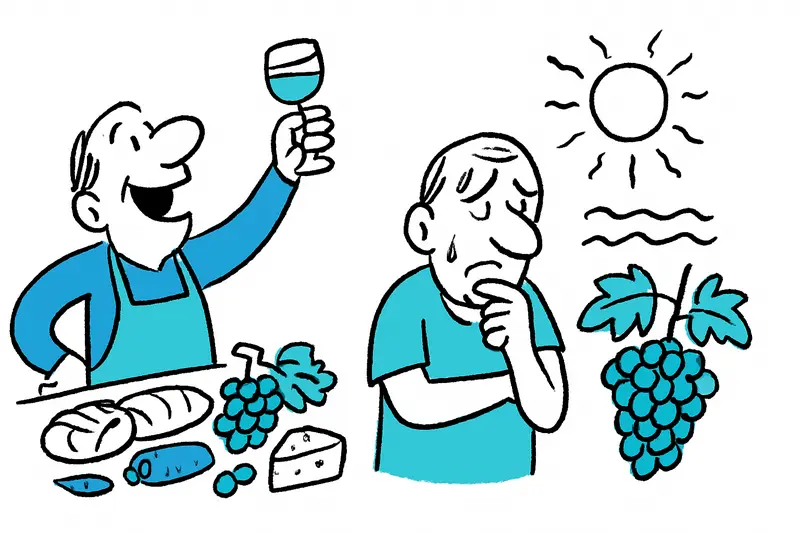
At Finca Son Llompart the grape harvest was celebrated with sobrasada, bread and habaneras. But behind the glasses are heat-related yield losses, less fungal pressure — and the question: How will Mallorca's viticulture adapt?
When the harvest comes earlier: Macià Batle celebrates — and worries about heat and water
Berenar de Verema at Son Llompart shows: Joy and concern sit close together
Key question: How much longer can Mallorcan viticulture be carried out as before, if summers get hotter and rain becomes rarer?
Tuesday morning at Finca Son Llompart near Santa Eugènia: the veranda was flooded with bright September light, cicadas cried from the pines, and on the tables lay bread, sobrassada, cold cuts, cheese, olives and fresh grapes. Friends and family of the estate and employees of the Macià Batle winery raised their glasses — to a vintage that looks different from usual. Mantonegro, Merlot and Chardonnay fill the glasses; in the background a band sings habaneras in Mallorquí and Spanish. The celebration here is called “Berenar de Verema” and is at once ritual and affirmation.
Beneath the good mood, however, lay a sober observation that CEO Ramón Servalls put bluntly: the volume of grapes has fallen this year because heat and drought are depressing yields. At the same time, the quality of many batches is surprisingly good — and a fungus that causes trouble in wetter years had little chance because there was hardly any rain.
Critical analysis: What do we enjoy in our glasses, and what worries us? A smaller yield with better grape quality is not a clear conscience. Less fungal pressure sounds like luck at first, but uniformly dry years mean reduced water reserves in the soil, stress for the vines and, in the long term, altered terroirs. Earlier harvest times like in recent years, noted in Autumn in Mallorca: Late Summer on the Horizon, shift work schedules, storage logistics and the demand for harvest workers. For operations with limited water rights, an existential bottleneck threatens if irrigation becomes necessary but allocations remain scarce.
What is missing from the public debate: there is much talk of how prepared the island is for the next heatwave and the start of the harvest, but little about concrete adaptation plans for island wineries. Coordinated water strategies for agriculture are lacking, incentives to switch to drought-tolerant varieties or binding plans for soil protection and reforestation in catchment areas are missing. The question of how smaller family wineries receive financial and technical support is also asked too rarely.
Everyday scene: Anyone driving along the MA-13 toward Palma in the afternoon sees it in the red clay soils: some plots lie yellow-brown, others still show green grapes. On the square in Santa Eugènia neighbors greet each other while the farmer across the way sells a small crate of early grapes. The finca celebration may seem carefree, but the conversations behind the wine glasses are about follow-up costs, new techniques and the next winter rain.
Concrete solutions that could work locally: targeted water management with drip irrigation and sensors that allow water use only under stress; building up soil through compost and cover crops to retain water; adapted pruning methods and shade structures so berries don't sunburn; selection of heat- and drought-resistant grape varieties or suitable rootstocks; increased storage of rainwater in local catchments combined with municipal allocation rules. Added to this are coordinated research projects between winemakers, agronomists and island authorities, as well as financial support for small farms investing in technology and advisory services. Similar pressures have affected other local crops, for example Almond Harvest 2025: Between Yield Declines and New Opportunities, and water dilemmas appear in other sectors such as in Avocados from the Tramuntana: Sóller between a Harvest Boom and a Water Dilemma.
Political measures would be sensible: flexible water allocations in drought periods, incentives for increasing soil organic matter and erosion control, and a regional plan for agriculture under climate stress. Practically speaking: fewer monologues at parties, more working groups after the Berenar.
Conclusion: The glass at Son Llompart was half full — and that's fine. But the question remains open: do we celebrate the current success or act so there are still enough grapes and water in ten years' time? Anyone growing wine on Mallorca has to celebrate today and at the same time have a plan for tomorrow.
Frequently asked questions
How is Mallorca's wine harvest affected by hotter, drier summers?
What practical steps can Mallorca vineyards take to conserve water?
Are there sustainable plans to support small wineries on Mallorca?
How does a smaller harvest impact wine quality and Mallorca's wine scene?
What is the Berenar de Verema at Son Llompart and why does it matter?
What kinds of drought-resilient options are being considered for Mallorca’s vineyards?
How could Mallorca improve water management during drought periods?
What should Mallorca producers consider when planning the next harvest after a challenging season?
Similar News

Why Mallorca Has Become So Terribly Expensive — A Reality Check
Rents are exploding, staple food prices are rising, wages are lagging behind. A look at the causes, what is missing from...

When Paradise Becomes Unaffordable
Hotel rooms, paella and the weekly grocery shop: Mallorca is becoming more expensive for many. Who pays the bill — guest...

End at Ballermann: What Is Lost with the Dino Mini Golf at Playa de Palma
On October 25 the dinosaur mini-golf course at Playa de Palma will close after more than 30 years. Why the city is recla...

Expensive Address Calvià: What Does First Place Mean for Mallorca?
The National Institute of Statistics (INE) ranks Calvià as Spain’s most expensive municipality for property purchases. W...

Emergency over Spain: Ryanair Dublin–Tenerife flight diverted to Santiago after medical emergency
A Ryanair flight from Dublin to Tenerife was diverted to Santiago de Compostela due to a passenger's acute health proble...
More to explore
Discover more interesting content

Can Cap de Bou

Townhouse Lleo 72
