
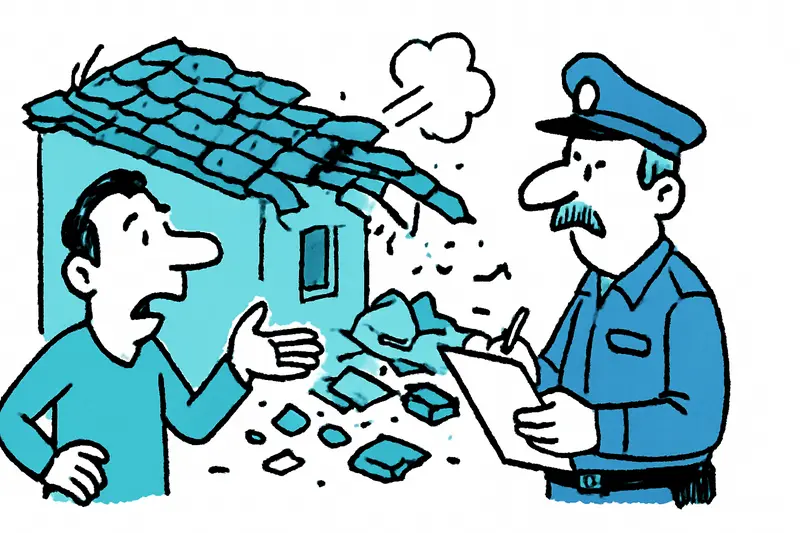
Roof collapse in Manacor: Who missed the mandatory inspection?
Roof collapse in Manacor: Who missed the mandatory inspection?
An 18-year-old died in a roof collapse in Manacor. The city administration says the building had no mandated inspection since 2016. Police are investigating whether illegal alterations played a role.
Roof collapse in Manacor: Who missed the mandatory inspection?
Key question
How could a house in Manacor remain without the required building inspection until the roof collapsed and an 18-year-old lost his life?
Critical analysis
The Manacor city administration states that no inspection report exists for the affected house since the introduction of the mandatory inspection in 2016. This is not a mere formality: such inspections are intended to reveal defects in load-bearing elements, the roof structure and other safety-relevant components. If they do not take place, dangers remain invisible. The police are now investigating whether unauthorized alterations were made to the building, a response similar to the roof collapse in Artà that uncovered termite damage. That is important, but it only reacts at a point when people have already been harmed.
Organizationally, several problems become apparent: gaps in the inspection register, slow processing of reports and unclear responsibilities between owners, technical services and the municipality. In addition, many older buildings on Mallorca are privately owned and often held within families. Owners are not always informed or willing to pay for renovations; inspections have even found illegal shelters, including eleven makeshift shelters on the outskirts of Manacor. If inspection obligations exist only on paper, that does not help the people on the street.
What is missing in the public discourse
The discussion remains too focused on purely legal questions: who did not sign which file? More important would be the question of how prevention works in practice. The voices of neighbors, caretakers and carpenters — who work every day above and below roofs — are missing. It is also rarely discussed how economic pressures — seasonal rentals, rental demand, and unsafe modifications for holiday guests — can lead to risky interventions, as in the Playa de Palma rooftop terrace case. Clear figures are also lacking: how many buildings in Mallorca do not comply with inspection requirements? Which sanctions have been imposed so far?
A scene from Manacor
The afternoon after the accident the air was cold and clear, the bells of Sant Vicenç rang slowly. Two older women in front of the town hall discussed the victim's family, a delivery driver parked his van on Carrer de la Palma and a group of teenagers smoked quietly in a corner. In such streets people know who lives in which house, who repaired the shutters and who has always warned about the rain. These small observations show: problems are often seen for a long time — and rarely reported immediately.
Concrete solutions
1. Public, digital inspection register: Every completed inspection must be dated and accessible to emergency services and municipalities. This makes it quick to see whether a building has been recently inspected.
2. Mobile rapid-assessment teams: Specially equipped technical teams that, after a report, carry out initial on-site assessments within 24–48 hours and can order immediate closures.
3. Funding program for safety-related renovations: Grants or low-interest loans for owners of older buildings, tied to binding deadlines for remedying defects.
4. Stricter controls on renovation applications and clear liability rules: Those who alter load-bearing parts without permission must expect swift fines and obligations to remediate.
5. Strengthen local reporting channels: Encourage caretakers, neighbors, tradespeople and associations to report endangered buildings via simple hotlines or digital forms — with the option to report anonymously.
Concise conclusion
The tragic event in Manacor is not just an isolated case but a warning signal for the entire island: rights on paper are not enough. If inspection obligations are not enforced, unauthorized changes are not consistently pursued and owners are not supported, safety remains a matter of hope. The city can now prove that it has learned from the accident — with clear registration, rapid technical interventions and policies that take prevention seriously both financially and organizationally.
Frequently asked questions
Why do older buildings in Mallorca need mandatory inspections?
What happens if a house in Mallorca never gets the required building inspection?
Are older houses in Mallorca more likely to have structural problems?
What are the warning signs of roof damage in a Mallorca house?
How often are building inspections required in Mallorca?
What should Mallorca homeowners do if they suspect a structural problem?
What role does the Manacor town hall play in building safety?
Can unauthorized renovations make a house unsafe in Mallorca?
Similar News
Warning to Bathers: Nipping Fish in Cala Major and Other Coves — a Reality Check
In Cala Major and several beaches around Mallorca, bathers report painful “nips”. Who are the animals, why are they gett...

Rental Car Theft in El Arenal: What This Incident Reveals About Our Gaps
A teenager steals a running rental car in El Arenal, flees on foot, climbs over walls and is caught by the Guardia Civil...

Red Rope in Palma's Library: What Helps Against Selfie Tourism — and What's Missing
Palma's city library cordoned off an area with a red rope to keep selfie tourism away from reading and working activitie...
Fort San Carlos: Museum, Harbor Dispute — and a Conflict That Demands Answers
The military museum at Fort San Carlos sits right on Palma's harbor, with unexpectedly quiet rooms filled with cannons a...
Old Town Under Pressure: When a Doorway Becomes a Sleeping and Shower Place
For months a woman has been living with a parasol, a clothes rack and personal belongings next to the social welfare off...
More to explore
Discover more interesting content

Can Cap de Bou

Townhouse Lleo 72
