
Marburg Alarm at Palma Port: Exercise with Serious Side Effects
Marburg Alarm at Palma Port: Exercise with Serious Side Effects
A large-scale operation at Palma harbor prompted by a suspected Marburg case turned out to be an exercise. Mallorca Magic analyses on location why the realism was dangerously high, which gaps became visible, and how we can better protect people in future.
Marburg Alarm at Palma Port: Exercise with Serious Side Effects
Key question: How realistic can a disaster exercise be before it itself becomes a risk to the public and to trust?
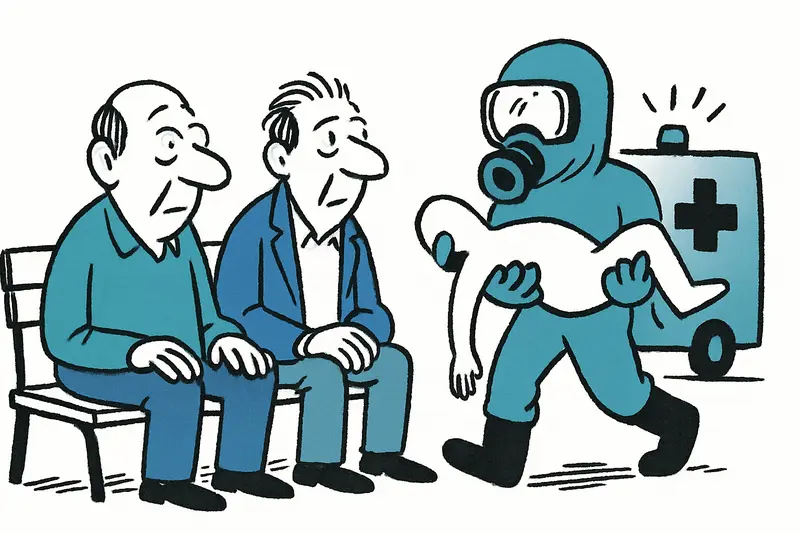
Early on Thursday morning the usually quiet harbor promenade changed. The siren of a police vehicle, the horn of an ambulance, the muffled footsteps of personnel in protective suits – and beyond it the distant roar of the ferry at Moll Vell. What to many passersby on site seemed like an actual outbreak of the dangerous Marburg virus was part of a large-scale exercise named MARSEC-26. Nevertheless, more than 150 emergency workers from over 20 organizations responded, a navy ship was searched, two deceased persons were recovered, suspected patients were brought ashore and a dog on board received medical care. In the end there was an all-clear: no real infection, the ship was disinfected and released, similar to the checks when the USS Gerald R. Ford off Palma: Routine or wake-up call for better controls? was inspected in the bay.
The decision to make the exercise conditions extremely realistic has tangible consequences. For an hour Palma stood in the middle of a scenario that can trigger panic, misinformation and strain on rescue personnel. Pablo Gárriz, the official responsible for emergencies in the Balearic Islands, emphasized that coastal regions are particularly sensitive and need constant preparation, as highlighted in Storm Alert: Is Mallorca Prepared for the Deluge?. That is correct. But the exercise itself raises questions: How is the balance maintained between realistic training and public protection? And who informs citizens in a timely manner without disrupting the exercise?
Critical analysis: The exercise confirmed that interdisciplinary procedures can work. Health services, the coast guard, fire brigade, military and forensic teams operated in a coordinated way. At the same time weaknesses became apparent. First: situational communication. To laypeople on site it was not clear that this was an exercise. In a city where morning passersby have coffee at the Passeig Mallorca and look at the harbor, unclear signals should not be the norm. Second: follow-up care and psychological support. Personnel in full protective gear change clothing, disinfect and still have to continue working under the impression of real experiences with deceased persons. Such operations leave marks that must be planned for. Third: animal protocols. The dog on board was treated separately – the right approach. But who guarantees that in real contaminations pet owners and veterinarians are strictly protected while humane solutions remain possible?
What is missing in the public discourse: clear rules for marking exercises, a binding timetable for media and citizen information and publicly accessible after-action reviews. If an exercise exceeds the limits of perceptible reality, there needs to be a mandatory, immediately accessible information offer: Why was the exercise carried out? Who was involved? Which safety standards applied? And: what is the message for everyday life – how should citizens behave if they encounter such an operation?
An everyday scene: Around 9 a.m. two older men sat on a bench near the Estación Marítima and watched as responders walked along the railing. One, over 70, pushed his glasses up and said: "If that had been real, I wouldn't have gone out today." The sounds of a nearby bus changing route, the clatter of a bicycle basket and gulls mixed with the serious activity. These observations show: the people of Palma react immediately, emotionally and pragmatically at the same time. Crisis prevention can and should take that into account.
Concrete approaches we need now:
1) Transparency rules for exercises: Minimum standards that require temporal and spatial labeling without diminishing training value. A publicly available exercise schedule for ports and larger cities would be useful.
2) Public information chains: A coordinated short-information system (push notifications, harbor displays, local radio announcements) that immediately indicates: Exercise in progress / no danger to the public. This can prevent uncertainty.
3) Follow-up transparency for responders: Mandatory initial psychological care, registered cleaning and disposal protocols, regular health checks after such operations (see Critical Bathing Incident at Arenal: Call for Better Protective Measures).
4) Animal protocols: Clear interfaces between veterinarians, protection services and public health authorities, including quarantine and decision-making rules for pets.
5) Publicly accessible evaluation: After each exercise a summary of results and lessons learned, prepared for non-specialists. That builds trust and allows citizen participation.
Conclusion: Exercises like MARSEC-26 are necessary and sensible. The challenge is to respect the boundary at which reality becomes a burden for the population. This time Palma showed that the link between military precision and civilian procedures can work. At the same time responsibility for communication, follow-up care and animal welfare must be clearly regulated. Otherwise, after every successful exercise a bitter aftertaste remains – for those who watched and for those who worked in the middle of it.
Frequently asked questions
What happened at Palma Port during the Marburg virus alarm?
Was there a real danger to the public in Palma during the Marburg drill?
Why are emergency exercises in Mallorca sometimes made so realistic?
How should the public react if they see a major emergency operation in Palma?
Which services took part in the Palma Port emergency exercise?
Why is communication so important during emergency drills in Mallorca?
What happens to animals during a port emergency exercise in Palma?
What should Mallorca authorities improve after realistic emergency exercises?
Similar News
After a Chase at the Fashion Outlet: A Fall, €600 Stolen and the Big Question of Responsibility
In the Fashion Outlet parking lot near Palma, a woman was chased after allegedly stealing perfume worth around €600. A G...
"We can't sell beer for two euros" — Who is really driving rents up in Palma's gastronomy?
Restaurateurs in Palma are complaining about skyrocketing shop rents, especially at harbors and promenades. Is this only...

PISA shock in the Balearic Islands: Why reading suddenly became a problem area
The Balearic Islands score below the Spanish average in reading and mathematics in PISA 2025. Key question: Why is readi...
Two bikers fall 20 meters at Cala Tuent — What really goes wrong
On Tuesday afternoon two people went off the road near Cala Tuent and fell about 20 meters down a slope. Dense scrub and...
Heat casualty on a bike tour in Soller: warning signs, gaps and simple solutions
A 66-year-old cyclist collapsed on the old Ma-11A at the Coll de Soller in extreme heat and died despite resuscitation. ...
More to explore
Discover more interesting content

Boat Tour with BBQ along Es Trenc Beach

Private transfer from Mallorca Airport (PMI) to Pollensa
