
Motor yacht strands in Magaluf: Why this is more than just a beach photo
Motor yacht strands in Magaluf: Why this is more than just a beach photo
A roughly twelve-metre motor yacht ran aground in the bathing area at Magaluf. Lifeguards evacuated swimmers and a private boat later refloated the vessel. The question remains: how safe is our coastline really?
Motor yacht strands in Magaluf: Why this is more than just a beach photo
Between curiosity and safety gaps – a key question
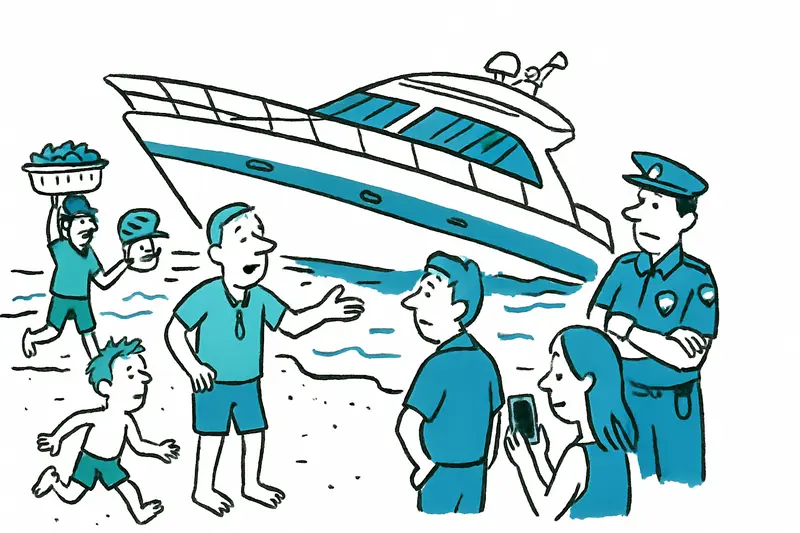
On Sunday afternoon a twelve-metre motor yacht became stuck in the sand in the middle of Magaluf's bathing area. Lifeguards called swimmers out of the water, the police monitored the situation, and after around two hours a private boat managed to tow the vessel free and bring it to Puerto Portals. There were no injuries. The remaining key question is: how can something like this happen at one of Mallorca's most frequented beaches?
On site the scene almost looked like it belonged in a film: phones flashing, ice cream vendors continuing to balance their baskets, and children running barefoot along the shore while the yacht sat awkwardly on the shallow sand. The sea was calm that day and the heat lay over the bay – ideal swimming temperatures, poor conditions for a drifting boat right in the bathing zone.
From the known facts a clear picture emerges: the boat entered the beach area, drifted up to the shore and ran aground. Lifeguards pulled people from the water and cordoned off the area. Shortly afterwards another boat tried in vain to free the yacht; later a private towing operation succeeded. The reason why the vessel came so close to the bathing area in the first place has not yet been clarified.
Critical analysis: what might have gone wrong here. First, the boundary between free navigation channels and bathing areas is often not self-explanatory, especially at heavily frequented beaches. Markings can be missing, misplaced, or ignored by the public. Second, human factors play a role: navigation errors, lack of local knowledge of shallows, technical problems on the vessel, or disregard for rules. Third, the chain of response must be questioned: how quickly were monitoring and intervention teams on site? Was coordination between lifeguards, the port authority and the police as it should have been?
What is often missing in public discussion: concrete numbers and responsibilities. It is said that the boat was towed free and no one was injured — which is good. But: who decides on zones, who controls the entry of pleasure boats into bathing areas, and what consequences follow if a boat causes a hazard? Without this information the discussion remains superficial and craves details.
An everyday scene from Mallorca that illustrates the problem: on a hot Sunday morning restaurant owners sit on the promenade, hear the clatter of sunshades and see boats anchored nearby. Most captains are respectful, but some act spontaneously and steer too close because they see the crowds or look for a free mooring spot, a problem highlighted by Mallorca's Problem with 'Floating Holiday Rentals'. For residents and shop owners such situations are not isolated incidents — they disrupt the normal rhythm, create liability risks and attract unnecessary attention.
Concrete solutions, easy to check and locally implementable: 1) Clearer and more visible boundaries for bathing zones — floating buoys with distance arrows and lighting. 2) More frequent patrols by the port service and local police during high season, with particular monitoring of popular beaches. 3) A reporting system via app or radio signal that allows lifeguards to request support quickly. 4) Mandatory information for moorings and charter boats: short briefings on local waterways and restricted zones. This is particularly important given concerns raised in When Private Boat Rentals Put Mallorca's Coasts at Risk. 5) Sanctions for entering designated bathing areas, coupled with immediate recovery and cleanup costs.
Technology and training are also important: lifeguards should regularly practice recovery procedures, ports should have accessible towing capacities, and boat rental companies must ensure charter customers receive briefings. All of this costs money — but after a beach incident like the one in Magaluf it quickly becomes clear that prevention is cheaper than improvised operations in public view.
What the scene in Magaluf also shows: the attraction of the unusual. A stranded boat quickly becomes a crowd magnet, selfies and live videos spread, and the real task of responders — hazard prevention and mitigation — is hampered by curiosity. The issue is compounded by Magaluf’s party culture, as reported in Magaluf after the beach discovery: When partying becomes a danger zone. That is human, but it is also a safety risk.
In conclusion: the incident in Magaluf was fortunately without injuries, but it is not a coincidence to be brushed off with a happy photo. It is a sign: beach areas used daily by hundreds of people need clear rules, visible markings, regular monitoring and cooperation between the port authority, police and rescue services. Anyone who works, lives or vacations on Mallorca has an interest in these systems working reliably — and that must happen before the next boat crosses the line.
Frequently asked questions
What should I know about Mallorca beach safety and sea conditions in summer?
How are bathing zones and navigation areas marked on Mallorca's beaches, and what should I look for?
What happens when a boat drifts into Mallorca's bathing area?
What measures are suggested to prevent boats entering bathing zones on Mallorca?
What happened during the Magaluf motor yacht incident?
Where was the yacht towed after it was freed in Magaluf?
Who coordinates safety responses on Mallorca’s coast?
What practical steps can visitors take to keep Mallorca beaches safe?
Similar News

When the Tap Only Runs Sometimes: Why Municipalities in the Balearic Islands Are Now Rationing Water
Deià, Valldemossa, Esporles, Sóller and several places on Menorca are scaling back water supply. Who is responsible, why...
Battle for the Ramp: Why Cala Gamba Needs More Than Enforcement
The Guardia Civil intervened in Cala Gamba — residents breathed a sigh of relief, but unease remains. Key question: Are ...
He dances at the Duty-Free: How an airport employee brings a smile to Palma
A Duty-Free employee at Palma Airport created a viral TikTok with dancing breaks. Why the scene is more than just an int...
Stolen Motorcycle in Palma: Fatal Crash in Coll d'en Rabassa Shortly After Theft
A motorcycle parked on Plaza Miquel Dolç in Son Gotleu was reportedly stolen in the early hours. Hours later two men cra...
When More Guests Mean Less: Mallorca's Restaurants at the Limit
Despite record visitor numbers, the revenues of many restaurants are shrinking. Why more visitors don't automatically me...
More to explore
Discover more interesting content

Boat Tour with BBQ along Es Trenc Beach

Private transfer from Mallorca Airport (PMI) to Pollensa
