
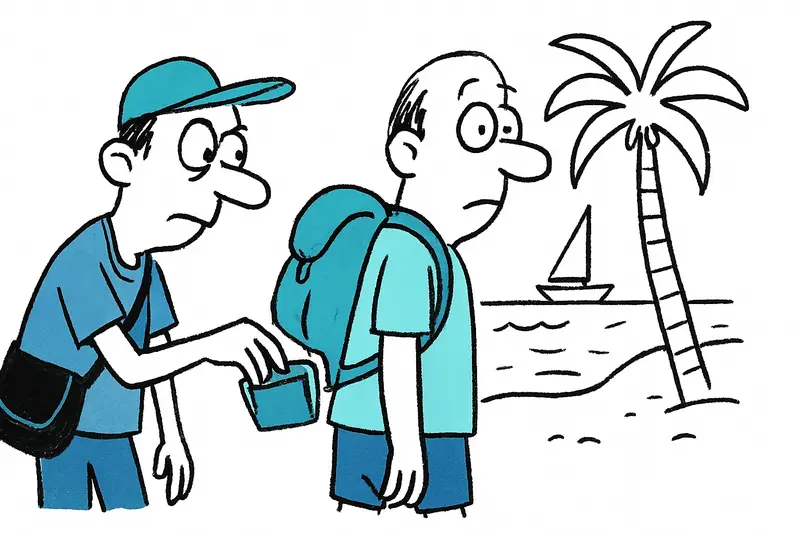
Pickpockets at Ballermann: How safe are German holidaymakers really?
Pickpockets at Ballermann: How safe are German holidaymakers really?
In the night the National Police at Playa de Palma observed a man who allegedly stole from several German holidaymakers. A cache of phones, wallets and identity documents led to an arrest. A reality check: How do the thieves operate, what is missing from the public debate and what short-term measures help immediately?
Pickpockets at Ballermann: How safe are German holidaymakers really?
Key question: How can travelers at Playa de Palma prevent becoming victims of professional pickpockets — and what needs to change at the island level so that visitors can sleep more peacefully?
In the early hours between Monday and Tuesday, a unit of the National Police at Playa de Palma observed a man who apparently crept up on holidaymakers in a systematic way. During a search, officers discovered several wallets containing identity documents of German guests, cash, sunglasses, wireless earphones and four high-end mobile phones. According to the police, the items could be attributed to different victims; the man was arrested. The action is part of the measures reported since the start of Operación Verano — authorities say around 120 people have already been caught in the act at Playa de Palma; Arrests at Playa de Palma: How safe are phones on the Schinkenstraße?.
So much for the facts. Anyone strolling along Playa de Palma on a mild summer evening — the bass from the venues, the murmur of voices in German and Spanish, the clinking of bottles and the distant wash of the waves — senses immediately: there are many potential targets here. New Tricks at Ballermann: How Pickpockets Exploit Playa de Palma — and What Actually Helps explains how pickpockets exploit exactly this atmosphere; they work in short, precise actions, often in pairs or groups, and rely on distraction and proximity. The arrest shows that the police can react; but it also raises questions.
Critical analysis
First: The pattern is not new, but the professionalism of some offenders is. Fanny packs, supposedly harmless pocket knives or a sudden scuffle — all serve to spread attention. The recovered phones show that perpetrators specifically target expensive electronics. Second: The victims are not random; German holidaymakers form the largest group in many beach sections, they often sit or lie in groups with bags next to the towel or sunbed — an invitation for thieves who act in a flash.
Third: Police presence helps, but it is not comprehensive. Operación Verano ensures spot checks and arrests; at the same time the question remains how sustainable such operations can be without offenders relocating to other areas. Fourth: Communication about protecting tourists is patchy. There are warning notices, but these do not always reach nighttime partygoers or older guests who prefer to keep documents in jackets or handbags.
What is missing in the public discourse
We talk a lot about arrests and statistics, but hardly about everyday prevention: concrete advice to hotels, provision of simple theft-protection measures or clear guidance for beach visitors is often missing. There is also little discussion on how offenders use networks — for example whether mobile phones are immediately resold or shifted through middlemen (Pickpockets Stopped in Port d’Andratx – What the Case Reveals About Crime Tourism). The victims' perspective is similarly underrepresented: many do not report theft because the effort seems cumbersome or because they believe the police cannot help. That reduces the visibility of the problem.
A typical scene from Mallorca
A scene: It's late evening, the Bierkönig hasn't completely closed yet, groups stand in front of the venue and the music pulses. Two men move inconspicuously among the guests, start conversations, ask briefly for attention — a laugh here, a lost mobile game there — and minutes later the wallet is missing from the beach bag. These scenes are common here. Not a Hollywood mystery, but everyday life on hot summer nights.
Concrete solutions
- For tourists: Leave valuables in the hotel safe where possible; carry only copies of identity documents; keep phones in closed inner pockets or on the body; use small, lockable money belts; do not leave belongings unattended even briefly. Activate 'Find My' features on iPhone or Android and note down serial numbers.
- For businesses at Playa de Palma: Clear notices at entrances, short information sheets at check-in, secure lockers at beach access points. Staff at bars and beach clubs can be trained to report suspicious behaviour.
- For authorities: Increased presence during night hours at hotspots, a coordinated information campaign in multiple languages, pragmatic return points for found items and a simple reporting culture that is low-threshold for victims. In the long term: cooperation with online platforms and second-hand markets to interrupt fencing chains.
Many of these measures can be implemented quickly. Small things like a flyer at check-in or clearly visible lockers on the beach cost little — but help deter crime. More important, however, is that the language becomes more practical. Not just "be careful", but "here's exactly what to do". That is often missing.
Conclusion
The arrest at Playa de Palma is a success for the police — it returns property and shows that controls work. However, arrests alone are not enough. Anyone who spends hours on the beach or visits the night-time party scene needs simple, immediately applicable rules and active support from hotels and venue operators. Otherwise the island remains a summer destination, but for some guests also a place where one must be particularly vigilant.
Frequently asked questions
When is the best time to visit Mallorca for good weather and fewer crowds?
What should I pack for a Mallorca trip?
Is it safe to swim at Mallorca beaches?
How can I get around Mallorca without a car?
What are good first stops in Palma de Mallorca for a short visit?
Is Alcúdia old town worth a visit for history and markets?
Is the train ride from Palma to Sóller worth doing?
Are there good family-friendly beaches near Cala d’Or?
Similar News
Palma, Palma de Mallorca, Palma‑Mallorca: What is it really about?
The debate over the city's name is more than grammar: it concerns identity, law and branding policy. A sober reality che...
Warning to Bathers: Nipping Fish in Cala Major and Other Coves — a Reality Check
In Cala Major and several beaches around Mallorca, bathers report painful “nips”. Who are the animals, why are they gett...
Rental Car Theft in El Arenal: What This Incident Reveals About Our Gaps
A teenager steals a running rental car in El Arenal, flees on foot, climbs over walls and is caught by the Guardia Civil...

Red Rope in Palma's Library: What Helps Against Selfie Tourism — and What's Missing
Palma's city library cordoned off an area with a red rope to keep selfie tourism away from reading and working activitie...
Fort San Carlos: Museum, Harbor Dispute — and a Conflict That Demands Answers
The military museum at Fort San Carlos sits right on Palma's harbor, with unexpectedly quiet rooms filled with cannons a...
More to explore
Discover more interesting content

Can Cap de Bou

Townhouse Lleo 72
