
After unrest at Playa de Palma: Senegalese community demands prospects and rejects crime
After unrest at Playa de Palma: Senegalese community demands prospects and rejects crime
After the police operation at Playa de Palma, the association of Senegalese immigrants speaks out: a clear distancing from criminals, but also calls for training, language courses and concrete offers instead of pure repression.
After unrest at Playa de Palma: Senegalese community demands prospects and rejects crime
Key question: How can we combine order at Ballermann with real integration offers, instead of just tougher controls?
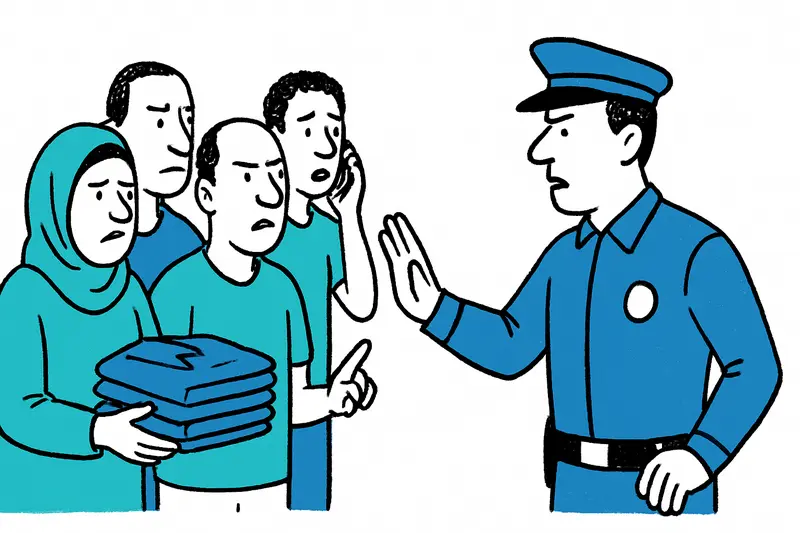
In the late afternoon, when the sun still warms the promenade at Playa de Palma and buses full of guests head for loungers and beach bars, a different picture can be seen in some corners: a circle of sellers, stacked jerseys, a police patrol trying to keep calm. These everyday moments recently escalated into a larger police operation — and have now made the voice of the Senegalese community in the Balearics louder, as reported in Helmets, Controls and Clear Words: The Chairman of the Senegalese Community on Mallorca's Dilemma.
Critical analysis
The message from the community is twofold: it condemns criminal acts and demands that offenders be held accountable. At the same time, it makes clear that many people selling on the street are in difficult, sometimes existential situations. Pure police presence temporarily stops the street offer on the promenade, but does not solve the root causes: missing papers, insufficient Spanish skills, a lack of job prospects and insecure housing. If politics and administration rely only on fines and arrests, the problem will at best be displaced — to another beach or into courtyards, as recent Night raid at Playa de Palma: assessment, questions and what's missing shows.
What is missing in the public discourse
There is a lack of detail: concrete plans for how street vendors can become regular workers, figures on available integration places and statements from the authorities that could actually organize labour market integration, as residents' proposals such as Playa de Palma Demands Responsibility: A 36-Point Plan for Cleanliness, Greenery and Safety demonstrate. The perspective of those Senegalese who work legally and pay taxes is also rarely heard; their everyday lives between construction sites, restaurant kitchens and family remain a background note in the debate.
An everyday scene from the island
I often see this in the morning on the Passeig Marítim: a woman folding T-shirts patiently, a young man practising conversation in Spanish on his phone, a police officer walking the promenade. Tourists stroll by, buying perhaps out of pity or curiosity. The sounds are the same as always — the sound of the sea, the clatter of plastic packaging, a vendor shouting "camiseta." This continuity recalls historical coverage such as 30 Years Ago on the Playa: How Senegalese Street Vendors Changed Mallorca's Beach Scene. From these small scenes emerges the big question of fair treatment of one another.
Concrete approaches to solutions
1) Labour-market-oriented offers: short Spanish courses, literacy, basic digital skills and career advice offered directly where the risk arises — ideally mobile and multilingual. 2) Temporary, regulated vending zones: instead of banning, organise — easily controllable areas with clear rules, licensing requirements and hygiene standards, accompanied by educational offers. 3) Cooperation with employers from tourism and gastronomy: pilot programmes that teach simple tasks and guarantee internship placements. 4) Rapid aid for newly arrived people: emergency shelters, meal vouchers and referral to social services so that people are not forced into illegal sales out of sheer necessity. 5) Sanctions linked to reintegration: fines and arrests remain possible but should be tied to offers — for example, mandatory courses or job placement as alternatives. 6) Clear communication: authorities, NGOs and the Senegalese community (YAPO) must sit at the same table and publicly explain the next steps.
Why this remains a local issue
Majorca lives from tourism. Image-damaging scenes of unrest at Playa de Palma hit not only the beach bars, they hit people: those selling illegally as well as neighbours, market women and legal workers. A solution must be thought out locally: the municipality, local social services and tourism businesses know the routes and connections that a nationwide strategy cannot always map.
Concise conclusion
Those who rely only on more police act like a gardener who only cuts off the top of the weeds and leaves the roots untouched. Order and security need measures that work in both directions: enforcement of the law on one side and realistic prospects on the other. The Senegalese community is right to distance itself from crime and to demand more support. A small, bold pilot project at Playa de Palma — with regulated vending areas, language courses and employment bridges — would show whether we are serious.
Frequently asked questions
When is Mallorca's best time to visit for beach days and milder weather?
What should I pack for a Mallorca trip to cover beaches and hikes?
Is swimming in Mallorca comfortable year-round, or are there limits?
What outdoor activities suit different ages in Mallorca?
Why is Palma a good base for exploring Mallorca?
Are day trips to Sóller or the Serra de Tramuntana worth it from Mallorca?
Is Es Trenc beach in Mallorca worth a visit?
Do clocks and daylight saving affect trips to Mallorca?
Similar News

Tragedy on the MA-4020: 23-year-old dies, police seek cause of crash
On the MA-4020 country road between Manacor and Porto Cristo a car overturned and hit a tree. A 23-year-old woman died a...
So Many Tonnes: What Mallorca's Garbage Boats Accomplish — and What's Missing
23 boats patrol in summer, and 36.8 tonnes were recently pulled from the water. The fleet is shrinking — is that still e...

No Identification Documents on the Steep Slope: Body near Tolleric Raises Questions
The body of an elderly man was found over the weekend in a wooded area near the cliffs of Tolleric. He had no identifica...

Arrest at the Port: Three Suspected Pickpockets Left Mallorca After Series of Thefts
The National Police stopped three men at Palma harbour who are accused of several thefts at the airport. How could the g...

Palma's Rental Bike Boom: More Bikes, More People, More City Life
Since Bicipalma was opened to non-residents, the system has noticeably grown. Students, residents and tourists bring lif...
More to explore
Discover more interesting content

Boat Tour with BBQ along Es Trenc Beach

Private transfer from Mallorca Airport (PMI) to Pollensa
