
Playa de Palma under pressure: shell-game operators, pickpockets and the everyday reality that makes it possible
Playa de Palma under pressure: shell-game operators, pickpockets and the everyday reality that makes it possible
Residents and shopkeepers in Can Pastilla and along the Schinkenstraße report a rise in organized thefts and shell games: why doesn't the system intervene more effectively?
Playa de Palma under pressure: shell-game operators, pickpockets and the everyday reality that makes it possible
Leading question: What needs to change so tourists can feel safe again on the beach and in the streets of Can Pastilla?
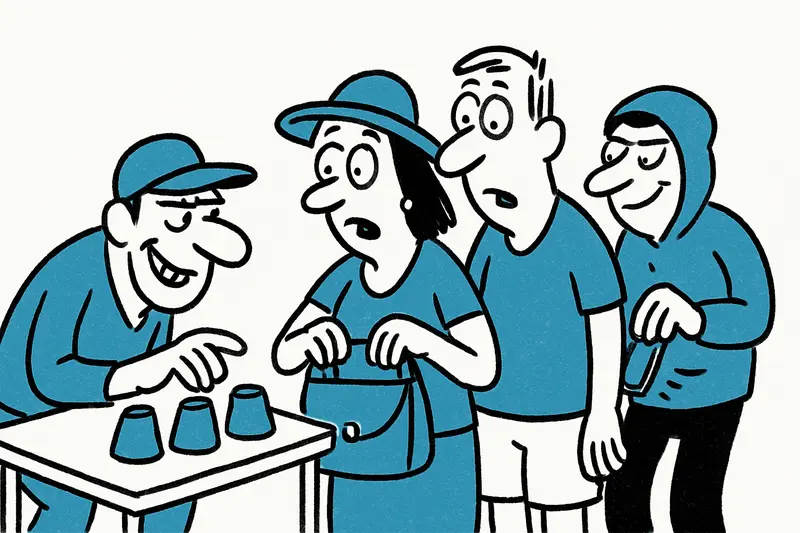
It smells of fried fish and petrol, the first cleaning crews push their carts along the promenade, and yet on some mornings plastic bags and empty cups remain like silent evidence of the previous night. At the same time, shopkeepers and residents in Can Pastilla and along the so-called Schinkenstraße observe that pickpockets and shell-game operators are active again—and apparently more organized than before. The perpetrators blend in with beachgoers, use groups, loud music and crowds, and flee when the opportunity arises by bicycle or in small groups.
The everyday life there has a loud, sticky surface: sunscreen smeared on counters, beer glasses on bars, tourists leaving their handbags open on tables. In these moments the perpetrators strike. Business owners report direct attempts in their shops; opportunistic thieves also lurk at ATMs, exploiting waiting or tipsy users.
The situation is explosive because it touches several levels: public order, the tourist image and the working reality of small traders. If visitors feel they can no longer safely keep their valuables, it changes their holiday—and you notice it immediately in the mood on the streets.
Critical analysis: It is no longer enough to merely show presence. Visible police patrols may reassure, but they often do not address the patterns of the perpetrators. Many thieves work in teams, disguise themselves as tourists and thereby create situations where preventive measures fail. Offenses also shift to times and places where controls are thinner: daytime on promenades, terraces and near ATMs.
What is missing from the public debate: the discussion remains too focused on individual incidents. There is a lack of sober stocktaking with figures, concrete hotspot maps and an assessment of whether personnel and technical resources are being used in a targeted manner. Also barely discussed is the role of seasonal infrastructure: are bins, lighting, environmental design and traffic flow arranged so that petty crimes are more likely prevented than facilitated?
A typical morning at Playa de Palma: cleaning vehicles hum along the promenade, two tourists complain about a stolen bag, a supermarket owner pulls up the shutters and counts the previous day's takings with relief while at the same time seeing the gap on the street corner where groups with questionable intentions gather once again. This small scene repeats itself in many forms along the coast—loud, visible, but often hard to catch.
Concrete measures that would make sense now:
1) Hotspot strategy instead of blanket presence: Police forces must be deployed based on concrete observations and reports at specific times and locations—including plainclothes officers who move within visitor flows.
2) Cooperation with businesses: A local security alliance of hotels, bars, landlords and shopkeepers with a fast WhatsApp alert chain and a central contact at the Guardia Civil can speed up interventions.
3) Prevention at high-risk points: More visible notices at ATMs, additional secure places to store valuables in bars, information boards in several languages and short awareness campaigns at hotel check-in.
4) Urban design as a prevention measure: Better lighting, more public bins with more frequent emptying and tactile cues that ease crowding on terraces.
5) Use of technology with a legal basis: Targeted camera placement in legally secure locations, combined with clear rules for data use and fast evaluation channels for the police.
6) Controls of rental cars: Cooperation with rental companies, targeted checks in parking lots and information sheets at rental counters to reduce the visible leaving of valuables in vehicles.
Another aspect: the judiciary must find ways to confront repeat offenders more quickly and consistently. Prevention alone is not enough if organized petty crime operates without significant consequences.
For the people on site this means: they need practicable instruments in the short term and structural changes in the medium term. A pilot project that tests some of the measures mentioned for six weeks on selected sections and measures outcomes with clear indicators—fewer reports, fewer repeat incidents, increased tourist satisfaction—would be a pragmatic approach.
Conclusion: The problems at Playa de Palma are not a natural disaster. They are the result of gaps in action on several levels: prevention, law enforcement, urban design and information policy. Anyone who believes that mere presence alone will solve the issue is mistaken. If we want family-friendly resorts and small businesses not to suffer from a loss of image, authorities, businesses and visitors must work together—quickly, concretely and without media-driven one-off actions that change nothing. The promenade is not a training ground for criminals; it is a workplace, a living room and a business card for the island. That can be built on.
Frequently asked questions
Is Playa de Palma safe for tourists right now?
When are pickpockets most active in Mallorca beach areas like Playa de Palma?
How can tourists protect themselves from shell games and pickpockets in Playa de Palma?
Are ATMs in Playa de Palma a risk for tourists?
What should I know about staying in Can Pastilla as a visitor?
Why are small businesses on Playa de Palma affected by petty crime?
What could help reduce theft in Playa de Palma and along the promenade?
What is the safest way to park a rental car in Mallorca?
Similar News
Can Malle hits really work in Hamburg? A reality check for the premiere of "ALLE LIEBEN MALLE"
Premiere at the Großmarkt: thousands of attendees, stars from the Megapark and long beer queues. Why the concept works —...

Adrien Brody strolls through Mercat de l'Olivar – celebrity visit leading to Sa Pobla
Actor Adrien Brody was casually spotted at the Mercat de l’Olivar: tapas, fish stalls and later a stop in Sa Pobla spark...
Who can pick up whom? The complicated life of Mallorca's taxis
Three years after the inter-municipal service, empty runs are rarer — but there is a lack of equal treatment, transparen...

When the Tap Only Runs Sometimes: Why Municipalities in the Balearic Islands Are Now Rationing Water
Deià, Valldemossa, Esporles, Sóller and several places on Menorca are scaling back water supply. Who is responsible, why...
Battle for the Ramp: Why Cala Gamba Needs More Than Enforcement
The Guardia Civil intervened in Cala Gamba — residents breathed a sigh of relief, but unease remains. Key question: Are ...
More to explore
Discover more interesting content

Boat Tour with BBQ along Es Trenc Beach

Private transfer from Mallorca Airport (PMI) to Pollensa
