
When the helpers fail: PRM staff at the airport threaten to strike
When the helpers fail: PRM staff at the airport threaten to strike
Employees of the PRM service at Son Sant Joan airport refuse to work overtime. Can the airport guarantee care for passengers with reduced mobility when caregivers are being permanently exhausted?
When the helpers fail: PRM staff at the airport threaten to strike
Can Son Sant Joan reliably care for people with disabilities if caregivers are pushed beyond their limits?
On a typical morning at Son Sant Joan the clatter of runways, the beeping of baggage conveyors and the muted murmur of waiting families blend together. Between the arrivals hall and the taxi rank, PRM service staff push wheelchairs, assist with transfers from aircraft steps to wheelchair ramps and close the gap that is decisive for many travelers: the human accompaniment. This spring, however, the system is creaking: employees of the service for passengers with reduced mobility have started protest measures and are threatening a general strike unless their working conditions change.
The facts are clear: the airport service is operated by a concessionaire. Many permanent contracts are temporary and set at part-time (around 20 to 30 hours per week). At the same time, short-notice calls for extended working hours and overtime recur; employees report days with shifts of up to 17 hours. The workforce has therefore announced that they will no longer perform overtime and will reject individual improvement offers. The trade unions and the labor inspectorate have been informed, procedures are underway, and the staff ask for understanding for possible delays in assistance, as discussed in Strike by Ryanair Ground Staff: Why Palma Airport Has Remained Calm So Far — and What That May Hide.
Key question: How is a sensitive service that works with blind people, older passengers and travelers with severe mobility restrictions supposed to maintain its quality if employees are systematically exhausted?
Brief analysis: Part-time contracts that in reality entail significantly more work lead to two problems. First: physical and psychological overload among employees, which reduces the direct quality of care. Second: financial gaps for those affected, because social security and unemployment entitlements are calculated on the contractual working time and not on the hours actually worked. This is not just a feeling over coffee at the break — it changes the livelihoods and pension perspectives of the employees.
What is often missing in public debate: several parties play a role, but rarely is attention directed at contract design and the role of the concessioning authority. AENA awards the concession, the operator runs the service. What control mechanisms does AENA regularly check? Are there sanctions if services are systematically understaffed or if working hours are effectively extended? Similar operational negotiations are described in Ryanair Strike: Son Sant Joan Between Chaos and Negotiation Interludes. Instead of only reporting on individual strikes, it should be examined how contract criteria are formulated and whether they include protections for working people and for passengers receiving care.
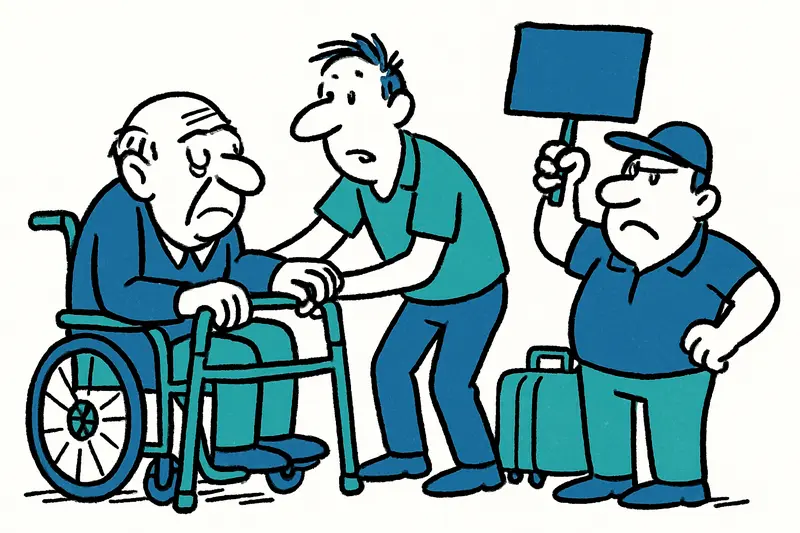
An everyday scene that brings the problem to the point: an elderly man with a walker sits at the gate, two staff members push his luggage, one helps him to stand. The clock shows 05:20, the shift began during the night. The colleagues look tired; one rubs his neck, the other swears quietly about yet another short-notice request by phone. Passengers notice the stressed look, but not the causes: reliable schedules scarcely exist.
Concrete solutions can be identified without long theoretical discourse: first, binding duty rosters with minimum hours and clear limits on daily deployment duration. Someone contracted for 20 hours should not regularly work 12- to 17-hour days. Second, overtime actually worked must be included in social security contributions so that contributions and later benefits (e.g. unemployment benefits) are calculated correctly. Third, the situation demands more transparency in concession awarding: contract requirements should include regular audits, staffing ratios and sanctions for violations. Fourth, an emergency reserve at the airport is needed — a qualified pool of standby staff that can be activated at short notice so care does not depend on a few people reaching exhaustion. Fifth, a roundtable between those affected, trade unions, the operating company and AENA would be sensible — binding, scheduled and with a publicly available action plan.
Practical immediate measures that the airport and operator can implement quickly: regulated advance notice for deployments, an anonymous reporting system for labor violations, psychosocial support for strained employees, and better passenger information duties (visible notices at check-in and online) so people with disabilities know what waiting times to expect and can arrange alternative assistance.
A common objection is: 'That costs money.' Yes. But low-cost concepts where caregivers are called to extra burdens at the push of a button end up costing more — in the form of quality loss, reputational damage for the airport and higher follow-up costs in the social sector. An island that relies on tourism should not skimp on essential services such as mobility assistance, as warned in Palma before the departure chaos: Ground staff strike plans put the island to the test.
Punchy conclusion: Those who bring people together must not tear their helpers apart. Son Sant Joan stands at a crossroads: either binding rules are introduced that make work more plannable and socially fair, or the bottleneck in care becomes a regular disruption — with immediate consequences for travelers who depend on reliable help. Those responsible now have the chance to provide structure instead of patchwork. The clock is ticking, and not only for the next flight.
Frequently asked questions
When is the best time to visit Mallorca for good weather?
What should I pack for a trip to Mallorca?
Is it warm enough to swim in Mallorca?
What is Mallorca like in spring?
Is Mallorca a good destination in autumn?
What is the weather like in Palma de Mallorca?
Is Sóller a good place to visit in Mallorca?
What makes Alcúdia a popular place in Mallorca?
Similar News

Mueller continues expanding in Mallorca: Artà in 2026, Can Picafort in early summer 2027
The drugstore chain Mueller is opening two new stores in Mallorca: a 1,400 m² shop in Artà on 5 November 2026 and a bran...
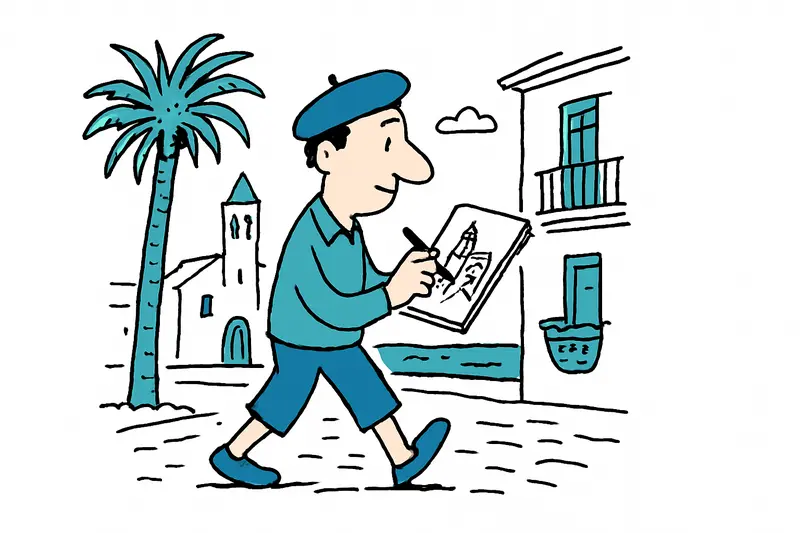
The Painter Who Lived Mallorca: Franz Taussig and His Century-Old Secret
A hundred years ago a young Viennese arrived in El Terreno, sketched the island and called himself Francis Caron. Today ...
Airport dispute: Bridge, forecasts and the question of responsibility
A video by the Spanish transport minister has ignited the dispute over DORA figures, capacities and local governance pow...

The Painter Who Invented Himself: How a Young Viennese Drew Mallorca
A hundred years ago a 19-year-old draftsman arrived in El Terreno. His diary and sheets, long known under the pseudonym ...
Released with Conditions: The Plus Ultra Suspicion and a Mallorcan Finca as Residence
A Dutch entrepreneur, sought in connection with the Plus Ultra case, was extradited to Spain after his arrest in Germany...
More to explore
Discover more interesting content

Can Cap de Bou

Townhouse Lleo 72
