
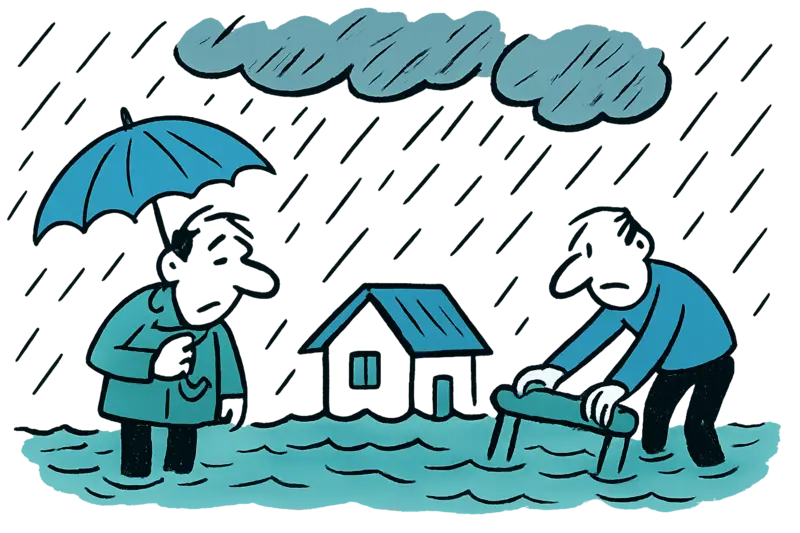
New Rain Alert in Mallorca: Where Danger Looms and What We Should Do
New Rain Alert in Mallorca: Where Danger Looms and What We Should Do
Aemet reported strong rain on Sunday in the Serra de Tramuntana and in the north and northeast — up to 20 l/m² in one hour. Emergency services advise caution. A reality check: what's missing in the public debate and how are municipalities and residents preparing in practice?
New Rain Alert in Mallorca: Where Danger Looms and What We Should Do
Key question: Is the current warning - Aemet warns of up to 20 liters per square meter in one hour in parts of the Serra de Tramuntana as well as in the north and northeast - sufficient to protect residents and tourists in concrete terms, or do we need to react differently at the local level?
The grey clouds over the Tramuntana were visible from early Sunday morning. On the Passeig Mallorca the first drizzle slapped the trees, at the port of Port de Pollença fishermen rolled up their nets, while in Sóller cafés were still putting chairs under tarpaulins. These small scenes show: weather is not just a forecast, it immediately turns into actions, worries and decisions in our daily life.
Aemet has issued a yellow warning for parts of the island: Serra de Tramuntana, north and northeast are in focus, as detailed in Yellow Storm Warning: How Well Is Mallorca Prepared for Heavy Rain?. The agency points out that in short time spans - specifically within one hour - up to 20 liters per square meter can fall locally. For the rest of the island there were no explicit warnings, but rather the prospect of thick cloud cover and isolated showers. Emergències 112 has simultaneously called for caution.
The situation in Catalonia is more serious: a red warning was in force there and heavy flooding was reported. As a concrete example: significant flow rates were observed in the lower course of the Besòs. This shows how quickly rain can become a critical situation when runoff, settlement structure and tributaries come together.
Critical analysis: The Aemet report is precise about intensity (up to 20 l/m² in one hour) and location. Still, questions remain. Which roads are particularly at risk? Which bridges or underpasses in the affected municipalities are at risk of becoming impassable at short notice, as examined in Orange Alert in Mallorca: What the AEMET Warning Means for the Island, Roads and Tourism? How are tourists in holiday apartments without local information channels reached? And: how well are local drainage systems prepared for heavy showers?
In the public discourse the local translation of the meteorological number into concrete recommendations for action is often missing. "20 liters per square meter" tells experts a lot, but the average driver on the MA-10 in the Tramuntana or an elderly woman in a settlement near Alcúdia understands less. There is a lack of easily accessible maps that show: here water runs from the mountain into this valley, there puddles form quickly, and here the bus stop is regularly flooded.
Everyday scene: In the rain you hear a different sound on Mallorca. On Palma's promenade footsteps mix with the slap of drops on awnings, at the square in Pollença market traders gather and protect their goods with plastic sheets. These things are not kitsch; they are indicators of places that are particularly affected by heavy rain. Local neighbors often know such spots - but their knowledge is not used systematically.
Concrete solutions that can help immediately:
1) Visible signs and simple maps: Municipalities should show small graphics on town hall websites and at bus stops: "In heavy rain: escape route, flood-prone areas, assembly points". Not technical, but practical.
2) Focus on critical infrastructure: Prioritize cleaning and keeping street drains clear, regular checks of underpasses on the MA-10 and access routes to the coast. Municipalities can make mobile warning signs available to be put up when an alert is issued.
3) Communication to visitors: Holiday hosts, hotels and Airbnb hosts must inform in simple terms where warnings are active and how guests should behave. QR codes on room information sheets with short info are cost-effective and efficient.
4) Neighborhood networks: In mountain villages like Valldemossa or Fornalutx neighborhood lists can help - who has a pump, who can collect elderly people, who checks the roof? Such informal structures save time when the rain arrives quickly.
5) Technical preparations: Public authorities should keep sandbags ready at known weak points on short notice, check pumps and deploy them where needed. In the long term we need investments in hydraulic maps and better sewer networks.
Despite all criticism: some positive approaches already exist locally, echoed in coverage such as Orange Alert: Torrential Rains — Is Mallorca Prepared?. The advice from Emergències 112 to be cautious is correct and important. Nevertheless, authorities and municipalities should "localize" warnings more strongly and link communication to everyday places: schools, markets, ferry terminals, popular viewpoints in the Tramuntana.
Conclusion: Aemet's weather warning is not an island-wide alarm, but increased attention is warranted for the Serra de Tramuntana as well as the north and northeast. We must translate meteorological data into concrete streets, squares and people. A little more local preparation and clearer, simple information channels would be enough to turn a weather warning into a manageable event - instead of a surprise problem for drivers, market traders and elderly people.
If you want to check now: Aemet offers hourly forecasts and local emergency services inform about acute measures. And above all: listen to your neighbors, remember the places where water pools, and move particularly risky trips to safer times. On Mallorca safety is often decided by small places: an underpass, an inconspicuous dip at the roadside, the café at the harbour that stays closed today.
Frequently asked questions
When is Mallorca typically warmest and best for beach days?
Can you swim in Mallorca outside the peak summer months?
What should I pack for a Mallorca trip in spring or autumn?
What are the outdoor activities you can enjoy in Mallorca?
How can I get around Mallorca without a car?
Are there family-friendly beaches on Mallorca?
What should I know about Mallorca’s coastline and safety near the beach?
When is the best time to visit Mallorca to combine culture and beaches?
Similar News
Popular AIDA Stella Leaves Palma – a Quiet Autumn at the Harbour
The AIDA Stella has left Palma and is heading across the Mediterranean toward Antalya – a long transfer to Asia begins. ...
Taking Off Differently: Pilot, Pere Garau Resident and Rock Musician
Andreas Thiele flies an Airbus A320 for Lufthansa, has an apartment in Pere Garau — and will release an alternative-rock...

Palma takes to the streets: Thousands demand 'Housing as a Right'
Around 3,000 people marched through Palma on Saturday to demand affordable housing. The protest followed the rejection o...

Beatings in Palmanova: Two British tourists injure taxi drivers — what needs to happen now
In Palmanova, two taxi drivers were attacked at night by apparently drunk tourists. One suffered severe facial injuries ...

Village Festivals of Art: ArtinSal, TastArt and Canal'Art Bring Culture to Mallorca's Streets
In October Ses Salines, Porreres and Santanyí turn their squares into exhibition spaces: three art nights, plenty of cra...
More to explore
Discover more interesting content

Can Cap de Bou

Townhouse Lleo 72
