
Record heat in the sea off Mallorca: How dangerous is it really?
Record heat in the sea off Mallorca: How dangerous is it really?
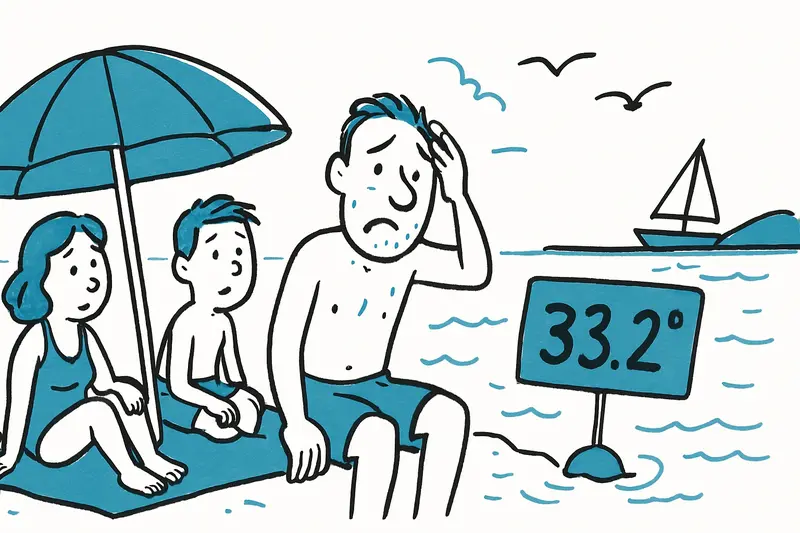
On Wednesday afternoon the buoy off Dragonera recorded a historic value — 33.02 °C according to the Spanish port authority. What do the numbers actually mean, what consequences are looming, and what is missing from the debate?
Record heat in the sea off Mallorca: How dangerous is it really?
Key question: Are we at a new turning point for the waters around Mallorca — or is this a localized measurement outlier with high symbolic value?
Late on Wednesday afternoon the buoy off the island of Dragonera showed an unusually high value: 33.02 °C, according to the record of the Spanish port authority, registered at 4 p.m. The Spanish weather service AEMET also published information about the unusually high sea values. At the same time, a Balearic meteorologist reported 32.71 °C on X and highlighted that these could be very unusual temperatures for the Mediterranean. During the night the temperature at the same buoy fell to 29.33 °C. For comparison: the previously documented peak at this measuring point was 31.9 °C on August 12, 2024; see Sea temperatures off Mallorca drop temporarily — temporary reprieve or false alarm?.
Critical analysis: Three things must be distinguished — measurement accuracy, local conditions and longer-term trends. Longer-term trends are discussed in Record Heat at 500 Meters Depth: Mallorca Faces an Invisible Danger. Buoys provide hourly point values at a single location. On a hot, windless afternoon with strong sunlight, shallow surface layers can become significantly warmer than deeper water just a few meters away. That explains why values fluctuate (33.02 °C at 4 p.m., 29.33 °C at night). Nevertheless, the sudden rise is not a purely technical detail: it points to a combination of extreme air heat, stable weather conditions and low water mixing — conditions that have occurred more frequently this summer.
What is missing in the public debate: The discussion often revolves around headlines — “historic record” — and less around consequences for ecosystems, fishers and everyday life. It is rarely explained how short-term peaks and prolonged sea warming lead to different outcomes. Also underexplored is how well the network of measuring stations is distributed. A single buoy tells a lot — but not everything. Someone who enters the water at Playa de Palma in the morning feels something different than a gauge on the open sea.
A scene from everyday life on Mallorca: On a hot day in Colònia de Sant Jordi locals and tourists sit in the shade of the small beach bars. Children splash, the waves are gentle, and a fishing boat rocks lazily at a buoy. People do not talk about statistics but about the water feeling “like a bathtub.” The waiter wipes sweat from his brow, terns circle overhead. Such observations are valuable: they show how abstract measurements feel in daily life.
Why the numbers matter: Even short-lived warm layers can stress marine organisms. Higher surface temperatures reduce oxygen solubility and alter the behavior of fish, molluscs and algae. Long-term rising averages, in turn, strain ecosystems like Posidonia meadows, the biological hotspots of the coast; see How the Sea off Mallorca Is Heating Up Faster Than We Think — and What We Can Do About It. The tourism industry also feels effects — if the sea no longer refreshes, the quality of beach recreation declines.
Concrete local measures that could help: First: expand and make the measurement network more transparent. More buoys and nearshore measurements, open data on municipal sites and a simple display for bathers (current surface temperature, warning levels) would provide orientation. Second: protect coastal ecosystems. Municipalities should regulate anchoring zones, boat traffic and construction to reduce stress on Posidonia and shallow-water areas. Third: everyday heat-prepared measures — shaded areas on beaches, drinking-water stations, well-communicated recommendations for safe swimming in warm water (e.g. shorter bath times for children). Fourth: monitoring fish stocks and algal blooms; early warning systems help fishers and lifeguards.
What politicians need to consider: Climate warming is a structural problem; local measures do not solve systemic causes. Nevertheless, preventive coastal policies, improved monitoring systems and information can significantly reduce real risks. More important than pure alarm messages are concrete plans: who will monitor continuously, who will finance coastal protection, who will inform tourists and locals quickly and clearly?
Concise conclusion: The 33‑degree mark at the buoy is a wake-up call, not an endpoint. Whether the event ends up as a one-off outlier in the statistics or as a harbinger of a new normal will be decided by the response: measure more, report more often, strengthen local protection measures. On Mallorca, between the Paseo Marítimo and small ports like Colònia de Sant Jordi, the heat is already noticeable — it is time to turn feeling into action.
Frequently asked questions
How hot is the sea off Mallorca recently, and what does a 33°C reading indicate?
How reliable are sea temperature readings from Mallorca’s buoys?
What are the ecological and practical effects of short-term warm water around Mallorca?
What practical steps can Mallorca take to adapt to warming seas?
How should residents and visitors stay safe when the sea is unusually warm in Mallorca?
Is the recent 33°C sea temperature a new normal for Mallorca or an outlier?
Why are Posidonia meadows important to Mallorca, and how does warming affect them?
Where can people find up-to-date sea temperature information and alerts for Mallorca?
Similar News

Warning to Bathers: Nipping Fish in Cala Major and Other Coves — a Reality Check
In Cala Major and several beaches around Mallorca, bathers report painful “nips”. Who are the animals, why are they gett...

Rental Car Theft in El Arenal: What This Incident Reveals About Our Gaps
A teenager steals a running rental car in El Arenal, flees on foot, climbs over walls and is caught by the Guardia Civil...

Red Rope in Palma's Library: What Helps Against Selfie Tourism — and What's Missing
Palma's city library cordoned off an area with a red rope to keep selfie tourism away from reading and working activitie...

Fort San Carlos: Museum, Harbor Dispute — and a Conflict That Demands Answers
The military museum at Fort San Carlos sits right on Palma's harbor, with unexpectedly quiet rooms filled with cannons a...

Old Town Under Pressure: When a Doorway Becomes a Sleeping and Shower Place
For months a woman has been living with a parasol, a clothes rack and personal belongings next to the social welfare off...
More to explore
Discover more interesting content

Can Cap de Bou

Townhouse Lleo 72
