
Rescue at the Portocolom Lighthouse: Why a Rock Fall So Quickly Becomes a Major Operation
Rescue at the Portocolom Lighthouse: Why a Rock Fall So Quickly Becomes a Major Operation
A walk ended in an aerial rescue on Tuesday in Portocolom: a man fell several meters onto rocks and was evacuated by helicopter. Why such accidents at popular cliff viewpoints often require complex rescues — and what should change now.
Rescue at the Portocolom Lighthouse: Why a Rock Fall So Quickly Becomes a Major Operation
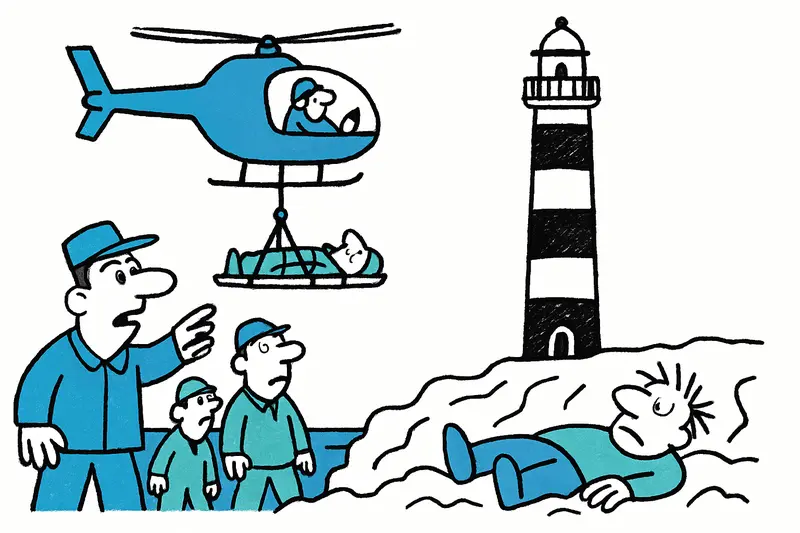
On Tuesday around 1:22 p.m., the normally quiet coast near Portocolom briefly turned into a busy incident scene. A man apparently fell several meters onto the rocks below near the lighthouse. Firefighters, the Guardia Civil, municipal police and an air ambulance responded because the accident site was too difficult to reach quickly by land, similar to incidents such as Dramatic Helicopter Rescue at Puig Major: Lessons from an Afternoon in the Tramuntana. The rescuers transported the injured person to a meeting point; an ambulance then took him to hospital. No information about the severity of his injuries has been released so far.
Key Question
Why does a four to five meter fall at a well-known viewpoint so quickly lead to an elaborate air rescue — and what is missing in prevention at such locations?
Critical Analysis
Portocolom is not a hidden path: visitors stroll there, seek photo angles and often go close to the edge. The terrain, with jagged rocks and steep drops, makes any rescue more difficult. A fall onto hard rock is dangerous even from a few meters; additionally, usual access routes along the coast are not always present or passable. In such cases, the helicopter remains the fastest option, but it is expensive, weather-dependent and ties up considerable personnel, as shown by Four missions in one day: How fit is Mallorca's mountain rescue? The situation shows that response and prevention do not always go hand in hand.
What Is Missing from Public Debate
There is much talk about spectacular rescue images and little about prevention: where are clear warnings about fall risks, how well secured are viewpoints, who maintains the paths? Authorities rarely publish figures on emergencies at coastal cliffs, and owners or municipalities seldom discuss responsibilities, as in Fatal Rescue Attempt in Son Bauló: What Must Change on Our Beaches. The visibility of rescue routes and meeting points also often remains unclear, especially for tourists unfamiliar with the area.
An Everyday Scene from Portocolom
Those who stood on the promenade yesterday first heard the distant thrum of the helicopter, then the low murmur of people looking toward the bay from cafés and the car park. Two anglers packed up their rods, older couples sought shade under plane trees, and young people filmed the operation with their phones. The lighthouse, usually a quiet point of orientation, suddenly felt like a small island of urgency.
Concrete Solutions
1. Visible signage: Clear signs at car parks and access points in several languages plus pictograms showing fall risks. 2. Designated viewpoints: Railings or natural barriers at particularly frequented spots, without overwhelming the landscape. 3. Path management: Regular maintenance and marking of informal paths; temporary closures during slippery conditions, as happened after the Rockfall at Sa Calobra: What are the lessons from the Ma-2141 closure?. 4. Strengthen rescue logistics: Marking of meeting points and access routes for ambulances; joint exercises with air rescue and ground teams. 5. Awareness: Local information campaigns during peak seasons, cooperation with tourist offices, boat operators and rental companies. 6. Volunteer networks: Training of local volunteers in first aid and orientation until professional teams arrive.
Why This Is Feasible
Many measures cost little or are one-off investments: signs and markings, simple railings at hot spots, coordinated plans for rescue access routes. Existing resources such as the Guardia Civil, fire brigade and local police know where the problems lie. The challenge is coordination between municipalities, conservation authorities and those responsible for coastal areas.
Concise Conclusion
Yesterday's operation at Portocolom was life-saving for the injured person — proof that rescue chains work. At the same time, the incident reveals a gap: frequent visitors meet unsecured cliffs. Less media spectacle and more concrete prevention would be the better recipe. A small sign at the car park entrance and a well-thought-out meeting point could prevent a routine walk from turning into an aerial rescue.
Frequently asked questions
Why do rescue teams use a helicopter for falls near the Portocolom lighthouse?
Is it safe to walk near the cliffs in Mallorca?
What should I do if I see someone injured on rocks in Mallorca?
Are Mallorca lighthouses and viewpoints usually protected against falls?
What makes Portocolom’s lighthouse area difficult for rescue crews?
When is the best time to visit Mallorca coastal viewpoints safely?
What should I wear and bring for a cliff walk in Mallorca?
Why are there calls for better warning signs at Mallorca’s coastal cliffs?
Similar News
More water than last year: Mallorca's reservoirs breathe easier
September rain refilled the Tramuntana's reserves: overall fill around 35 percent, Cúber at 40.42 percent, Gorg Blau at ...
Three Luxury Hotels in Banyalbufar: Lots of Money, Many Questions
A Danish investor plans three exclusive accommodations in Banyalbufar — including the historic Son Valentí. The announce...
2.1 tonnes of cocaine on sailing yacht off Spain's coast – a reality check for the coastguard
A 14-metre yacht was seized with 2.1 tonnes of cocaine. Who monitors the ports, how does the international hunt succeed ...
Heat Bonus in Mallorca: 100 Euros Extra for Outdoor Staff at MarSenses
MarSenses pays employees who worked outdoors in August an extra €100 as recognition. Lighter uniforms, reduced hours for...
Renovating in Mallorca: What You Really Can Do Without Neighbour Consent
Many think they can do whatever they want in their apartment. That's partly true — but only as long as structural elemen...
More to explore
Discover more interesting content

Can Cap de Bou

Townhouse Lleo 72
