
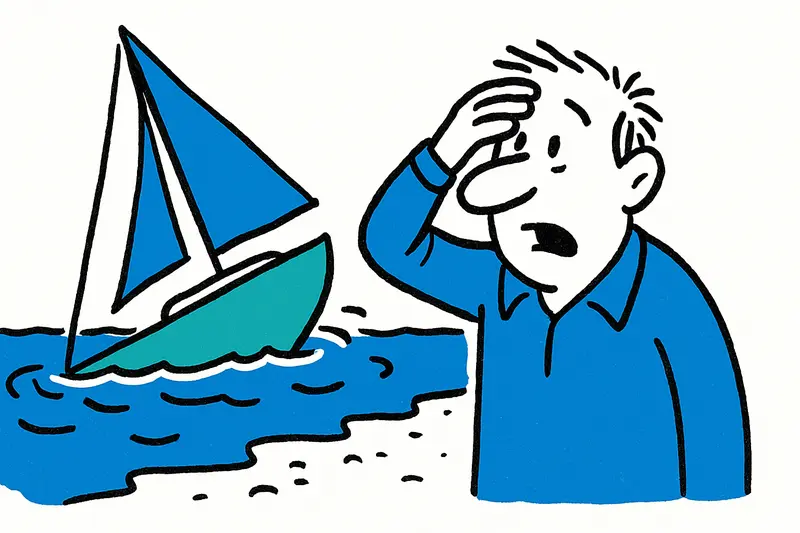
Sailing yacht 'Valent Segundo' sinks off Palmanova – a wake-up call for responsibility at sea
Sailing yacht 'Valent Segundo' sinks off Palmanova – a wake-up call for responsibility at sea
In the morning the nine-metre sailing yacht 'Valent Segundo' sank off Palmanova. Sea rescue teams could not secure the boat and the owner was unreachable. Who bears the consequences — and what needs to change?
Sailing yacht 'Valent Segundo' sinks off Palmanova – a wake-up call for responsibility at sea
Key question: Why was it not possible to save the boat – and who takes responsibility for sunken vessels off our beaches?
Early in the morning a resident noticed the stern of a nine-metre sailing yacht already half underwater off Palmanova and called the emergency number at around 8:55 a.m. The search and rescue vessel Salvamar Libertas reached the scene, found no one on board and attempted to stabilise the boat using a motor pump. The measure failed and the yacht sank. The owner could not be reached, a situation reminiscent of Patera Capsizes Near Portopetro — One Dead, Three Missing and Many Unanswered Questions.
The scene unfolds in a coastal stretch familiar to walkers and early risers: the smell of the sea, the cries of the gulls, the distant hum of boats off the promenade, and the voices of the few fishing boats returning in the morning. What starts as a moment of astonishment for residents quickly raises questions that go beyond the visible wreck.
Critical analysis: At first glance it was a classic sea rescue operation – a witness alarmed, an immediate departure, measures taken on site. But the rescue attempts were limited: a simple motor pump apparently could no longer stop or divert the ingress of water. No one was on board and there was no contact with the owner – which makes rapid, coordinated action more difficult. If no one is liable or reachable, the rescue teams are left with the practical task of limiting damage and minimising potential environmental hazards.
What is usually missing from the public debate: the discussion about responsibilities and preventive duties of boat owners quickly disappears behind the sensational headline "yacht sinks." There is a lack of clear information on how registration data, insurance details and contact channels should work in an emergency. The question of how ports and municipalities deal with decommissioned or neglected boats is rarely addressed. When storms have already hit the island in recent weeks and damaged vessels – as with A refugee boat capsizes off Cala Millor: one person dies, several seriously injured. – this gap in the system becomes alarmingly significant.
Everyday scene in Mallorca: late morning in Palmanova, people sit in small cafés by the coast, waiters wipe the tables, a dog tugs on its lead and tourists watch the water with curiosity. Rescue vessels are not uncommon; their signals are familiar. Still, it is unsettling when an unattended boat drifts and then sinks. For beach owners, fishermen and boat rental operators these are real risks – they whisper about possible oil pollution, additional salvage costs and the question of who will ultimately pay the bill, as discussed in Boat tragedy off Mallorca: Between grief, legal battles and the question of a Plan B.
Concrete solutions: First, owners' accessibility must be improved. A mandatory, up-to-date contact requirement in state or autonomous boat registers, coupled with fines for non-compliance, would help. Second, standard standby contracts between municipalities/ports and professional salvage companies would allow quick action in the event of accidents without long legal hurdles. Third, compulsory inspections before and after the storm season should be introduced, with concrete requirements for securing boats at anchorages and in marinas. Fourth: an emergency salvage fund, financed by port fees, could cover short-term costs when owners are not reachable and environmental damage is imminent.
Legal clarity is important: sea rescue protects lives and seeks to limit property damage. For follow-up costs – salvage, disposal, possible environmental cleanup – clear regulations are needed so that municipalities and taxpayers are not left alone. Insurance companies play a role, but only if policies exist and insurers cooperate. Transparency about ownership and insurance coverage would shorten administrative processes.
A practical detail: mobile technologies could help more quickly. A mandatory digital emergency profile for every registered recreational craft – with phone numbers, insurance information and a power of attorney for emergencies – could make the difference between timely intervention and later salvaging of a wreck. Authorities, port administrations and nautical associations should work together on a unified scheme.
Pointed conclusion: the sunken 'Valent Segundo' is more than a bulletin on the local radio; it is an indicator of gaps in responsibility and prevention. The island has no interest in its beaches and seabed becoming a repository for abandoned boats. Those who go out on the water bear responsibility – and if that responsibility is not guaranteed, rules and instruments must be adapted before the next storm presents the bill.
Frequently asked questions
Why did the sailing yacht sink off Palmanova?
What happens in Mallorca when an abandoned boat starts sinking near the coast?
Who is responsible for a sunken boat off Mallorca beaches?
What should boat owners in Mallorca do before storm season?
How can residents report a sinking boat in Palmanova or elsewhere in Mallorca?
Can a sunken boat in Mallorca cause pollution near the beach?
Is it common to see rescue boats off Palmanova in Mallorca?
What can municipalities in Mallorca do about neglected boats?
Similar News

Carriages Without Horses: Palma Plans E-Carriages – a Reality Check
Palma plans to switch to electric carriages in 2027. The prototype was shown near the cathedral. What is the technology ...

Record season, empty coffers: Who really benefits from the tourism boom?
Full hotels and more flights: the numbers sound impressive — yet many locals feel no benefit. A reality check with an ev...

Pool ordered for €46,000 – €23,000 paid, no work carried out: A fraud case in Palma
A homeowner in Palma transferred €23,000 for the construction of a pool. Weeks later it emerged that no building applica...

Summer greetings from the Pitiusas island: Gottschalk and Krüger enjoy the sun on Ibiza
A friendly photo of Thomas Gottschalk and Mike Krüger on Ibiza evokes memories of their shared film years and shows that...
Occupied in a Few Days: When Property in Mallorca Turns into a Dispute
Six young men were arrested in Palma after homeowners returned and could no longer open their own door. A case that rais...
More to explore
Discover more interesting content

Can Cap de Bou

Townhouse Lleo 72
