
Security must not rely on translation apps: Why Playa de Palma needs German-speaking interpreters
Security must not rely on translation apps: Why Playa de Palma needs German-speaking interpreters
A security guard, Instagrammer and German speaker observes: After thefts, communication with police and emergency personnel falters. A guiding question, analysis and concrete proposals.
Security must not rely on translation apps: Why Playa de Palma needs German-speaking interpreters
Guiding question: Is it enough to process victims with a translation app — or does Mallorca need a permanent interpreting structure at tourist hotspots?
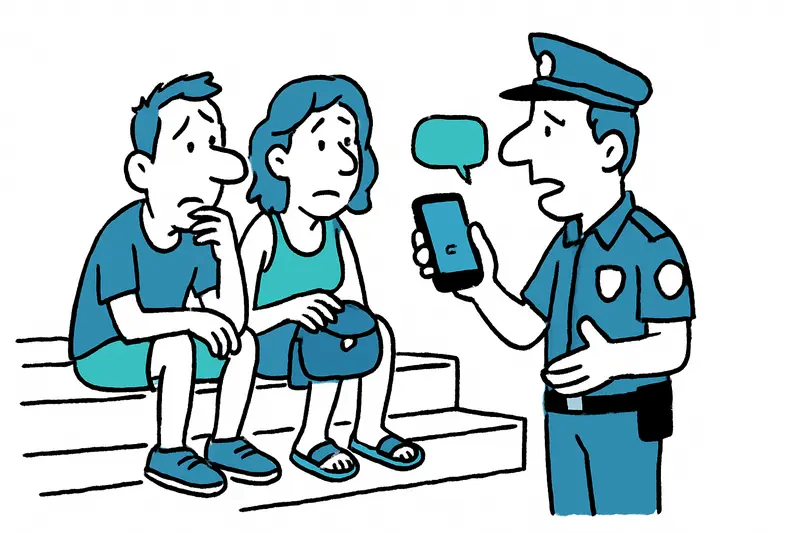
In the late afternoon, when the shadows of the parasols at Playa de Palma grow longer and the beach bar speakers get louder, shocked holidaymakers sit on the steps to the paseo with empty pockets. Phone gone, wallet gone, ID gone — and then the big worry: How do I explain this to the police if nobody speaks German?
One man who often witnesses this scene up close is Óscar Álvarez. As a security worker with a large Instagram following, he has become a contact point for many German guests. He speaks fluent German, collects IDs thought lost, helps with police reports and translates when necessary. His practice highlights the gap: Anyone who needs to communicate clearly and quickly in an emergency must not have to rely solely on automatic translators.
The criticism Álvarez raises is not aimed at individual police officers. Rather, it describes a structural problem: the security structures around Playa de Palma face an international public — especially guests from Germany — and are rarely prepared for this in their staffing, training offers or deployment plans.
Why this matters: the first minutes after a theft or an assault are crucial for preserving evidence, witness statements and later prosecution, as seen in a nighttime case where phone tracking led to an arrest.
What is often missing in the public debate is a sober overview of the costs and responsibilities associated with providing linguistic assistance. It is not enough to lament that tourists use apps or turn to influencers; it must be clarified who will fund interpreters, how quickly they will be available and in which situations their use should be mandatory.
On the ground, between sunbed rentals and taxi ranks, much is improvised at present, while a report describes how pickpockets exploit Playa de Palma. Police officers try to help with hands, feet and phone translators; hotels act as an intermediary; private helpers like Álvarez step in. That may work in the short term, but it is not a basis for a rule-of-law, traceable documentation of crimes.
Concrete solutions are possible and practicable:
1. Certified interpreters available on call: A pool of freelance German interpreters that authorities can call on could be covered with shifts. Their deployment would need to be paid promptly, similar to medical on-call services.
2. Bilingual presence during peak season: For the summer months, German-speaking staff could be stationed at times with the Policía Local or in tourist police stations. This is more expensive than ad-hoc interpreting but increases trust and direct contact.
3. Training for emergency personnel: Basic vocabulary, standard questions for reports and awareness of trauma-informed communication — short modules offered regularly would improve the quality of first interviews.
4. Cooperation with consulates and the tourism industry: Hotels, tour operators and German consular offices could share costs and organization, for example through a shared-service model or a hotline that channels cases.
5. Documentation standards: Forms in multiple languages, clear protocols for translated statements and mandatory labeling when translation apps were used instead of a human interpreter.
Everyday scene: On the avenue where taxis wait and ice cream vendors clean their stands, a young German couple sat on the curb last week trying to tell a policewoman what had happened using Google Translate. Bystanders listened, a hotel employee tried to help — in the end the report was filed, but several details remained vague. The confidence that a professional, human conversation creates was missing.
This affects not only minor offenses but also cases of physical violence or sexualized assaults, where precision in communication is particularly important — for examples of escalation see nighttime escalations at Playa de Palma.
Such observations lead to a clear demand: linguistic assistance is not a luxury but part of the security infrastructure of an international destination. If Mallorca wants to sell itself as a safe place, it must be able to listen to victims appropriately and understandably.
What should be done now
Instead of debates about image brochures, we need pragmatic steps: a pilot project for interpreters at Playa de Palma next season, an inventory of linguistic capacities in police and rescue services and a transparent cost model with multiple partners. The experience of individual helpers like Álvarez must not remain the rule — it should be the reason to close the gaps systematically.
Conclusion: Tourist safety does not end with cordoning off beaches or advertising promises. It begins at the moment of loss, when someone is afraid and needs clear, understandable support. Translation apps are useful, but they must not be the only bridge. Mallorca can show that it cares for people — by removing language barriers before another holidaymaker dictates their report to the beach with their phone.
Frequently asked questions
When is the best time to visit Mallorca for warm weather and fewer crowds?
Is it good to swim in Mallorca year-round?
What should I pack for a Mallorca trip?
What are the best beaches or coves to visit in Mallorca?
What’s the best way to get around Mallorca?
What outdoor activities are popular in Mallorca?
What should I wear in Mallorca in summer and winter?
What local highlights should I look for in Mallorca?
Similar News

Who will clean up? Illegal rubbish heaps on the highway near Son Gual drive residents onto the streets
For months, construction debris and household waste have piled up along the highway between Palma and Manacor near Son G...

Amundi takes over Bikini Island & Mountain Port in Sóller – many questions remain open
The French asset manager Amundi has acquired the four-star Bikini Island & Mountain Port hotel in Sóller from an Austria...

Silvia was allowed to see the sea once more – a small farewell in Port de Soller
A team from the Balearic health service IB-Salut fulfilled a terminally ill woman's wish: one last trip to the water in ...
Magaluf: Imprisonment for Beach Club Employee after Theft of a Bag — What the Ruling Overlooks
A former dishwasher received a one-year prison sentence for stealing a Louis‑Vuitton bag. The appellate court upheld the...

Road collapse at Port de Valldemossa: Who will pay for the next wave of damage?
A section of the MA-1131 near Port de Valldemossa slipped after heavy rains from cold front "Adam". Residents are strand...
More to explore
Discover more interesting content

Can Cap de Bou

Townhouse Lleo 72
