
Short Spring Interlude: Rain, Wind and Noticeable Temperature Drop in Mallorca
Short Spring Interlude: Rain, Wind and Noticeable Temperature Drop in Mallorca
The warm spell isn't ending, just taking a short dip: AEMET warns of rain and falling temperatures on Thursday and Friday. What this means for daily life, transport and farmers.
Short Spring Interlude: Rain, Wind and Noticeable Temperature Drop in Mallorca
A mild period gives way briefly to cooler, windier conditions – what residents and visitors should know now
Key question: Are we prepared for such rapid weather changes – from beach weather to a rain jacket in two days?
May is showing its two faces on Mallorca again. After a few days with temperatures around 24 °C, a low-pressure system brings in colder air. Severe weather in Mallorca: Wind, rain and a brief temperature drop – what matters now According to AEMET, the sky will cloud over next Thursday and the mercury may fall below 19 °C (Clouds Gather: Rainy Weather Coming to Mallorca — Pack an Umbrella). Persistent precipitation is expected especially on Friday, accompanied by a fresh northwesterly wind. By Saturday the situation should stabilize, but highs will remain subdued at around 20 °C.
Recent measurements show how unevenly the rainfall was distributed: about 15.6 liters per square meter fell in the Serra d'Alfàbia, Escorca reported 5.8 liters, Banyalbufar 3.8 and the Lluc monastery 3.6 liters. Such figures sound moderate, but in narrow mountain valleys they can mean slippery roads and fuller streams; similar local shower patterns were reported in Short showers, great relief: Mallorca breathes easy.
Critical analysis: Such rapid successive changes are not rare. They are typical for the transition from a rather wet spring to a more stable summer climate. The problem is less the temperature itself than the speed of the shift: road surfaces, gutters and small sewage plants often have too little time to recover. In Palma, for example, many cobblestone streets become suddenly slick after longer dry spells.
What's missing in public discussion: conversations about the everyday practicality of urban infrastructure often remain abstract. When "weather" is reported, it rarely addresses direct consequences for bus and ferry connections, for farmers in the Tramuntana or for safety on mountain roads like the Ma-10. Practical advice for tourists and seasonal businesses also hardly appears – yet clear, concrete recommendations help immediately.
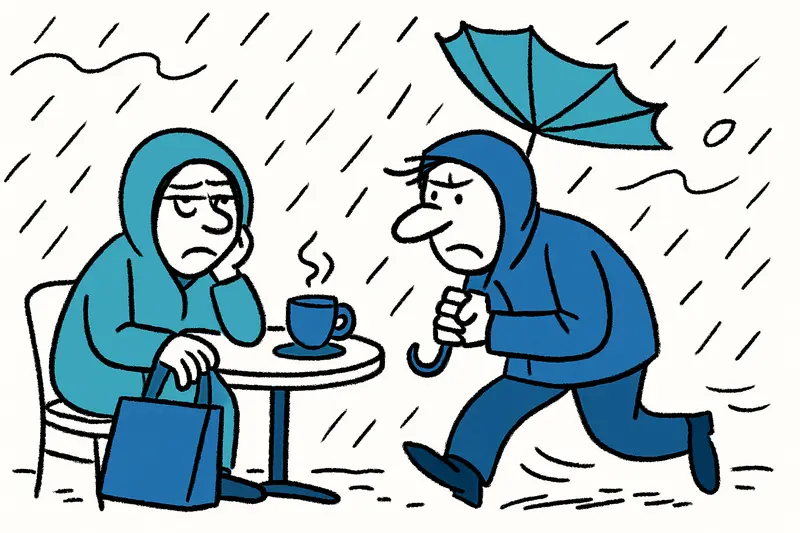
Everyday scene: On Thursday at midday a woman with a shopping bag sits outside the café in Plaça Major, her jacket beside her, the espresso still steaming. On the opposite side of the street a bus stops on Passeig Mallorca, passengers pull up hoods. In Portixol a small crew hauls their nets on deck – not a storm, but enough wind to change the day's plan. Such images repeat in villages and coastal towns when the weather turns at short notice.
Concrete solutions: Municipalities should now check whether street drains and channels are clear, especially in known problem zones on the east coast and in mountain valleys. Transport companies could use more accessible, automated information channels to inform passengers about delays. Farmers in the Tramuntana can adjust irrigation and harvest plans at short notice when heavy rain is expected, as happened during a Temperature Drop: Short Winter Interlude in the Tramuntana. For locals and visitors: drive carefully, keep distance, carry a jacket in your daypack; hikers should build in time buffers and walk slowly on slippery paths.
One practical tip to finish: check your gutters and balcony drains now before the rain comes. Small measures save later trouble. And for anyone heading out to sea: check wind strength hourly, especially for trips off northwest coasts.
Conclusion: It's not an unusual pattern, but one that demands attention. Short rain and wind phases in May are part of the island's weather, yet with some foresight many inconveniences can be avoided. Mallorca won't stay cold or wet for long – but this small climatic dip can noticeably affect daily life.
Frequently asked questions
What is the weather like in Mallorca in autumn?
Can you still swim in Mallorca outside summer?
What should I pack for a trip to Mallorca in the shoulder season?
Is autumn a good time to visit Mallorca?
What is Pollença like in autumn?
Is Palma pleasant to explore in the cooler months?
What can you do in Mallorca when the beach weather is less reliable?
How do temperatures in Mallorca change between day and evening?
Similar News
Magaluf: Watchtower Alarm – Lifeguards Pull Unconscious Beachgoer from the Water
After a drama in the late afternoon, two lifeguards at Magaluf beach rescued an unconscious 44-year-old man. He was stab...
Turquoise in the City: How dangerous is the color play of the Sa Riera?
The Sa Riera in Palma suddenly turned turquoise — a pretty motif, but behind the effect lies a discharge of saline waste...

Jeckliner at Sunnesching: Cologne spirit sets sail from Palma
In September 2027 the Mein Schiff 2 briefly becomes a floating carnival stage: four days with Cologne bands, comedy and ...
Finally Home: Mike and Leyla Heiter Buy Villa with Sea View in Mallorca
The reality TV couple Mike and Leyla Heiter have bought a house in Mallorca with a roof terrace and sea view. An Instagr...

Arrest after series in Palma: Who protects apartments from repeat offenders?
The National Police arrested a man in Palma who investigators say may have broken into several apartments. In one incide...
More to explore
Discover more interesting content

Can Cap de Bou

Townhouse Lleo 72
