
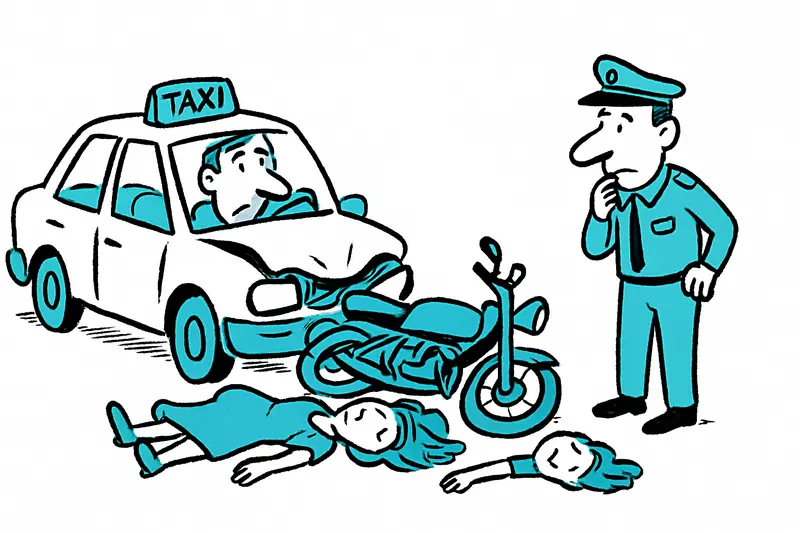
Taxi collides with motorcycle at Cala Duo on Formentera – two women dead
Taxi collides with motorcycle at Cala Duo on Formentera – two women dead
In a collision near Cala Duo on Formentera, two women on a motorcycle lost their lives. Emergency crews were unable to save them. We ask: What is going wrong on the island's narrow roads — and which measures would truly help?
Taxi collides with motorcycle at Cala Duo on Formentera – two women dead
On Wednesday midday, a serious traffic accident occurred near the small cove Cala Duo on Formentera: a taxi struck a motorcycle carrying two women. The immediately alerted emergency services, including ambulances from the SAMU 061 emergency service as well as the Guardia Civil and local police, initiated resuscitation measures. Despite their efforts, the two occupants could not be saved.
Key question
Who bears responsibility when something like this happens on an island with narrow roads and few vehicles — and which precautions would prevent further deaths?
Critical analysis
Formentera is not a big city with traffic canyons. The island has narrow coastal roads, little room to accelerate and during the high season many scooters, rental cars and some taxis from La Savina. That two people die in a collision makes clear: low traffic density is no guarantee of safety, as detailed in Why Are So Many Motorcyclists Dying on Mallorca? A Reality Check after the Llucmajor Accident. Often reliable details are missing: speed at the time of the accident, visibility conditions, road surface, whether the riders wore helmets or whether technical defects on the taxi played a role. Without this information the public discussion remains superficial.
What is missing in the public discourse
Public debate often focuses on assigning blame. Systemic questions are usually missing: How well organized are the emergency routes on Formentera? Are there speed controls specifically at busy spots such as accesses to coves? Are taxi companies regularly checked for technical safety? And: how well do seasonal workers know the island roads? Answers to these questions would help reduce the risk of accidents — not just outrage after the event, as argued in Too Many Deaths on Motorcycles: How Mallorca Can Stop the Summer Trend.
An everyday scene from Formentera
When you step out of the ferry terminal in La Savina on a hot July day, you hear engines, seagulls and the buzzing of scooters. The roads are narrow, sometimes without continuous sidewalks; in some places pedestrians, delivery vans and holidaymakers with rental scooters mix. At Cala Duo itself the air smells of sun and sea, the asphalt glitters and the few trees cast only short shadows — a place where speed and inattention can quickly become fatal. This mirrors broader trends described in More traffic fatalities in the Balearic Islands: Why are so many motorcyclists affected?.
Concrete: Which measures would work?
- Temporary traffic calming in the high season: additional signs, mobile speed cameras and closures of small access routes during peak times. - Preventive checks for taxis and rental vehicles: technical inspections, regular driver training and clear information duties for seasonal staff about danger spots. - Improved emergency logistics: visible positioning of rescue vehicles in critical sectors, coordinated radio frequencies and more publicly accessible AED devices (defibrillators) at beaches and parking areas. - Awareness campaigns: short notices when renting vehicles, mandatory reminders about helmet use and speed limits, on information boards at the ferry terminal. - Data-based analysis: systematic recording of accidents by location, time and cause so that measures can be targeted, as suggested in Why Mallorca Remains Dangerous for Bikers — and What Could Really Help.
Pointed conclusion
The death of two people at Cala Duo is a tragedy that demands answers, not quick judgments. Formentera does not need a general debate; it needs clearer rules on the island roads, better inspections and rescue logistics that take the terrain into account. If we do not tackle this seriously, the same sad scene will repeat on a hot summer day: the rattling of a scooter, an engine revving, the fluttering of an ambulance — and the question why action was not taken earlier.
Frequently asked questions
What safety tips should I follow when driving or riding on Formentera’s narrow coastal roads?
How could emergency response be improved for road accidents on Formentera, especially near Cala Duo?
What concrete traffic safety measures could help prevent crashes around busy coves on Formentera during summer?
Who bears responsibility in a road collision on a small island like Formentera, and how are taxi and rental-vehicle safety inspections handled?
Why is data collection important for preventing road accidents on Mallorca’s smaller islands like Formentera?
How can awareness campaigns reach seasonal workers on Formentera to improve helmet use and speed awareness?
When visiting Formentera, what should I pack to stay safe on the roads and beaches?
Are there speed checks at busy coves or access routes on Formentera?
Similar News
Mistaken identity with fatal consequences: Brutal assault in S'Aranjassa — what's missing in the follow-up?
At S'Aranjassa a visitor to a finca was tied up, beaten and thrown out of a van. Three men have been arrested, including...
High heel slips, car accelerates: accident on Camí de Son Hugo
A woman lost a high-heeled shoe on the forecourt of the sports facility at Camí de Son Hugo. The car accelerated, mounte...
Phone Scam: How Two Hotel Employees at Playa de Palma Lost Thousands of Euros
One morning in September, two reception employees at Playa de Palma were pressured by alleged alarm-company staff — in t...
When the Wallet Becomes a Danger: Attack in Peguera and Lessons for Mallorca
In Peguera, two women are said to have stolen the wallet from a 75-year-old German couple. When the victim intervened, t...
Plata stays Plata: Young people take over, Llonguets remain
A small bar on Carrer de l'Argenteria will continue: Tolo Serra hands the place over to young Mallorcans at the end of t...
More to explore
Discover more interesting content

Can Cap de Bou

Townhouse Lleo 72
