
'Ten Days and Uncertainty': Protest in Palma against eviction in the Son Bordoy project
'Ten Days and Uncertainty': Protest in Palma against eviction in the Son Bordoy project
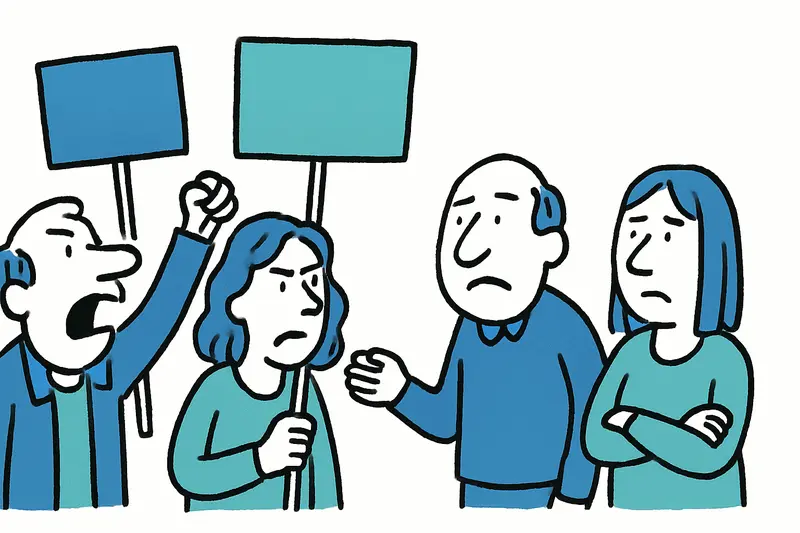
On Monday people gathered at the town hall square in Palma: the PAH initiative protested the planned eviction of around 200 residents in the Son Bordoy area. Those affected have been asked to leave within ten days – many demand a clear, dignified alternative.
'Ten Days and Uncertainty': Protest in Palma against eviction in the Son Bordoy project
PAH demands immediate, dignified solutions for around 200 affected people
At the town hall square in Palma, where in January the air still smells sharp of tram diesel along the large avenues and pigeons scratch for bread between the benches, a group of people gathered this morning, loudly and visibly protesting an impending eviction. The PAH platform called for the demonstration. The reason is a municipal construction project in Son Bordoy – between El Molinar and the MA-19 – intended to make space for a new neighborhood with up to 750 apartments. According to the initiative, around 200 people have been asked to vacate their accommodations within ten days.
Key question: Who in Palma will take short-term responsibility for families, older people and people with disabilities when existing homes are suddenly emptied? The question sounds simple but in reality it is complicated and unfair. In the square one heard not only chants but also the clinking of coffee cups from a nearby café on Passeig del Born – everyday life and crisis side by side.
Critical analysis: A forced eviction on such short notice exposes the weaknesses of the existing system. Authorities, developers and social services must act in a coordinated way; if they do not, emergencies arise. Ten days are, from a social-work perspective, barely enough to explore suitable alternatives, file applications or organize child-friendly moves. The situation affects the most vulnerable especially: children, older people and people with disabilities need time, support and often specialised housing.
What has so far been lacking in the public debate: concrete numbers on available social housing, information about possible temporary accommodation, and a transparent timetable from the administration; these omissions occur against a backdrop of rising evictions on the Balearic Islands. Technical details about the project – such as how many housing units will actually be built and how many of them will be socially subsidized – often remain vague. Without these facts the conflict between the need for construction and the protection of people turns into mutual blame.
A brief everyday scene at the edge of the protest showed how precarious the tightrope is: an elderly woman spoke quietly with a young mother, both knew each other from the neighborhood and both feared the change. A delivery van passed by with a sign for a plumbing company from El Molinar – a small picture of the island where work, living and caring for one another lie close together. This echoes scenes such as a door bricked up on Joan Miró Street.
Concrete solutions can be identified without denying the need for new construction: first, a temporary ban on evictions until binding relocation and accommodation plans are in place; second, the immediate activation of vacant municipal and private apartments for limited periods; third, accelerated cooperation between the town hall, social services, NGOs and developers, including a clear registry of contacts for those affected; fourth, transparent information on how many of the new apartments will be socially subsidized and according to which criteria allocations will be made.
It would also be pragmatic to examine whether existing hotel capacities can be used on a temporary, last-resort basis until permanent solutions are available. Such options are not pleasant but sometimes necessary to prevent people from becoming homeless at night. Importantly: decisions must be made in writing, be traceable and binding – only then can trust be built.
What counts now: pressure from the streets, but also political will in the offices. Today's rally was loud but peaceful, recalling instances when thousands demonstrated in Palma and everyday life had to be balanced with freedom of expression. The PAH made clear demands: faster, dignified housing alternatives and transparent information for those affected. This is more than a moral plea; it is a test of how Palma handles change.
Conclusion: Whoever builds in Palma must first ensure that people are not pushed out into the streets. Otherwise progress will leave little behind except empty facades and unsettled neighborhoods. Now the administration, developers and the community are called upon to deliver solutions that people can stand behind in the morning outside their front doors.
Frequently asked questions
What is the Son Bordoy eviction protest in Palma about?
How much notice do people usually get before an eviction in Mallorca?
What support is available for families facing eviction in Palma?
Can vacant apartments be used as temporary housing in Mallorca?
Where is Son Bordoy in Palma?
Why are protests in Palma over housing and evictions becoming more common?
What kind of housing is planned in the Son Bordoy development?
What should people in Mallorca do if they are told to leave their home quickly?
Similar News

Mistaken identity with fatal consequences: Brutal assault in S'Aranjassa — what's missing in the follow-up?
At S'Aranjassa a visitor to a finca was tied up, beaten and thrown out of a van. Three men have been arrested, including...

High heel slips, car accelerates: accident on Camí de Son Hugo
A woman lost a high-heeled shoe on the forecourt of the sports facility at Camí de Son Hugo. The car accelerated, mounte...

Phone Scam: How Two Hotel Employees at Playa de Palma Lost Thousands of Euros
One morning in September, two reception employees at Playa de Palma were pressured by alleged alarm-company staff — in t...
When the Wallet Becomes a Danger: Attack in Peguera and Lessons for Mallorca
In Peguera, two women are said to have stolen the wallet from a 75-year-old German couple. When the victim intervened, t...
Plata stays Plata: Young people take over, Llonguets remain
A small bar on Carrer de l'Argenteria will continue: Tolo Serra hands the place over to young Mallorcans at the end of t...
More to explore
Discover more interesting content

Can Cap de Bou

Townhouse Lleo 72
