
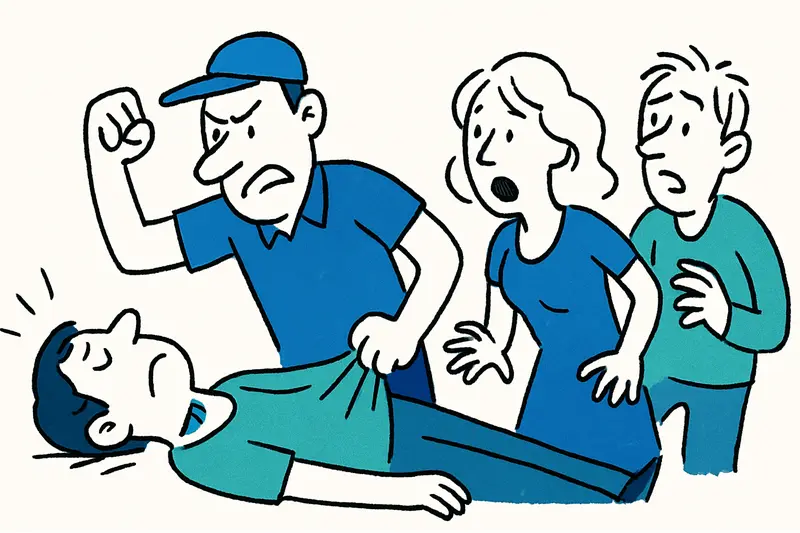
Throat injured at Plaza Gomila: 18-year-old in custody — what Palma's nightlife needs now
Early Saturday morning a 35-year-old man was severely injured in the neck at Plaza Gomila. An 18-year-old is in pretrial detention. A critical assessment: How safe is Palma's nightlife, and what steps are missing to prevent such escalations?
Key question: How safe is Palma's nightlife — and what can we do about it?
In the early hours, when Paseo Mallorca still smells of slammed taxi doors and loud reggaeton beats, a night out ended abruptly at Plaza Gomila. A 35-year-old man was admitted to Son Espases hospital with a deep, inverted V-shaped cut to his neck. The wound is about five centimetres long; doctors had to perform emergency surgery. The Policía Nacional detained an 18-year-old Spanish man at the scene, and a judge ordered pretrial detention on suspicion of attempted murder. Similar incidents have been covered in local reporting, notably the Nighttime Attack on the Paseo Marítimo: How Safe Is Palma’s Party Mile Really?.
Critical analysis: where prevention has failed
Incidents like this show not only raw violence but also how everyday objects can quickly become weapons: investigators believe a watch with small glass stones was used, not a bottle. The location — a crossroads of promenade, clubs and late-night snack bars — is a mix of people, emotions and alcohol. It takes one misstep, a verbal provocation or the feeling that friends are being harassed for an altercation to escalate, as seen in other episodes such as the Brawl at Playa de Palma: Why a verbal exchange could have ended fatally.
The state's response was swift; plainclothes officers intervened, provided first aid and, based on witness statements, were able to identify a suspect. Still, questions remain: Why do serious outbreaks of violence keep occurring on the same streets? Are current police presence plans for weekends sufficient? Are doormen adequately trained in de-escalation and first aid? And how can the time between attack and medical care be better bridged?
What is missing from the public debate
The debate often stays stuck in the perpetrator-victim framing and sensational headlines. There is a lack of honest engagement with systemic factors: opening hours, the concentration of many venues in one area, training for security staff, lighting and CCTV, but also social prevention aimed at young night-time visitors. Little is said about equipping public spaces with easily accessible first-aid supplies or about emergency routines in popular nightlife streets; incidents like the Palma: Club roof climbing stunt exposes safety gaps highlight gaps that rarely make it into policy talks.
A scene from everyday life
Picture the scene: it is shortly after five, high heels still click on wet pavement, streetlights throw wide bands of light, taxis honk, a bus drives empty toward the harbour. Two dancers leave a venue, three young men follow them. A small shove, a wrist grabbed, a ripped jacket — and soon the sirens are wailing. Many nights start like this; sometimes they end in the operating room, and other chaotic episodes are chronicled in pieces such as Seven People, One Trunk: Why Palma's Nights Are More Often Going Wrong.
Concrete solutions
1) Plan police presence smarter: fewer purely formal patrols, more plainclothes operations in hotspots between 2 and 6 a.m. 2) Train doormen and staff: mandatory courses on de-escalation, lawful use of force and first aid tied to every license renewal. 3) Adapt infrastructure: better street lighting at Plaza Gomila and the Paseo, more clearly visible CCTV cameras, clearly marked escape and rescue routes for ambulances. 4) Improve first-aid access: public defibrillators and small emergency kits in pubs and at club entrances. 5) Prevention and communication: transparent staffing schedules, exchange between venue operators, police and emergency services; campaigns against being followed and group chases at night. 6) Judicial and preventive measures: faster risk assessments when items are confiscated, clearer sanctions for targeted pursuit of individuals.
Conclusion
The case at Plaza Gomila is more than a single act of violence. It is a test of Palma's approach to nightlife: how much tolerance does a city have for places where conflicts can quickly escalate without mediation? Those who only react will keep seeing hospital doors locked. Those who act proactively reduce nighttime violence, improve rescue routes and make the journey home less risky. Concrete measures at the interface of police, venue operators and city administration are needed now — before the next siren shatters the promenade.
Frequently asked questions
When is the best time to visit Mallorca for outdoor activities?
What should I pack for a Mallorca trip by season?
Which Mallorca beaches are best for swimming and sunbathing?
What are some family-friendly activities to do in Mallorca?
How does the weather vary across Mallorca during the year?
How can I get around Mallorca without a car?
Are there easy day trips from Mallorca to explore the island?
How can I find quieter beaches on Mallorca if I want a more relaxed day?
Similar News
When Paradise Becomes Unaffordable
Hotel rooms, paella and the weekly grocery shop: Mallorca is becoming more expensive for many. Who pays the bill — guest...
End at Ballermann: What Is Lost with the Dino Mini Golf at Playa de Palma
On October 25 the dinosaur mini-golf course at Playa de Palma will close after more than 30 years. Why the city is recla...

Expensive Address Calvià: What Does First Place Mean for Mallorca?
The National Institute of Statistics (INE) ranks Calvià as Spain’s most expensive municipality for property purchases. W...
Emergency over Spain: Ryanair Dublin–Tenerife flight diverted to Santiago after medical emergency
A Ryanair flight from Dublin to Tenerife was diverted to Santiago de Compostela due to a passenger's acute health proble...
Ten Years in a Tent: A Couple in Son Verí and the Gaps in the Housing Market
A British couple has lived for around ten years in a makeshift shelter near Son Verí. Their story is not an isolated cas...
More to explore
Discover more interesting content

Can Cap de Bou

Townhouse Lleo 72
