
USS Gerald R. Ford off Palma: Between Warning and Everyday Life — Who Protects the Boats?
A US aircraft carrier is anchored off Palma, radio messages warn leisure skippers: What does this mean for security, port operations and everyday life on the island — and which rules are missing from the public discussion?
USS Gerald R. Ford off Palma: Between Warning and Everyday Life
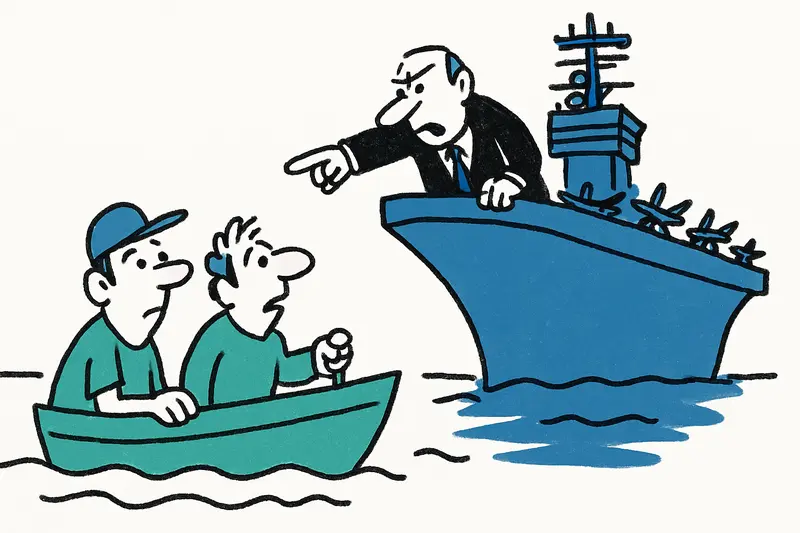
On Sunday at noon, military language suddenly mixed with the sounds of the city: seagulls cried over the Passeig del Born, coffee cups clinked, and a terse announcement came over VHF from the largest US aircraft carrier in the bay of Palma: “Leave the area — or defensive measures may follow.” Captains in the harbour and residents by the water heard the same instruction. For many it was unsettling — and for some people involved in everyday port operations simply new.
The central question: Who protects the small boats when the big ones arrive?
This is the key question that has been raised since the USS Gerald R. Ford off Palma: A Colossus That Casts More Than a Shadow anchored. A ship this size — more than 300 metres long, 4,500 marines on board, highly complex technology — not only brings presence but also rules that can quickly affect daily life. Who decides how tight the safety zones are? Who informs leisure skippers, fishers and ferry captains? And who bears responsibility if something goes wrong?
More than deterrence: security, legal and communication gaps
Officially, maritime safety zones, radio instructions and the authority of the port administration apply. In practice, however, information flows and responsibilities often diverge. Small operators who rarely hear English or who do not constantly monitor VHF channels face questions: Are fines the only tool? How are rescue routes organised if harbour pilots are blocked by closures? And: are there clear agreements between the Guardia Civil Marítima, the harbour master’s office and the US personnel? (see Giant at Anchor: US Aircraft Carrier Sparks Debate in Palma).
One aspect that was little discussed is the language barrier: the warnings were also broadcast in English — useful for international crew members, problematic for local fishers or tour boats without multilingual crews. In addition, liability remains unclear: if an incident occurs, which jurisdiction applies — Spanish civil courts or military jurisdiction? Such details are not abstract for island residents; they concern concrete risks and costs.
Economy versus sovereignty — the quiet everyday conflicts
The effects are visible throughout the city: sailors and soldiers sit next to locals at harbour cafés, and the Olivar market hums with quiet conversations. A taxi driver calculated that an evening with US visitors can quickly bring in an extra €300 to €500; a bar owner in Olivar described it plainly: “Money is money, but the atmosphere doesn’t always improve.”
At the same time, protest signs were visible in some streets (see USS Gerald R. Ford off Palma: Why the island is now divided) — the issue also touches on questions of sovereignty and public space. The presence of the most advanced military technology is rarely perceived as neutral; it is a political signal discussed around municipal tables.
What has so far been too rarely on the table
The following points receive little attention: the concrete environmental impact (emissions, noise), emergency plans for technical problems on a carrier in the harbour area, and the social integration of crew members temporarily ashore. Also underexposed is how transparent the schedule of such ship movements is made for the public — information that boat owners need to plan their trips (see USS Gerald R. Ford off Palma: Routine or wake-up call for better controls?).
Concrete proposals — how Palma and its boats can be better protected
A few pragmatic steps that could be implemented quickly:
1. Clear, multilingual information channels: The port authority, Guardia Civil and the US forces should issue binding notices in Spanish, Catalan and English — via postings, website and push notifications for registered skippers.
2. A fixed safety corridor: Instead of blanket exclusion zones, clearly marked transit corridors could be defined that allow rescue routes and tourist trips without endangering security interests.
3. Public emergency briefing: A short daily briefing for port actors (fishers, operators of excursion boats, yacht owners) with contact persons and VHF channel information.
4. Environmental and noise measurements: Monitoring during the berthing period, documented and publicly accessible.
These measures would not only reduce fears but also demonstrate that presence and local safety can be reconciled.
A look ahead
For the coming days the situation remains calm but tense. The port authority emphasizes that it is in contact with the American authorities. Practical advice for boat owners: call ahead, check the VHF channel and do not rely solely on a sense of adventure. And for the city: transparent communication and clear rules make the difference between unrest and safe coexistence.
Between the roar of the waves, the clatter of espresso cups and the announcements from the carrier, a slow negotiation process is currently underway here — between security, the economy and the right to head carefree to the cove.
Frequently asked questions
Why is there a safety zone around the USS Gerald R. Ford off Palma?
How should boat owners in Mallorca check whether they can sail near Palma?
Do local fishers and tour boats in Palma receive warnings in Spanish or English?
Who is responsible if a boating incident happens near Palma’s harbour?
Is it still possible to visit Palma harbour cafés and the city while the carrier is anchored?
Does the USS Gerald R. Ford affect tourism and local business in Palma?
What practical advice is there for skippers sailing near Palma during the carrier’s stay?
Are noise and environmental impacts from the carrier off Palma being monitored?
Similar News
Palma under the microscope: 87 arrests over forged passports – what now?
The National Police stopped 87 people at Palma airport this year with allegedly forged documents. Why are controls alone...
When a Taxi Fare Dispute in Magaluf Turned Bloody: How Safe Are Passengers and Drivers?
In Magaluf a dispute over the fare escalated: a tourist, now 18, is accused of having seriously injured a taxi driver in...

Why Mallorca Has Become So Terribly Expensive — A Reality Check
Rents are exploding, staple food prices are rising, wages are lagging behind. A look at the causes, what is missing from...
When Paradise Becomes Unaffordable
Hotel rooms, paella and the weekly grocery shop: Mallorca is becoming more expensive for many. Who pays the bill — guest...
End at Ballermann: What Is Lost with the Dino Mini Golf at Playa de Palma
On October 25 the dinosaur mini-golf course at Playa de Palma will close after more than 30 years. Why the city is recla...
More to explore
Discover more interesting content

Can Cap de Bou

Townhouse Lleo 72
