
Winter onset at the start of the holidays: polar air, 12‑meter waves and what's missing in Mallorca
Winter onset at the start of the holidays: polar air, 12‑meter waves and what's missing in Mallorca
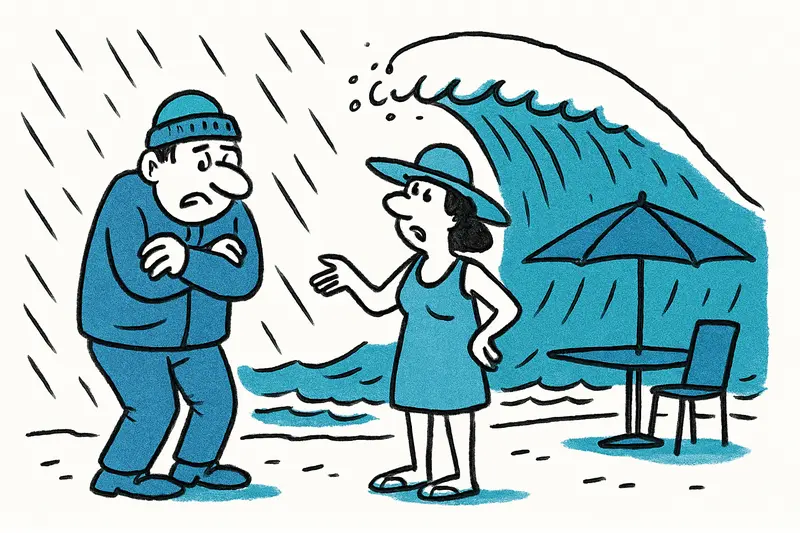
A sharp cold snap brings Aemet warnings, strong gusts and snow down to 600 meters. Our guiding question: Are warning systems and infrastructure sufficient when tourist flows and storms coincide?
Winter onset at the start of the holidays: polar air, 12‑meter waves and what's missing in Mallorca
A strong surge of polar air is hitting the island. Aemet raises warning levels — and many travelers have only just arrived.
Our guiding question: Are warning systems, communication and local preparedness sufficient when storm, snowfall and full holiday flights coincide?
The national weather service Aemet has assessed the situation clearly: a low bringing cold polar air will cause stormy gusts, rain, thunderstorms with hail and a dramatically agitated sea, as covered in Short late summer — then a weather turnaround: What Mallorca needs to know now.
Orange warnings now apply to parts of the coast; gusts of around 70 km/h are reported in places, and some bays could see waves of up to twelve meters, as noted in Storm warning on the coast: Ten-meter waves and freezing nights in Mallorca. The snow line will fall considerably on the night to Sunday — locally snow is expected from around 600 meters, and daytime temperatures remain cool: Valldemossa will barely rise above about 12 °C, Palma around 17 °C.
That is the sober meteorological picture. But when you stroll through Palma, other concerns quickly become visible: wheeled suitcases stand in the arrivals hall of the airport, families with children look for an open café on the Passeig, and the loose plastic furniture of the beach bars rattles in the cold wind along the promenade. These everyday scenes show how quickly a weather event can become a logistical problem.
Our critical analysis: Aemet messages are available, but warnings do not always reach people at the right time or in the appropriate language. Many holidaymakers read reports before departure, yet short‑notice deteriorations — such as the drop of the snow line to 600 meters or the upgrade of coastal warnings — often reach travelers too late. On the other hand, municipal measures like beach closures, port restrictions or shuttle changes are organized very differently depending on the municipality, a disparity examined in Sudden autumn in Mallorca: Are harbors and coasts prepared for short storms?.
What is often missing in public discussion: practical guidance for travelers and businesses. Instead of only citing figures, holidaymakers need concrete instructions: When should harbor facilities be avoided? Where will ferries be rerouted? Which roads on Tramuntana slopes are particularly at risk? Also rarely discussed: the strain on emergency services at peak times and whether temporary staff increases for the Guardia Civil, fire brigade and port authority are planned in time.
Concrete, immediately implementable proposals: First: multilingual, location‑based warnings at airports, bus stops and major hotels — via notices and push notifications. Second: uniform criteria for beach and harbor closures, viewable online in real time. Third: temporary traffic management and enhanced information for rental car customers — especially for mountain roads toward Valldemossa and Deià. Fourth: clear recommendations for boat owners and small fishing harbors to secure their vessels or temporarily remove them from the water. And fifth: short‑term readiness plans for tourist hotspots so that rescue services are not overwhelmed by routine tasks.
A small everyday example from Portixol: On Friday morning operators of a beach bar carefully covered the chairs with a tarpaulin while an older woman with her dog stopped by the café and looked worriedly at the sea. No drama, but a moment when information would help — a sign with the next warning level, a QR code for current updates, an announcement in German, English and Spanish.
From an infrastructure perspective: storm surges and very high waves are not purely meteorological problems. They test promenades, dunes and harbor walls. Longer discussions about coastal protection or seasonal beach opening hours are important, but in the short term clear responsibilities and closer coordination between municipalities, the island government and port authorities count most.
For travelers: keep plans flexible, check with accommodation providers, have weatherproof clothing handy and respect safe distances from the shore. If traveling by car, check traffic reports and be especially alert to rockfalls or closed stretches in the Tramuntana.
Conclusion: the meteorological warning situation is serious. Aemet provides the data — now the follow‑up work must be better: clear, timely information and coordinated local measures. Otherwise a winter onset in the middle of the holiday season can quickly become a preventable inconvenience. That would be unfortunate both for locals and for guests who came to relax.
In short: Aemet warns of storm, high waves and snow; the snow line can fall to around 600 meters by Sunday morning; local authorities and travel providers should now act proactively and inform clearly.
Frequently asked questions
How cold does Mallorca usually get during a winter weather shift?
Is it safe to go to the beach in Mallorca during strong wind and high waves?
When can it snow in Mallorca's mountains?
What should I pack for a holiday in Mallorca when bad weather is forecast?
How does bad weather affect flights and arrivals in Mallorca?
Is Valldemossa colder than Palma in winter weather?
What should drivers know about the roads to Deià and Valldemossa in a storm?
Are beach bars and harbour areas in Mallorca affected by winter storms?
Similar News
Magaluf: Watchtower Alarm – Lifeguards Pull Unconscious Beachgoer from the Water
After a drama in the late afternoon, two lifeguards at Magaluf beach rescued an unconscious 44-year-old man. He was stab...
Turquoise in the City: How dangerous is the color play of the Sa Riera?
The Sa Riera in Palma suddenly turned turquoise — a pretty motif, but behind the effect lies a discharge of saline waste...

Jeckliner at Sunnesching: Cologne spirit sets sail from Palma
In September 2027 the Mein Schiff 2 briefly becomes a floating carnival stage: four days with Cologne bands, comedy and ...
Finally Home: Mike and Leyla Heiter Buy Villa with Sea View in Mallorca
The reality TV couple Mike and Leyla Heiter have bought a house in Mallorca with a roof terrace and sea view. An Instagr...
Arrest after series in Palma: Who protects apartments from repeat offenders?
The National Police arrested a man in Palma who investigators say may have broken into several apartments. In one incide...
More to explore
Discover more interesting content

Can Cap de Bou

Townhouse Lleo 72
