
Balearic Islands tighten sale of energy drinks to minors: protection or sham regulation?
Balearic Islands tighten sale of energy drinks to minors: protection or sham regulation?
The Balearic government has proposed a bill that would ban the sale of caffeinated energy drinks to minors and tighten rules on the sale of nitrous oxide. A step in the right direction — but is it enough?
Balearic Islands tighten sale of energy drinks to minors: protection or sham regulation?
On Friday the Balearic cabinet approved a bill that would prohibit the sale of caffeinated energy drinks to persons under 18 and at the same time tighten the regulation of nitrous oxide sales for non-medical or non-industrial purposes. Health Minister Manuela García emphasized that the aim is to protect minors from health risks and to make decisions based on data.
Key question
Does a sales ban really protect young people — or does it just push the problem into backyards, vending machines or online?
Critical analysis
At first glance the ban is understandable: studies and surveys show that caffeinated stimulants are common among adolescents. According to the ESTUDES 2023 survey, almost 48 percent of 14- to 18-year-olds reported regularly consuming energy drinks; around one in five mixed them with alcohol. That not only increases the risk of cardiovascular problems and sleep disorders, but also raises the likelihood of risky behaviour among young people.
But law texts are not a panacea. What will be decisive is how enforcement is implemented: who checks age at kiosks along Avenida Gabriel Roca or at supermarkets on Calle Aragón? What sanctions will be imposed if retailers continue to sell to minors? And how will the administration tackle online commerce and items brought in from abroad? Without clear answers, the ban risks becoming a paper tiger. Coverage of recent regulatory debates in the islands provides context, for example Smoking Ban in Mallorca: What the New Law Means for Terraces, Playgrounds and E‑Cigarettes.
The same applies to nitrous oxide. In recent days material related to nitrous oxide was seized at Playa de Palma; investigations were opened against two people. That shows the problem is already present on the streets. A sales ban without accompanying measures — such as checks in tourist centres, information campaigns and a concept for disposing used cartridges — remains incomplete.
What is missing in the public debate
There is little discussion about prevention and education. Bans are important, but they work better when young people understand why certain substances are dangerous. Schools often lack practical educational offerings on the effects of caffeine, combined consumption and the risks of nitrous oxide. It also remains unclear how doctors, social workers and pharmacies are to be involved in the measures. Economic aspects are hardly discussed either: small kiosks rely on impulse purchases during high season — how will they be supported to make checks practicable? The broader Balearic approach to public-health measures has been discussed elsewhere, for instance Balearic Islands Reject Central Smoking Ban on Beaches and Terraces.
Everyday scene in Mallorca
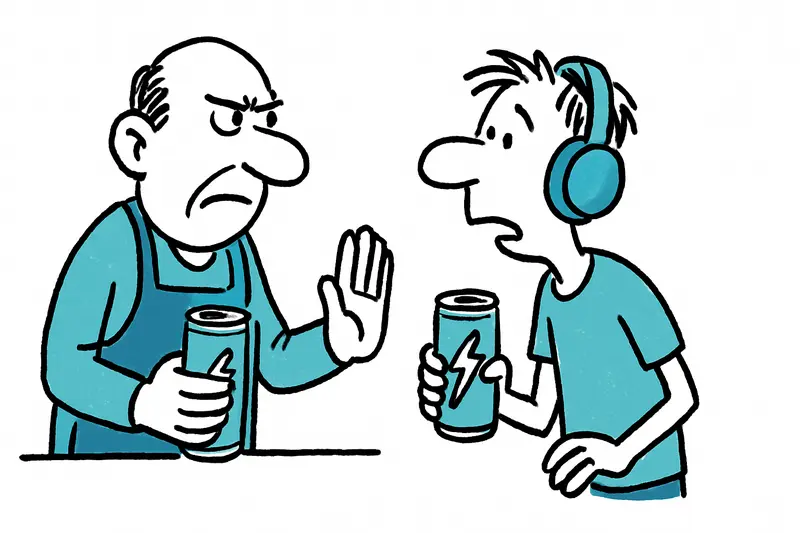
Early in the morning on the Passeig Marítim: delivery vans parked, market traders setting up, a school bus lets teenagers off who hurry to the bus with headphones and colourful cans in hand. On the corner a street musician plays, motorcycles hum by. This scene is a reminder of how commonplace energy drinks have become — they are in sight of schools and sports grounds. If a ban is to be effective, it must reach this everyday reality, not just the headlines.
Concrete solutions
1) Age verification digital and analog: mandatory ID checks by sellers, complemented by random inspections by market supervision; mandatory age verification via ID services for online shop orders.
2) Mandatory warning labels: uniform warning notices on cans and in advertising; limits on allowed caffeine content per 100 ml.
3) School and leisure programmes: educational offers in secondary schools and youth centres about the effects of caffeine, combined consumption and nitrous oxide, provided in cooperation with health authorities.
4) Tourism-oriented controls: increased patrols in hotspots such as Playa de Palma at peak times and cooperation with hospitality businesses so that bars do not serve mixed drinks to underage guests.
5) Social services: low-threshold counselling and addiction prevention combined with municipal programmes that promote alternative drink options in schools and sports clubs.
6) Clarify nitrous oxide regulation: ban the sale of portion cartridges to end consumers in small quantities, sell only to verified businesses or with proof of use; clear fines and waste management. For related local economic measures and their limits, see Cheaper Gas Bottles in Mallorca: Short-term Relief — But Is It Enough?.
Concise conclusion
The bill is a clear signal: the Balearic Islands want to address the issue. Whether it becomes more than a signal depends on implementation, resources and political will. Anyone who knows the scene on the Passeig Marítim knows: bans alone do not change minds. It takes enforcement, education and practical rules for retailers — otherwise the cans and cartridges will remain where they already are: in the hands of young people and in the headlines.
Frequently asked questions
What does the Balearic energy drink law mean for minors in Mallorca?
Will the new rules curb underage drinking and health risks from caffeine in Mallorca?
How could online sales and tourist areas affect the energy drink ban in Mallorca?
What accompanying measures are proposed to make the Mallorca ban effective?
What are the concerns about nitrous oxide regulation in the Balearic Islands?
How does the public debate view bans versus prevention in Mallorca?
What practical steps should Mallorca retailers take to comply with the energy drink rules?
How might enforcement look in tourist hotspots like Playa de Palma?
Similar News
Warning to Bathers: Nipping Fish in Cala Major and Other Coves — a Reality Check
In Cala Major and several beaches around Mallorca, bathers report painful “nips”. Who are the animals, why are they gett...
Rental Car Theft in El Arenal: What This Incident Reveals About Our Gaps
A teenager steals a running rental car in El Arenal, flees on foot, climbs over walls and is caught by the Guardia Civil...
Red Rope in Palma's Library: What Helps Against Selfie Tourism — and What's Missing
Palma's city library cordoned off an area with a red rope to keep selfie tourism away from reading and working activitie...
Fort San Carlos: Museum, Harbor Dispute — and a Conflict That Demands Answers
The military museum at Fort San Carlos sits right on Palma's harbor, with unexpectedly quiet rooms filled with cannons a...
Old Town Under Pressure: When a Doorway Becomes a Sleeping and Shower Place
For months a woman has been living with a parasol, a clothes rack and personal belongings next to the social welfare off...
More to explore
Discover more interesting content

Can Cap de Bou

Townhouse Lleo 72
