
Guardia Civil and Social Media: When Backseat Posing Leads to Charges
Guardia Civil and Social Media: When Backseat Posing Leads to Charges
Since the summer the Guardia Civil has been analyzing videos from social networks to detect risky driving maneuvers. What this means for drivers, viewers and everyday life in Mallorca — and which questions remain unanswered.
Guardia Civil and Social Media: When Backseat Posing Leads to Charges
Digital traces, real consequences — a reality check from Palma
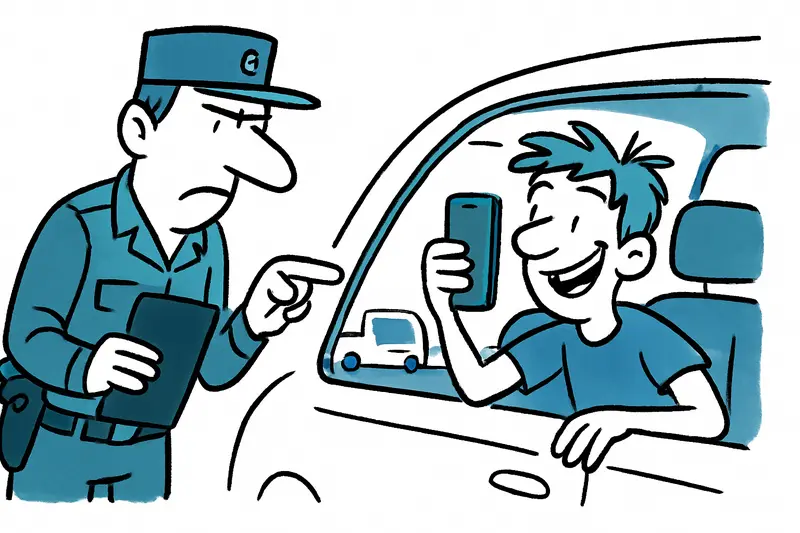
On the Plaça de la Reina a man sits with an iced coffee, behind him a van slowly passes the Parc de la Mar. Loud laughter echoes from an open window; a smartphone is filming. Scenes like this are part of everyday island life: loud engines, the ringing of e‑bikes, tourist groups planning their next shots on their screens. What many do not know: such clips no longer end up only in the family album — they can also bring the Guardia Civil into action.
In recent weeks, officers from the traffic unit have intensified their monitoring of the digital space. Already published videos showing reckless overtaking, drifts or people on the back seat of a rental car have been analyzed to reconstruct scenes, identify license plates and determine possible drivers, as in the case reported in Aggressive driver in Bendinat: Why the streets can no longer remain calm. Several investigations are reportedly already underway.
Key question: Should public social media posts serve as a basis for investigations — and how can the innocent be protected at the same time? This is not a theoretical debate. On an island where roads, social life and tourism are closely intertwined, two interests clash: traffic safety versus legal protection and data privacy.
The advantages are obvious. A video can document dangerous behavior that might not be noticed from a patrol car: risky lane changes, tailgating, illegal overtaking, or sudden incidents such as the abrupt braking on the Ma‑20 reported in Dangerous braking maneuver on the Ma-20: When will authorities finally act effectively?. Especially when witness name, time and location are provided, it speeds up tracing. This is useful for rescue operations and prevention.
But the digital hunt has its pitfalls. Videos are often short, blurred and lack context. Misinterpretations are possible: a photo of five people on the back seat may look like posing at a party but could also be explained by a celebration. License plates are sometimes only partially legible. If investigations rely solely on social media material, the risk of misidentification increases — with all the consequences of stalking or damage to reputation, a problem highlighted by reporting such as Who Really Drove? Forensics Reinterpret Crash around Port d'Alcúdia.
Public discourse so far lacks a factual debate about which standards should apply: What requirements for the quality and authenticity of recordings should be set? How long may digital evidence be stored? Who checks the chain of custody before a charge is issued? Authorities speak of a “detailed analysis,” but the criteria remain vague.
Another blind spot is the responsibility of the platforms. Should operators cooperate more when there are clear indications of danger? Or would such cooperation open the door to data collection that goes far beyond traffic safety? This balance is missing from the current discussion.
The perspective of car rental companies is rarely heard. In summer many rental cars circulate on Mallorca; damage, overcrowding and illegal modifications often become apparent only later. This ties into wider problems such as More than 350 drivers without a driver's license in the Balearic Islands: Why the problem on Mallorca shouldn't exist. A binding reporting procedure between companies and authorities — with data protection guarantees — could help identify repeat offenders more quickly.
Practical solutions that seem feasible: first, clear minimum requirements for usable recordings (date/time, minimum resolution, camera angle) and mandatory documentation of the source. Second, a transparent reporting chain at the Guardia Civil: receipts, processing status and deletion deadlines should be traceable. Third, information campaigns on Mallorca — at beaches, parking lots and rental agencies — explaining how citizens can reliably report dangerous incidents (phone 062, local stations, official website or the email colabora@guardiacivil.org) without breaking laws themselves.
In everyday life this means: if you see a dangerous scene, it is better to note time, place and direction than to post immediately. Screenshots are helpful, videos even more — but only if they have not been manipulated afterward. And if you pose on the back seat, be aware: visibility leaves traces.
What we need as a society is a set of rules that promotes safety without undermining the presumption of innocence. The Guardia Civil emphasizes that it wants to make dangers visible and pursue them consistently — which is understandable. But transparency and rule-of-law safeguards must go hand in hand.
Conclusion: The digital world makes us alert and makes us quick. That is good for road safety — provided the rules are right. On Mallorca this means concretely: less showing off on the Paseo Marítimo, more consideration at the Vía Cintura roundabout and clearer guardrails for how police and the public handle videos. Whoever brags with a clip today could get a letter from the Guardia Civil tomorrow — perhaps a salutary reminder that true coolness on the island begins with consideration.
Frequently asked questions
How is social media footage used in Mallorca traffic investigations?
What are the risks of basing investigations on social media clips in Mallorca?
What standards and procedures are being discussed for usable video evidence?
How can residents report dangerous incidents on Mallorca without violating privacy?
What role could rental car companies play in spotting repeat offenders on Mallorca’s roads?
What should you consider before posting street videos from Mallorca?
Why is transparency important in how the Guardia Civil uses digital evidence?
What practical steps could improve how Mallorca handles social media evidence?
Similar News
Palma under the microscope: 87 arrests over forged passports – what now?
The National Police stopped 87 people at Palma airport this year with allegedly forged documents. Why are controls alone...
When a Taxi Fare Dispute in Magaluf Turned Bloody: How Safe Are Passengers and Drivers?
In Magaluf a dispute over the fare escalated: a tourist, now 18, is accused of having seriously injured a taxi driver in...
Why Mallorca Has Become So Terribly Expensive — A Reality Check
Rents are exploding, staple food prices are rising, wages are lagging behind. A look at the causes, what is missing from...
When Paradise Becomes Unaffordable
Hotel rooms, paella and the weekly grocery shop: Mallorca is becoming more expensive for many. Who pays the bill — guest...

End at Ballermann: What Is Lost with the Dino Mini Golf at Playa de Palma
On October 25 the dinosaur mini-golf course at Playa de Palma will close after more than 30 years. Why the city is recla...
More to explore
Discover more interesting content

Can Cap de Bou

Townhouse Lleo 72
