
When Lifeguards Do More Than Pull Buoys: Pursuit at Playa de Palma
When Lifeguards Do More Than Pull Buoys: Pursuit at Playa de Palma
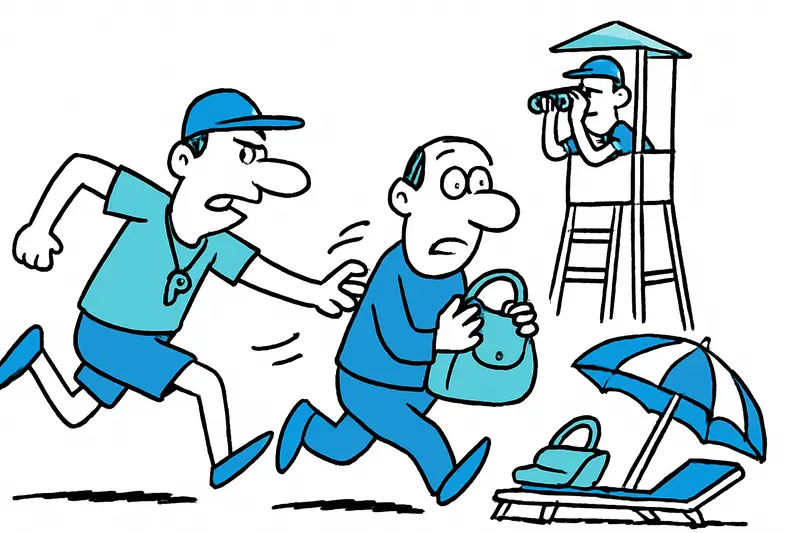
Shortly after 4:15 p.m., lifeguards at Playa de Palma observed a man apparently rummaging through handbags. They followed him, detained him and alerted the Guardia Civil. A case that raises questions about the protection of sunbed guests and the duties of the socorristas.
When Lifeguards Do More Than Pull Buoys: Pursuit at Playa de Palma
An incident on a late-summer afternoon highlights the need for action — and the limits of what can be demanded of rescuers
Late on Sunday afternoon, around 4:15 p.m., a man was detained at Playa de Palma on the Llucmajor side after lifeguards observed him apparently taking items from a handbag. The team on the watchtower became suspicious, a colleague followed the man discreetly behind the rows of sunshades, and after intervening the rescuers brought him to the station until the Guardia Civil arrived. That's the dry sequence of events — yet when I look out to sea I notice more than just the scene itself.
Key question: How far may, should or must lifeguards intervene in property crimes on the beach without neglecting their primary duties?
The answer is not simple. Lifeguards are primarily responsible for human life, drowning prevention and medical first aid. However, the incident reminds us that they also act as the eyes and ears of the promenade: gatekeepers of beach order, with binoculars instead of handcuffs. In practice they often see more than just swimmers — lost phones, bag thefts, unruly groups that can cause trouble. And suddenly they find themselves between a duty of care and legal caution. There have been public protests about working conditions, for example Lifeguards in Palma: When Wooden Crosses Speak Louder Than Megaphones.
Critical analysis: Three problems become apparent from the sequence. First: role and liability. If a socorrista pursues and detains a suspect, questions arise about legal protection — may they use physical force, who bears responsibility if things escalate and cause damage or injury? Second: training and equipment. Not all teams are trained for de-escalation or police tasks; binoculars and a rescue buoy are no substitute for legal instruction. Recent protests, such as Lifeguards stage protest at Can Pere Antoni — a wake-up call for Mallorca's beaches, underlined demands for better training and staffing. Third: prevention instead of reaction. Bathers who leave their belongings in plain sight create opportunities. Public prevention measures are often too quiet.
What is missing from the public debate: numbers. We hear about isolated cases, but not how frequently such thefts occur on beaches overall. Also, there is hardly any open discussion about the workload on rescue teams during peak season: more people in the water, more lost-and-found items, more disturbances on land. This has been highlighted in Who Protects the Rescuers? 'Collective Drowning' at Playa de Palma Sparks Debate on Working Conditions. And surprisingly rarely discussed is the responsibility of hotels and beach operators to inform guests and offer simple security measures.
An everyday scene that illustrates this: morning on the Paseo Marítimo. Vendors shout, the smell of fried fish mixes with sunscreen, police patrol slowly, and next to the small kiosk a sunbed lies with an open handbag as if nothing had happened. The lifeguard towers are like small lighthouses of order, but they are not built to manage luggage.
Concrete solutions that could help immediately: first, clear operational protocols between the municipal administration, the rescue service and the Guardia Civil — who intervenes how, what documentation is required, how is a suspect safely handed over? Second, mandatory de-escalation and legal training courses for socorristas, funded by local authorities; that creates security for helpers and affected persons. Third, simple prevention measures on the beach: lockable lockers in sectors with high visitor numbers, prominent signs in several languages, short information leaflets at hotel check-in with tips on storing valuables. Fourth, more visible police presence during peak times and coordinated bicycle patrols that can react faster than cars in the parking situation along the playa.
For beachgoers the obvious — and often disregarded — advice remains: do not leave valuables openly next to the sunbed, carry money and documents on your person or deposit them in lockers, and ask a trusted neighbor to watch your things when you are away. For beach operators and landlords a minimum standard would be helpful: small, secure storage options or at least clear notices visible in the sunbed area. The wider debate over seasonal staffing and safety, which has even seen walkouts, is covered in Lifeguards Strike: Safety Questions and the Uncomfortable Debate Over Seasonal Work.
Conclusion: The lifeguards' intervention that Sunday afternoon shows the human side of everyday life in Mallorca — people who see and act beyond their job description. That is commendable, but it must not become the norm if it endangers others' safety or leaves helpers legally exposed. A better system would combine prevention, training and clear competencies so that in future no one has to stand alone between a row of sunshades, binoculars and the law.
The waves remain indifferent on the beach: they come and go. We should make sure the same indifference does not apply to the safety of personal belongings.
Frequently asked questions
When is the best time to visit Mallorca for outdoor activities?
Can you swim in Mallorca year-round?
What should I pack for a Mallorca trip in spring?
What family-friendly activities are good in Mallorca?
Is driving in Mallorca easy for visitors?
What are good day trips from Mallorca's capital?
How does Mallorca’s weather change with the seasons?
What should I know about beach safety in Mallorca?
Similar News
Rats in Llucmajor: Who clears the streets, who stops the infestation?
In Llucmajor rat sightings and uncollected waste have increased after rain. A local check reveals gaps in cleaning, sewe...
Who will clean up? Illegal rubbish heaps on the highway near Son Gual drive residents onto the streets
For months, construction debris and household waste have piled up along the highway between Palma and Manacor near Son G...

Amundi takes over Bikini Island & Mountain Port in Sóller – many questions remain open
The French asset manager Amundi has acquired the four-star Bikini Island & Mountain Port hotel in Sóller from an Austria...

Silvia was allowed to see the sea once more – a small farewell in Port de Soller
A team from the Balearic health service IB-Salut fulfilled a terminally ill woman's wish: one last trip to the water in ...
Magaluf: Imprisonment for Beach Club Employee after Theft of a Bag — What the Ruling Overlooks
A former dishwasher received a one-year prison sentence for stealing a Louis‑Vuitton bag. The appellate court upheld the...
More to explore
Discover more interesting content

Can Cap de Bou

Townhouse Lleo 72
