
When the Old Town Sleeps — and Some Remain on the Street
When the Old Town Sleeps — and Some Remain on the Street
At night Palma's Old Town grows livelier, its alleys filling with visitors. At the same time, more and more people are laying their heads to rest in doorways, on mattresses or benches. Who pays the price of the housing shortage — and what should be done in the short and long term?
When the Old Town Sleeps — and Some Remain on the Street
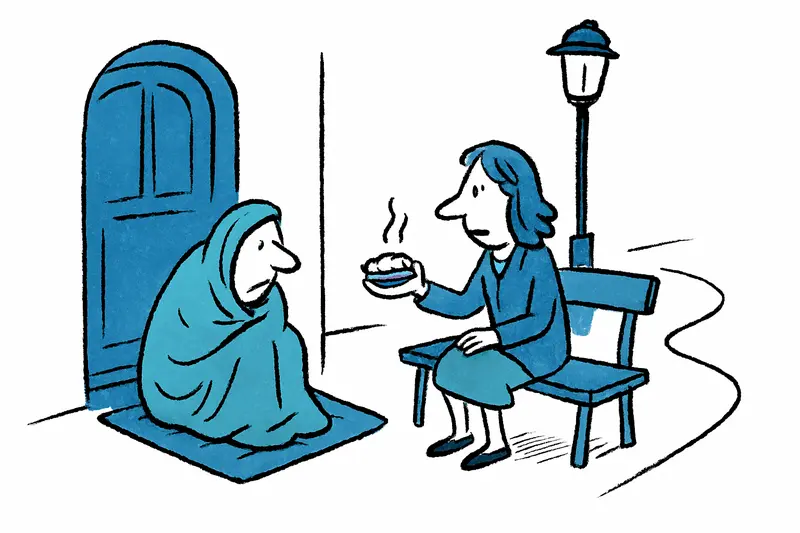
It is half past ten in the evening in Palma's Old Town. The tables on the Passeig have thinned out, the scent of fresh bread still drifts from a bakery, and streetlights cast long shadows into the narrow lanes. And at some doorways, right next to closed front doors, mattresses or sleeping bags lie on the ground. On a bench near the Olmos pedestrian zone a woman sits with a blanket, behind her the soft hum of a delivery van, a situation described in Homelessness on Paseo Mallorca: When the Park Bench Becomes the Final Address. Such scenes are no longer isolated cases — they are becoming more frequent, as local reporting shows in When Work Isn't Enough: Palma and the Growing Number of Homeless People.
Key question
How can a city prevent people from sleeping in the middle of tourist routes, in front of social services offices or in doorways — and do it now, not only in a few months' time?
Critical analysis
The situation has several interlocking causes. Rents have risen sharply in recent years; many jobs on the island do not pay enough to cover ongoing costs, a phenomenon explored in When work no longer protects against sleeping outdoors: Palma at a social crossroads. At the same time, long-term tenants compete with short-term holiday rentals, which are often more lucrative for owners. The result: empty apartments, rising profits — and people without a roof over their heads.
There are also structural gaps: there are too few affordable social housing units, capacities in emergency shelters are limited, and outreach services like streetwork teams do not reach everyone who needs help. Seasonality plays a role as well: more jobs exist in summer, while winter brings job losses and savings run out.
What is missing from the public debate
The debate often remains superficial: images of mattresses spark outrage, followed by finger-pointing. What is missing are sober numbers — how many people are permanently homeless, how many new cases arise because of evictions or rent increases? This lack of clear data is underscored by reporting such as Mallorca's Streets Are Growing Longer: Why More Than 800 People Are Homeless and Nothing Solves It by Itself. There is a lack of honest cost-benefit calculations: what would it cost the city to secure 100 apartments, and what social and economic benefits would follow? Also rarely heard are the voices of those affected themselves and of neighbors in the districts, who often have practical suggestions.
Everyday scene from Palma
An inhabitable shop space near Calle de la Ferreria has been empty for months. In the evening a man comes by, lays a sleeping mat in the doorway, covers himself with an old blanket and speaks quietly with a passerby who gives him a warm croissant. Such small, unannounced encounters reveal the dual role of the Old Town: attraction for visitors and emergency lodging for people without homes.
Concrete approaches
Short-term (days to weeks):
- Expand emergency beds and mobile services: The city can provide additional sleeping places during the winter months and organize mobile shower and laundry facilities. Outreach teams should be present at night to inform people and facilitate referrals.
- Immediate support for premises: Vacant municipal buildings or repurposable spaces can be made available temporarily as supervised emergency sleeping facilities, an approach related to initiatives like When Offices Go to Sleep: Palma's Plan to Revive the Old Town.
Medium-term (months to a year):
- Rent protection and mediation programs: A binding mediation program that advises tenants facing eviction and supports them with short-term financial aid can reduce forced evictions. Incentives for owners to rent long-term (tax breaks or guaranteed rent payments in emergencies) help ease the pressure.
- Coordination of data and capacities: A central, publicly accessible dashboard for beds, counseling services and vacancies would create transparency and enable rapid action.
Long-term (years):
- Social housing construction and regulation of short-term rentals: Accelerate the construction and renovation of affordable housing; at the same time tighten the approval practices for holiday apartments and introduce rental registries.
- Housing First programs: Place people directly into stable housing and offer parallel support for employment, health and integration — this reduces relapses into homelessness.
Who must act — and how to finance it?
Municipal administrations, the regional government, social organizations and neighborhood initiatives must act together. Financing proposals: targeted use of tourism levies, funds from regional housing programs and EU funds, as well as partnerships with foundations and local businesses. It is important that money is not used only as a one-off measure but invested in sustainable solutions.
What can residents do?
Neighbors can help by sharing contacts with aid organizations, joining volunteer groups or setting up secure collection points for clothing and hygiene products. On the street, a friendly word and knowledge of contact points often help more than mere outrage.
Concise conclusion
Homelessness in Palma's Old Town is the visible result of a deeper housing and social crisis. Those who only look away or rely solely on repression merely move the problem. But those who create immediate emergency shelter, strengthen mediation in the medium term and build affordable housing in the long term prevent people from ending up sleeping in doorways at night. Palma has the resources — what is occasionally missing is the political will, the sense of urgency and coordinated action. Without that, the number of mattresses in the alleys will continue to rise — and that must not become our normal state.
Frequently asked questions
What practical steps can Palma take to stop people from sleeping in doorways in the Old Town?
How do housing costs and seasonal work contribute to homelessness in Mallorca's Palma?
What short-term measures are suggested to help homeless people in Palma during winter?
What mediation and rental protections could help prevent evictions in Palma?
Could a central dashboard of beds and services improve Palma's response to homelessness?
What long-term housing strategies could Mallorca adopt to reduce homelessness?
What can residents and neighborhoods do to help those experiencing homelessness in Palma?
Can Palma use vacant municipal buildings as temporary emergency sleeping facilities?
Similar News
After Accident in the Tramuntana: Mourning — and the Question of Rally Safety
The death of Klaus Rader at the Rally 550 Challenge Mallorca has shaken island residents and participants. His wife aske...
Does Pedro Sánchez Have Better Odds in New Elections? A Reality Check from Mallorca
Sánchez weathers setbacks, forms tactical coalitions — but is that enough in new elections? A critical look with an ever...
Ses Salines Celebrates Art: ArtinSal Turns the Village into a Gallery
More than 70 artists, open houses, music on the Plaça Sant Bartomeu and the Església Vella as an exhibition space: Artin...
More than five tons of waste from the sea: Who cleans up when plastic keeps washing ashore?
In September, response boats in the Balearics recovered over 5.3 tons of waste from the sea and coasts — almost half of ...
Loose dog on the MA-19: Rescue — and an uncomfortable question
A large dog ran across the carriageway of the MA-19 near exit 12 on Sunday morning. The Local Police captured the animal...
More to explore
Discover more interesting content

Can Cap de Bou

Townhouse Lleo 72
