
Late at night in Palma: 29-year-old fatally struck by car on Camí de Can Capó
Late at night in Palma: 29-year-old fatally struck by car on Camí de Can Capó
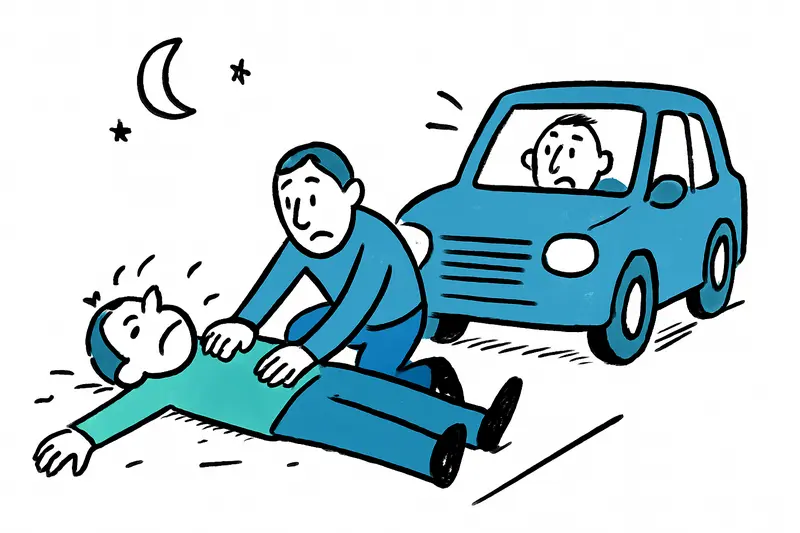
During the night a 29-year-old Italian was hit by a car on Camí de Can Capó in Palma and died despite resuscitation attempts. The Guardia Civil is investigating; the driver tested negative for alcohol.
Late at night in Palma: 29-year-old fatally struck by car on Camí de Can Capó
Key question: Why do accidents occur at the edges of nightlife — and what must change?
In the early hours, at 00:25, a tragic accident occurred on Camí de Can Capó in Palma: a 29-year-old man of Italian nationality was struck by a vehicle and died from his injuries despite resuscitation efforts by emergency services. According to responders, the vehicle was a Dacia Sandero heading toward the road to Manacor. The Guardia Civil has taken over the traffic investigation; an alcohol and drug test on the driver was negative.
Those are the confirmed facts. What follows in many reports are hypotheses: eyewitnesses said the man had been walking along the roadside near a well-known nightclub. A possible explanation — that he stepped onto the road — is being examined by investigators but is not yet definitively established. The factual record is thus sparse, and that is part of the problem. Similar reports have appeared before, for example Nighttime Escape on the Camí dels Reis: An Accident, Many Questions.
Critical analysis: traffic fatalities at junctions of nightlife are not simply the result of "inattention." Often several factors interact: road layout, lighting, sidewalks, late-night traffic volumes, available transport alternatives and the presence of security staff. When an apparently sober driver and a pedestrian meet in dim light, infrastructure often decides between life and death.
What is missing from the public debate are basic details about the local infrastructure. Is there a continuous sidewalk on Camí de Can Capó in the section where the accident occurred? Are crossing aids present, and is the lighting adequate? What do night-time speed profiles look like — is 50 km/h still in force there or have 30 km/h zones been implemented? Such detailed questions are rarely answered quickly, but they are crucial for root-cause analysis and prevention. Local coverage has highlighted comparable cases such as Seriously injured on Palma's Paseo Marítimo: An accident, many questions.
Everyday scene from Palma: it is shortly after midnight, the music behind club doors still plays, the air smells of fried food and the sea, scooters hum, taxi drivers shout their prices, doormen quietly argue with patrons. In such places, when sidewalks are narrow or interrupted and taxi stands are missing, people walk along the road edges. A narrow strip of asphalt separates the dancing nights from passing cars — a risky dividing line. This follows a pattern documented in pieces like Third traffic death in a few days: Do Palma's night streets need to be safer?.
Concrete solutions that could have quick effect:
• Increase visibility: better, low-maintenance street lighting and reflective road markings around venue exits.
• Ensure walkways: continuous, well-maintained sidewalks or temporary barriers in front of known doorways and club exits.
• Reduce speed: temporarily lowered speed limits at night in evening and night zones and clearly visible signage.
• Strengthen mobility alternatives: designated taxi and rideshare pickup points, improved night bus connections so guests do not have to wait at the road edge.
• Order and awareness work: hospitality operators, doormen and local police should jointly identify danger spots; prevention campaigns for nightgoers (visibility, safe routes home) can help as well.
• Data and transparency: accident analyses should quickly include information on lighting, visibility and infrastructure so that evidence-based measures are possible.
It is particularly urgent that authorities, operators and nightgoers do not remain in separate spheres. Walking along the Passeig or Playa de Portixol you can see how everyday life and traffic flow into one another. At night small decisions — a step onto the verge, a car that drives more quietly — are tragic for those affected.
Pointed conclusion: this accident is not an abstract statistic but another indication that we must improve the transitions between nightlife and the roadway. The Guardia Civil will determine the exact sequence of events; previous cases include Fatality on the MA-19 near Palma: How did a pedestrian get onto the highway?. Until causes are fully examined, simple improvements can make the next night safer. The municipal administration, traffic planners and the night scene itself are responsible — and it would be better if everyone tackled this together now, rather than only describing afterward what everyone already sees.
Frequently asked questions
What factors contribute to pedestrian accidents near Palma's nightlife areas?
What quick safety improvements could Palma implement to protect pedestrians after nightlife events?
How can nightlife operators and local police work together to reduce night-time risks in Mallorca?
What should a night out in Palma consider to stay safe while walking to transport options?
What happened in the Camí de Can Capó incident in Palma?
How does Mallorca handle data and transparency in analyzing night-time accidents?
Are there ongoing discussions about nighttime speed and road design in Palma?
What can visitors do to stay safer when enjoying Palma's nightlife?
Similar News

When Palma Becomes a Zombie Zone: 'Mallorca Z', AI and the Thought Experiment with Side Effects
A Mallorcan lawyer built a strategy game over a weekend using AI that treats the island as the scene of a zombie crisis....
Learning to Wait: How Leisure Is Making Space Again on Mallorca
Waiting doesn't have to be lost time. A mild October day in Palma shows how small pauses slow down our lives — and what ...
Cala en Brut: Body in the Sea — a Fatal Autumn Day and What’s Missing
In Cala en Brut (Ciutadella) a man's body was recovered during storm Dana "Adam". Why do autumn storms in the Balearics ...
When the road is gone: Port de Valldemossa cut off after storm 'Adam'
After heavy rains a retaining wall gave way and two sections of mountain road MA-1131 became impassable. Why are rural p...

Crypto Promises, Ferry, Arrest: How Investors in Mallorca and the Neighboring Islands Fall into the Trap
A Swiss man wanted under a German arrest warrant was captured in Ciutadella. The case raises questions about cross-borde...
More to explore
Discover more interesting content

Can Cap de Bou

Townhouse Lleo 72
