
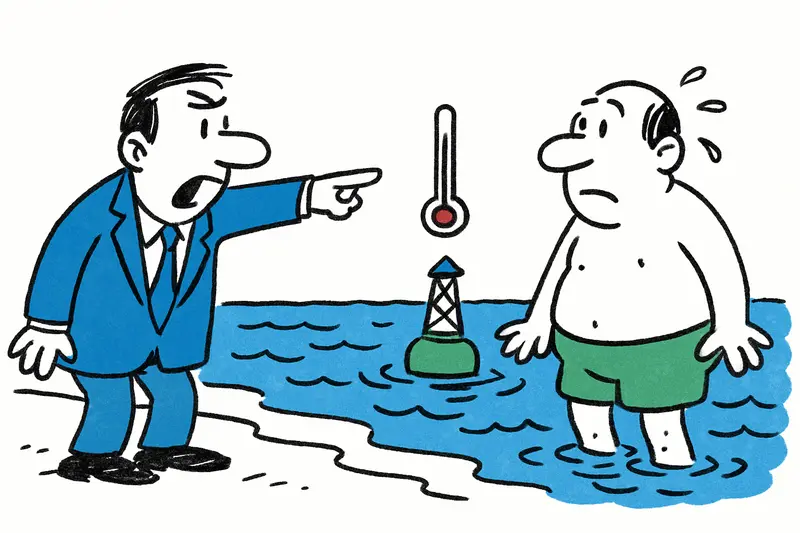
Sea off Mallorca heats up: Almost six degrees in two weeks – How threatened are the coast and everyday life?
Sea off Mallorca heats up: Almost six degrees in two weeks – How threatened are the coast and everyday life?
SOCIB measurements show: The average temperature of the Balearic Sea rose by around 5.7 °C within 15 days. An assessment of what this means for beaches, fishermen and tourism in Mallorca — and what should be done locally now.
Sea off Mallorca heats up: Almost six degrees in two weeks
The figures recorded at the buoys — and the consequences for our everyday life
Key question: How dangerous is this abrupt rise in temperature for Mallorca's coasts, and what is being done locally to address it?
The sober measurements speak clearly: The Balearic coastal monitoring service (SOCIB) registered an average sea surface temperature of the Balearic Sea of about 18 °C in mid-May; on 2 June the mean was 23.74 °C. How the Sea off Mallorca Is Heating Up Faster Than We Think — and What We Can Do About It provides broader context. That is an increase of around 5.74 °C within about 15 days and more than four degrees above the 1982–2015 reference period. Individual buoys reported local peak values for May: Maó with 26.58 °C and Sa Dragonera with 26.20 °C. These figures are not trivial — they are reshaping the sea.
Critical analysis: Such rapid increases change ecosystems in a short time. Warm surface waters favor algal blooms, weaken posidonia meadows and shift fish stocks closer to the surface or into other areas. For commercial and recreational fishers, catch patterns can suddenly go awry; for bathers there are increased encounters with warm-water species. Thermal stratification (cold deep water, warm surface water) also becomes more frequent, which impairs oxygen supply and nutrient cycles.
What is often missing in the public debate: concrete local impacts on fishing income, bathing water quality and small harbors. There is no clear picture of how strongly local bay ecosystems — from Port de Sóller to Santa Ponça — have already shifted. Also lacking is a focus on concrete warning chains for rapid alerts to lifeguards, landlords or fishers when buoys report unusual values.
An everyday scene: On a warm morning at the Passeig Marítim you can hear the clatter of fishing nets and the distant whistle of the lifeguards. Tourists dry their hair, children splash in shallower water than usual; the promenade smells of grilled fish and sunscreen. This familiar blend could change — not overnight, but noticeably: fewer small sea urchins, different fish species at the market, and sometimes unpleasant odors after an algal bloom event.
Concrete approaches for Mallorca, not just pious promises:
1) Earlier, local alert network: A direct link between SOCIB measurements and local authorities, lifeguards and fisher associations so deviations quickly result in warnings, navigation or bathing advisories.
2) Protection and restoration of posidonia areas: Enhanced mapping and stricter control of anchoring in sensitive bays, combined with support programs for fishers shifting to sustainable practices.
3) Infrastructure adaptation: More shade and drinking water stations on heavily used promenades like the Paseo Marítimo, information signs with current water temperatures at main beaches and adjusted duty schedules for lifeguards on extremely hot days. These measures echo challenges reported in Nearly 40 °C: Mallorca's Daily Life Under Heat Stress — How the Island Can Respond and the emergency planning discussed during Heatwave reaches 42 °C: How Mallorca should cope with the new temperature peak.
4) Transparency and public information: Daily short updates on municipal websites and in tourism apps with buoy values and simple behavioral guidance for swimmers and boaters (see Sea temperatures off Mallorca drop temporarily — temporary reprieve or false alarm?).
5) Research and local funding: Support for universities and laboratories on the islands to study short- and medium-term effects such as algal blooms or fish migrations, plus funding for affected coastal communities.
What the data also show: 2025 was already exceptional. In parts of the Mediterranean, water temperatures were up to 6.5 °C above the long-term average; 190 days of so-called marine heatwaves were recorded. For the Balearics, the 2025 annual report recorded the highest sea surface temperatures in the measurement history; on 3 July 2025 the regional average was about 28.4 °C, with local buoy values near 31 °C. Such records cannot simply be brushed aside.
What is now missing is a binding list of responsibilities at island level: Who activates the warning chains? Who pays for restoration measures? How are fishers compensated for income losses if protected areas must be expanded? And last but not least: How are tourists realistically informed without creating panic?
In short and pointed: The sea warming is not an abstract climate data game, but a factor that is already changing beaches, fish markets and the sounds on the promenade. Local politicians, port authorities, lifeguards and the tourism industry must take the SOCIB figures seriously, agree on clear procedures and act visibly. Small local measures help buy time — the long-term solution, however, lies far beyond the island border: fewer emissions, faster climate policy and better coordinated marine protection management in the Mediterranean.
Conclusion: We are witnessing locally how the sea is readjusting its temperature. This is measurable, tangible and can be influenced — if action is taken now. Otherwise, the beach conversations in a few years will sound very different.
Frequently asked questions
What is the weather like in Mallorca in early June?
Can you swim in Mallorca in early June?
Is early June a good time to visit Mallorca?
What should I pack for Mallorca in early June?
What is Port de Sóller like in early June?
What is Palma like to visit in early June?
What are the best things to do in Mallorca in early June?
Are Mallorca beaches crowded in early June?
Similar News

When the Wallet Becomes a Danger: Attack in Peguera and Lessons for Mallorca
In Peguera, two women are said to have stolen the wallet from a 75-year-old German couple. When the victim intervened, t...
Plata stays Plata: Young people take over, Llonguets remain
A small bar on Carrer de l'Argenteria will continue: Tolo Serra hands the place over to young Mallorcans at the end of t...

Unnoticed in the Luggage Compartment: How a Boy Traveled More Than 100 Kilometers in a Team Bus
A minor traveled in the undercarriage of a team bus for more than 100 kilometers until his cries for help were heard. A ...

Cap Vermell Grand: Second Michelin Key – a Gift for the East
The Cap Vermell Grand in Capdepera has been awarded its second Michelin key. For the region this elevates the luxury off...

Eurowings lets four aircraft carry names – a friendly idea that also reaches Mallorca
Eurowings is launching a campaign: four Airbus A320s are to carry the first names of people who help others in everyday ...
More to explore
Discover more interesting content

Can Cap de Bou

Townhouse Lleo 72
