
Two bikers fall 20 meters at Cala Tuent — What really goes wrong
Two bikers fall 20 meters at Cala Tuent — What really goes wrong
On Tuesday afternoon two people went off the road near Cala Tuent and fell about 20 meters down a slope. Dense scrub and a helicopter rescue likely prevented the worst. Time for a reality check: why do accidents on the MA-10 end so dramatically, and what needs to change?
Two bikers fall 20 meters at Cala Tuent — What really goes wrong
Accident in the early afternoon: rescuers take the injured to hospital
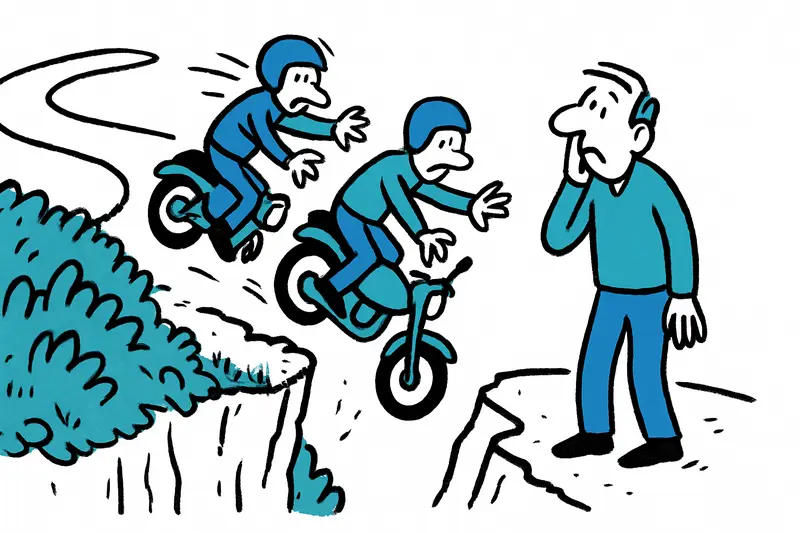
On Tuesday at around 1:15 p.m. two motorcyclists in the municipality of Escorca near Cala Tuent left the road and fell down a slope of about 20 meters. Both were riding together on one motorcycle. Firefighters and ambulance service SAMU 061 reported that the injured were taken in a non-life-threatening condition to the major Son Espases hospital in Palma.
The rescue was difficult: the terrain is steep and hard to access. Fire crews recovered the two with the support of a helicopter and brought them to a point where an ambulance was waiting. The dense scrub on the slope apparently acted as a kind of braking zone and softened the impact.
Key question
Why do accidents on winding sections of the Serra de Tramuntana so often end so badly — and who will make sure the next bend doesn't become a death trap?
Critical analysis
The facts are sparse, but the patterns on Mallorca are well known, as reported in Too Many Deaths on Motorcycles: How Mallorca Can Stop the Summer Trend: narrow roads, sometimes tight bends, changing grip of the road surface and tourist-driven traffic peaks. The MA-10 around Cala Tuent is a popular excursion route — cars, mopeds, cyclists and pedestrians share the road, a situation highlighted in MA-10 under scrutiny: Head-on collision between intercity bus and delivery truck near Esporles. When a motorcycle breaks out in a corner there is little room for correction. If a guardrail is missing, the slide often ends in the slope. Here road design, landscape management and user behavior combined to turn an error into a major accident.
What is usually missing from the public debate
On the island people often resort to blanket blame: "too fast" or "negligent." But the debate misses the structural questions: How well is the traffic infrastructure designed for mixed use? When were guardrails, drainage and surface inspections last checked? Are there enough signs before particularly dangerous curves or warning points in navigation maps? And how transparent are the accident statistics for the affected road sections, as discussed in Crash on the Ma-10: Bus collides head-on with a truck — What does this say about our roads??
An everyday scene familiar to many
Anyone who drives the MA-10 in summer knows the scene: the smell of pine resin, the clack of stone walls below the bends, the hiss of tyres when a motorcycle speeds past a lay-by. At the Cala Tuent viewpoint tourists stand with cameras, locals with coffee cups — everything seems peaceful until a siren cuts through the quiet. Such moments show how close danger and normality are to each other.
Concrete solutions
- Immediate measures: visible warning signs, reduced speed limits at particularly tight bends and mobile information boards during the season.
- Infrastructure: inspection and targeted installation of curve-specific safety barriers that catch motorcycles rather than deflect them; regular surface checks and removal of loose gravel.
- Landscape management: clearing vegetation in places where dense growth hinders rescue access, combined with controlled plantings that absorb energy in a fall.
- Strengthen the rescue chain: GPS coordinates at key points, improved radio coverage for emergency calls, regular joint exercises by the fire brigade, SAMU and air rescue.
- Prevention: targeted information for rental scooter and motorcycle riders — tourists are often unfamiliar with the road conditions; a check-out with clear instructions could help, as argued in Why Mallorca Remains Dangerous for Bikers — and What Could Really Help.
Conclusion
That the two injured were not critically hurt is a stroke of luck — a mix of dense scrub, quick response and professional rescue. But luck should not be the island's safety concept. Curves that are spectacular today can be deadly tomorrow if infrastructure, maintenance and education do not go hand in hand. Escorca, Cala Tuent and the MA-10 deserve an honest inventory: transparent accident figures, prioritized measures at danger spots and pragmatic solutions that protect both locals and visitors.
Frequently asked questions
Why are winding roads in Mallorca prone to serious motorcycle accidents?
What happened at Cala Tuent when the two bikers fell?
What kinds of safety improvements could reduce motorcycle accidents on Mallorca's winding roads?
How is emergency response being strengthened to handle road incidents in Mallorca?
Why is it useful to discuss road safety in Mallorca beyond blaming drivers?
Which Mallorca routes or areas are particularly relevant for safety in the Serra de Tramuntana?
What should visitors know about road safety when renting scooters or motorcycles in Mallorca?
What concrete steps could local authorities take to prevent serious accidents on Mallorca’s dangerous curves?
Similar News
Palma under the microscope: 87 arrests over forged passports – what now?
The National Police stopped 87 people at Palma airport this year with allegedly forged documents. Why are controls alone...
When a Taxi Fare Dispute in Magaluf Turned Bloody: How Safe Are Passengers and Drivers?
In Magaluf a dispute over the fare escalated: a tourist, now 18, is accused of having seriously injured a taxi driver in...
Why Mallorca Has Become So Terribly Expensive — A Reality Check
Rents are exploding, staple food prices are rising, wages are lagging behind. A look at the causes, what is missing from...
When Paradise Becomes Unaffordable
Hotel rooms, paella and the weekly grocery shop: Mallorca is becoming more expensive for many. Who pays the bill — guest...
End at Ballermann: What Is Lost with the Dino Mini Golf at Playa de Palma
On October 25 the dinosaur mini-golf course at Playa de Palma will close after more than 30 years. Why the city is recla...
More to explore
Discover more interesting content

Can Cap de Bou

Townhouse Lleo 72
