
Blown by the Wind: Who Will Finally Explain the Delays at Palma Airport Clearly?
Blown by the Wind: Who Will Finally Explain the Delays at Palma Airport Clearly?
Wind shear in the afternoon caused numerous delays in Palma and unsettled travelers. Why the information chain breaks down and what on-site solutions could help.
Blown by the Wind: Who Will Finally Explain the Delays at Palma Airport Clearly?
Wind shear slowed operations down on Tuesday afternoon – passengers were often left in the dark
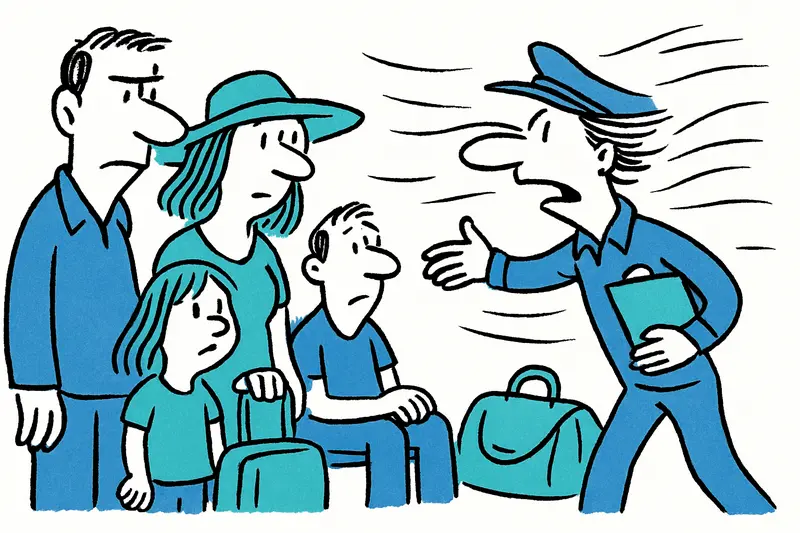
In the late afternoon, when the sun still warms the apron asphalt and the displays in the terminal flip every second, operations at Palma Airport come to a halt. Suddenly people stand with travel bags, sun hats and wet children in a mix of waiting and bewilderment. That was exactly how it looked that Tuesday, when a variable wind situation, known in technical terms as 'wind shear', caused takeoffs and landings to be handled more slowly than usual, a pattern described in Storms in Palma: Why Takeoffs and Landings Are Stalling — and What Helps Now.
Guiding question: Why is the current information policy not enough to quickly reassure unsettled travelers — and who bears responsibility for this: Aena, the airlines, or airport operations?
Technically the phenomenon is well known: when wind direction or speed fluctuates strongly over a short distance, aircraft on final approach can suddenly lose lift or have to go around. This is not a failure of pilots or equipment but a safety regulation. In Palma this meant aircraft had to operate with greater separations – and the entire process slowed down. Several flights to Germany, including connections to Frankfurt and Hannover, arrived later than planned. Some passengers reported delays of more than four hours, as discussed in Severe weather disrupts Palma Airport — what this means for travelers.
So far, this is technically understandable. What matters, however, is how this cause was communicated externally. On site, the image that emerged was of waiting passengers staring at screens and listening to announcements without clear information about the status of their flight. In conversations one heard the same complaint: people knew 'something has happened, but nobody tells us what exactly.' I have seen similar scenes in previous summers: baggage carts rumbling, taxi queues on Paseo Mallorca getting longer, and moods turning sour because time is tight — connections, booked transfers, childcare, a situation echoed in Storm Chaos in Palma: Why a Storm Slows the Airport So Much — and What Needs to Change.
Critical analysis: The information chain between the airport operator, airlines and ground staff appears too fragile on days with unsettled weather. Aena has emphasized that operations were not halted, and that is true. But a confirming message alone is not enough. For travelers, the how and the when matter: When will things continue? Will I receive food or alternative transport? Do I need to arrange accommodation?
What is missing in the public discourse: There is a lot of talk about technical causes and little about the organizational consequences for passengers. Almost never is it discussed how information flows should look in real time, which digital tools could help, or which standards for compensation and care apply in weather situations. The question of local crisis management — additional information counters, clear responsibilities at the gates, better coordination between Aena and airlines — is also rarely discussed concretely, a gap noted in Weather chaos at Palma Airport: Why a thunderstorm brings more than just delays.
Everyday scene from Mallorca: After a long wait, those who leave the terminal encounter the familiar smell of sunscreen and café con leche, see taxi drivers smiling tiredly, and apartment managers trying to reassure unsettled guests. At La Lonja you can hear the street musicians who don't care one bit about flight schedules — and that is precisely what makes the island: life goes on, even if something goes wrong in the sky.
Concrete solutions: First: transparent, consistent communication. Aena and the airlines should provide coordinated standard messages that are automatically broadcast via display boards, apps and loudspeakers. Second: clear points of contact; a visible staff member should be assigned to each gate to provide information, an approach urged after incidents such as Severe storm halts Palma Airport: Why delays hit inter-island services and travelers especially hard. Third: digital pre-warnings. Better use of meteorological forecasts and automatic push notifications to affected passengers can reduce uncertainty. Fourth: improved passenger care. For delays starting at two hours, options such as refreshments or rebooking offers should be examined. And fifth: training programs for wind conditions so that ground staff and airlines have practiced procedures.
Conclusion: Wind shear is a weather problem, not a management failure. Nevertheless, a technical disruption quickly becomes a question of trust when people are left in the dark. Mallorca thrives on a good atmosphere at arrival and departure points. A little more clarity, faster information and identifiable contacts would not tame the winds — but they would save many nerves.
Frequently asked questions
Why are flights at Palma Airport delayed when the wind is strong?
How can I tell if my flight from Mallorca is delayed because of weather?
What should I do if my flight from Palma is delayed for several hours?
Do airlines in Mallorca have to provide food or accommodation during weather delays?
When is the worst time for wind-related flight delays in Mallorca?
Is it still safe to fly into Palma Airport during wind shear?
What information should Palma Airport passengers get during a delay?
How can Mallorca airports improve communication during weather disruptions?
Similar News
The Painter Who Lived Mallorca: Franz Taussig and His Century-Old Secret
A hundred years ago a young Viennese arrived in El Terreno, sketched the island and called himself Francis Caron. Today ...
Airport dispute: Bridge, forecasts and the question of responsibility
A video by the Spanish transport minister has ignited the dispute over DORA figures, capacities and local governance pow...

The Painter Who Invented Himself: How a Young Viennese Drew Mallorca
A hundred years ago a 19-year-old draftsman arrived in El Terreno. His diary and sheets, long known under the pseudonym ...
Released with Conditions: The Plus Ultra Suspicion and a Mallorcan Finca as Residence
A Dutch entrepreneur, sought in connection with the Plus Ultra case, was extradited to Spain after his arrest in Germany...

Haute Nuit in Puerto Portals: Fashion, Art and Indulgence by the Water
On October 2 the Lobster Club in Puerto Portals will be transformed into a stage for curated fashion, art and culinary e...
More to explore
Discover more interesting content

Can Cap de Bou

Townhouse Lleo 72
