
28 Dead on the Way to Mallorca: What This Shipwreck Says About Rescue in the Mediterranean
28 Dead on the Way to Mallorca: What This Shipwreck Says About Rescue in the Mediterranean
A boat traveling from Algeria to the Balearic Islands capsizes, 28 people die and only four survive. Who is responsible, why does the search not perform better — and what is missing from the debate? A reality check from Mallorca.
28 Dead on the Way to Mallorca: What This Shipwreck Says About Rescue in the Mediterranean
Guiding question: Why do people continue to die in large numbers on the Algeria–Balearic route — and why do we learn so few reliable details?
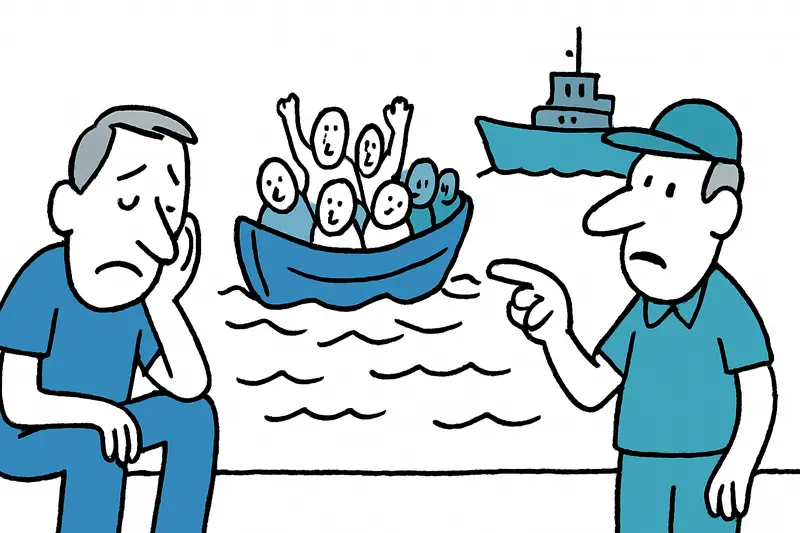
The news is brief, harsh and leaves a long trail: A boat with around 32 people on board allegedly departed from the coast near Boumerdès in Algeria, headed for the Balearic Islands, and sank. 28 dead, four survivors, a German fishing vessel that took some people on board, and reports from civil society networks such as Alarm Phone and Caminando Fronteras that provide background. According to available information, the Spanish maritime rescue authorities have not yet provided information about the case.
Such reports land differently here in Mallorca: I am sitting on Passeig Mallorca, the heat pressing down (Palma is 35°C today), gulls screech, scooters buzz, and in the harbor fishermen discuss nets and routes. Between parasols and the voices of tourists, the tragedy feels distant — and yet it concerns us. Crossings towards the Balearics do not only affect remote sea areas; they touch local harbors, emergency capacities and the people who work on the water here every day, as reflected in Body Recovered off East Coast: A Sign of Larger Problems at Sea?.
Critical analysis: Several problem areas stand out. First: SAR zones (search and rescue areas) create clear responsibilities on paper — in practice they lead to information gaps. If an accident occurs in the Algerian SAR, Spain apparently has no obligation to report it; at the same time, refugees may reach the Balearics or be recovered elsewhere. This makes transparency difficult and prevents a complete situational picture.
Second: The role of private fishermen and commercial ships is ambivalent. The mentioned German fishing vessel rescued people, showing that civilian actors often provide first aid, and similar dynamics were reported in Patera Capsizes Near Portopetro — One Dead, Three Missing and Many Unanswered Questions. These operations are life-saving but are not planned or coordinated like professional rescue missions. There are hardly any binding protocols on how rescued people are cared for, registered and handled after the rescue is completed.
Third: Collected figures remain fragmentary. NGOs document victims, collection points publish nationality information — Mali, Ivory Coast, Guinea were mentioned — but a central, independent recording that brings together deaths, missing persons and survivors is missing. The result: statistics become estimates, cause becomes debate.
What is missing in the public debate: clear questions about responsibility and concrete improvements. It is not only about moral outrage, but about technical procedures: Who has the position data? Why are Alarm Phone reports not automatically forwarded to all responsible coordinators? How quickly can ports like Palma or Alcúdia serve as safe havens when survivors arrive on board, as local coverage such as 18 People Missing off Mallorca — A Call to Politics and Society highlights?
Everyday scene from Mallorca: Imagine the second-smallest clock on the Paseo, the bars on the plaza shimmering in summer light. A dockworker who has been checking the boats since five in the morning for decades says: "If someone comes out of the sea here, we take care of them. But often no one knows what happens afterwards." That is the point: human help exists, organizational structures do not always.
Concrete approaches to solutions, without sounding naive: First, better publicly accessible protocols between states and NGOs for incidents in border SARs — a kind of rapid information window that automatically shares data when a distress call comes in. Second, mandatory registration of rescued people with clear paths to immediate medical care and identification; for that, ports in the Balearics – Palma, Portocolom, Alcúdia — could provisionally provide capacities, and incidents like Shipwreck at Cala Millor: One Dead, Many Questions — How Can We Better Protect People? illustrate that capacity is needed. Third, station more rescue resources where routes show high mortality; the number 1037 (victims in the western Mediterranean in 2025, documented by civilian groups) must prompt targeted reinforcement, not just headlines.
Fourth, regional cooperation: no administrative solution works without dialogue with North Africa. That does not mean shifting responsibility, but joint SAR exercises, medical readmission agreements and transparent investigations into mechanical causes of boat sinkings, as the political aftermath of such incidents is discussed in Boat tragedy off Mallorca: Between grief, legal battles and the question of a Plan B. Fifth, better aftercare for survivors: identification, psychosocial support, legal status — all of this must be tangible instead of disappearing into administrative nothingness.
Conclusion, pointed: Feeling sorrow when boats capsize is not enough. We need more than sympathy: binding information channels, clear procedures for rescued people, increased rescue capacities — and an island community that is prepared when people come ashore. Mallorca cannot solve all problems. But here, between harbor cranes and beach kiosks, the practical part begins: teams from port authorities, civilian helpers and health services should develop plans before the next crossing. Otherwise the same story will repeat itself with different names and numbers.
Frequently asked questions
How do search-and-rescue zones affect rescue operations around Mallorca, and why can information gaps occur?
What happens to people rescued at sea near Mallorca, and who coordinates their care?
What concrete steps are proposed to improve rescue response and aftercare at Mallorca’s ports?
How prepared are Mallorca's ports like Palma and Alcúdia to receive rescued people, and what challenges do they face?
What precautions should visitors to Mallorca take during hot Mediterranean summers, especially near harbors?
How do civilian rescuers, like fishermen, interact with official rescue authorities around Mallorca?
How do NGOs document shipwrecks and casualties in the western Mediterranean, and what limits do they face in reporting?
What would a prepared, community-focused approach look like for Mallorca when people arrive ashore?
Similar News
Graffiti on the Ma-10: "Mallorca is not Germany" – What's behind it, what to do?
On the Ma-10 between Estellencs and Andratx the German sentence "Mallorca ist nicht Deutschland" appeared on several roa...
Mercadona brings ready-made doner wrap to the chilled shelf – practical for beach days and after work
A 400-gram kebab wrap with seasoned chicken, tomatoes, lettuce, onions and a wheat flatbread lands in Mercadona's chille...
Spray on the Ma-10: When the message 'Mallorca is not Germany' reaches the Tramuntana
On a stretch of the Ma-10 between Estellencs and Andratx, German slogans have been painted on the road and embankment. A...
Heatstroke at El Toro: Why the island must be better prepared for such major events
At the El Toro viewpoint in Calvià a 74-year-old man suffered a heatstroke while waiting for the solar eclipse and had t...
When a giant tuna stirred up the beach in Marbella
A stranded, apparently injured tuna on El Ancón beach caused panic and helping hands on Saturday. What remained unresolv...
More to explore
Discover more interesting content

Boat Tour with BBQ along Es Trenc Beach

Private transfer from Mallorca Airport (PMI) to Pollensa
